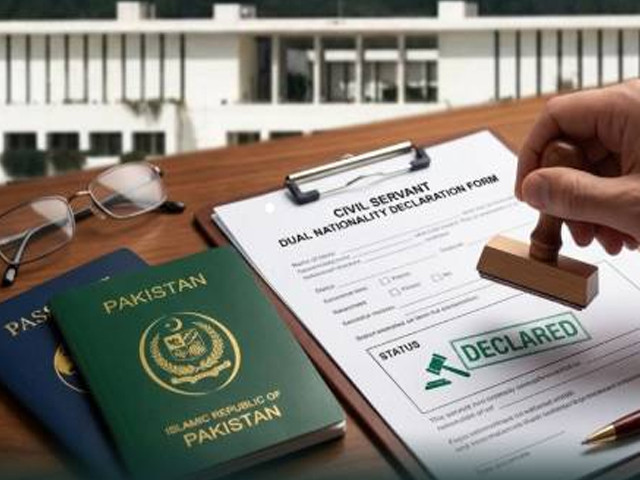
Govt rolls out new civil service conduct rules after 62 years
The federal government has introduced new civil service conduct rules, replacing the 1964 framework with stricter provisions on asset disclosure, conflicts of interest, social media use and financial accountability. The rules also allow public disclosure of annual asset declarations of officers in B

ISLAMABAD: The federal government has introduced a new code of conduct for civil servants, replacing a framework that had remained in place for 62 years with stricter provisions on asset declarations, conflicts of interest, social media use and financial accountability.
According to official sources cited in a comparison between the repealed 1964 Rules and the Civil Servants (Conduct) Rules 2026, the new framework keeps key principles from the earlier code, including restrictions on political activity, unauthorised disclosure of official information, nepotism and misuse of official position. At the same time, it adds broader accountability measures aimed at addressing present-day governance requirements.
One of the most significant changes is that annual asset declarations of officers in BPS-17 and above will now be made public after confidential personal information is redacted. Under the 1964 rules, such declarations were submitted internally and were not made public.
The 2026 rules also require senior officers to submit their declarations digitally by October 30 each year. These filings will undergo risk-based verification by the Federal Board of Revenue (FBR), and officers may be asked to explain omissions, misstatements or unexplained increases in wealth.
For the first time, civil servants will also have to declare virtual assets such as cryptocurrencies, in addition to bank accounts, shares, securities, insurance policies and jewellery valued at Rs5 million or more.
Conflict of interest and online activity
The new rules introduce a formal conflict-of-interest regime. Civil servants are now required to disclose personal or family interests that could clash with their official responsibilities and must recuse themselves from procurement, selection and other decision-making processes where such conflicts exist.
The code also sets out detailed restrictions on social media and online activity, an area not covered in the 1964 rules. Civil servants may not, without prior approval, own or manage websites, podcasts, blogs, YouTube channels or similar platforms.
They are also barred from using personal social media accounts to display official work, facilities or entitlements for personal publicity or image-building. Cadre Administrators may also require officers to disclose all of their social media accounts.
Gifts, spending and outside employment
The government has also tightened rules relating to gifts and hospitality. Civil servants and their family members are prohibited from accepting gifts from any person, company, foreign government or diplomat, except where allowed under the Toshakhana (Management and Regulation) Act, 2024. They are also not allowed to offer gifts to superior officers if such gifts could be seen as attempts to secure favours.
The new code further states that civil servants should not maintain a lifestyle beyond their declared means and may be required to explain spending on weddings and other social functions if such expenditures appear extravagant or inconsistent with disclosed income.
Another provision covers officers who take private-sector jobs during sanctioned Extraordinary Leave. Such officers must obtain prior approval and, after returning to government service, must not take part for three years in any official matter involving their former employer.
The rules also allow officers to undertake approved teaching, consultancy and professional work, provided it does not interfere with official duties or create conflicts of interest. In such cases, one-twenty-fifth of the remuneration earned must be deposited in the national treasury.
Reporting obligations and wider application
Among other provisions, civil servants must immediately report any criminal case or arrest to their Cadre Administrator. They are also prohibited from filing frivolous complaints against colleagues and may not approach foreign missions or donor agencies to seek overseas visits or training opportunities for personal benefit.
The federal government has also given itself the authority to extend the new rules to autonomous bodies, regulatory authorities, universities and state-owned enterprises.
Any breach of the Civil Servants (Conduct) Rules, 2026 will be treated as misconduct under the Civil Servants (Efficiency and Discipline) Rules, 2020, making violators liable to disciplinary action.
Officials said the new framework marks the most extensive modernisation of Pakistan’s civil service ethics regime in more than six decades, shifting emphasis from traditional conduct standards to stronger transparency, financial scrutiny and digital accountability.
Comments
No comments yet. Be the first to join the discussion!