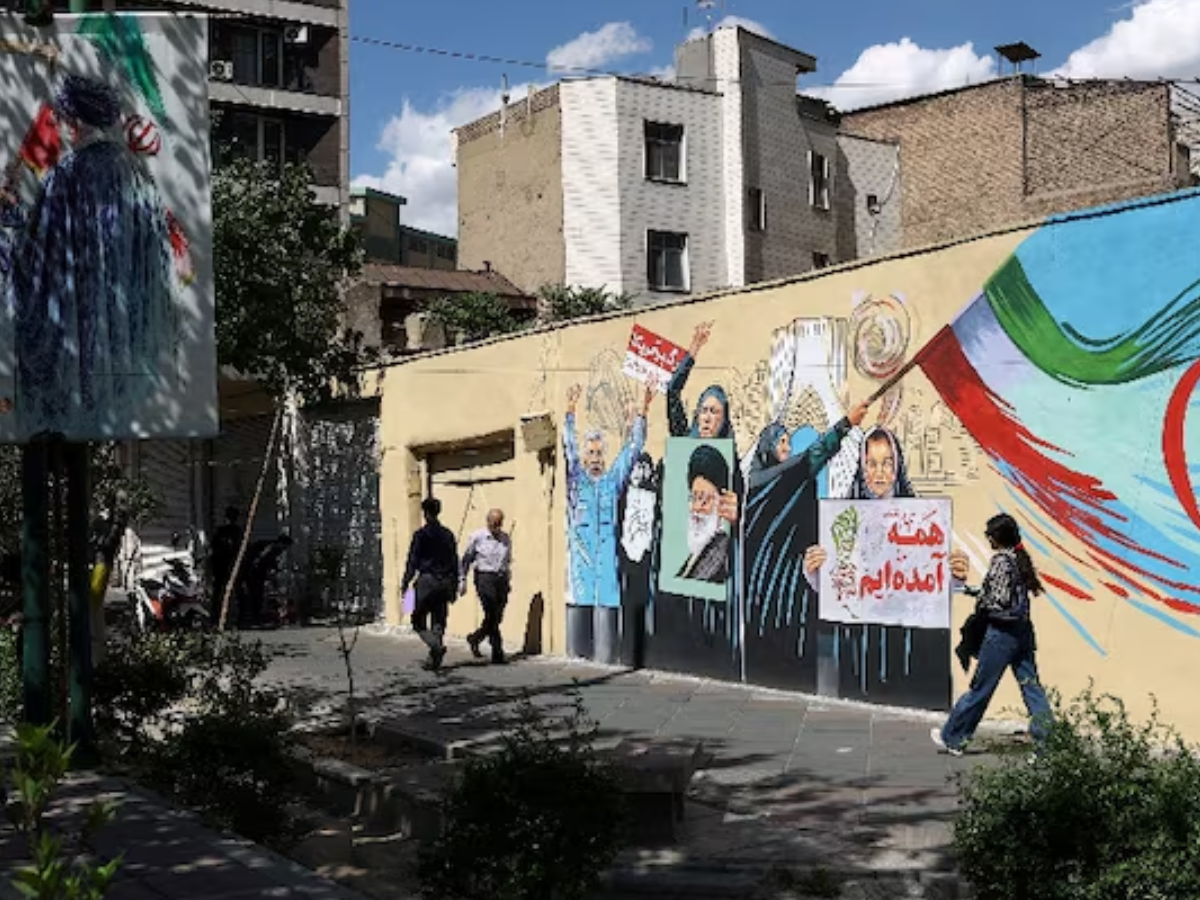
In it for the long haul
The US-Iran confrontation appears stuck in a dangerous “sideways” pattern—neither war nor peace. A limping ceasefire buys time, but instability persists for both sides and the region.

It now seems increasingly possible that the US-Iran confrontation will last in its present form indefinitely: not quite war, not quite peace, not quite diplomacy, and not quite breakdown. The latest signal from Washington, where President Donald Trump described the ceasefire as close to collapse after rejecting Tehran’s response to a US proposal, confirms what has become obvious: the crisis is no longer moving in a straight line toward either settlement or escalation. It is moving sideways.
This is the most dangerous kind of geopolitical normal. A formal war produces horror, but it also produces clarity. A settlement produces relief, even if temporary. What the region now has is something more unstable: a permanent seesaw between threats and openings, strikes and pauses, ultimatums and backchannels. Each side declares resolve. Each side signals restraint. Neither appears ready to accept the costs of defeat, yet neither can comfortably bear the costs of a wider conflict.
For Washington, the limits are political, military and economic. A prolonged conflict with Iran would stretch American power while the US is already managing pressures in Europe, Asia and at home. It would risk oil shocks, shipping disruptions and another open-ended Middle Eastern entanglement that even many hawks would struggle to defend if casualties and prices began to rise. Trump may prefer the language of dominance, but even dominance has a balance sheet.
For Tehran, the calculation is equally harsh. Iran cannot afford a war that further weakens its economy, exposes its infrastructure, and invites deeper isolation. Yet it also cannot accept terms that look like surrender, particularly on issues tied to sovereignty, deterrence and regime legitimacy. That leaves Iran with a familiar strategy: resist enough to avoid capitulation, negotiate enough to avoid catastrophe.
This is why the ceasefire keeps dying without quite dying. It is not strong enough to become peace, but it is still useful enough to prevent full-scale war. It gives both sides room to posture before domestic audiences while buying time in the background. Its weakness, paradoxically, is also its function.
For Pakistan, the lesson should be sobering. A conflict that remains suspended rather than resolved can still disturb energy prices, shipping routes, investor sentiment and regional diplomacy. Islamabad cannot assume that a pause is stability, or that mediation has succeeded simply because guns have gone quieter.
The long haul now looks less like a choice than a condition. The region may have to live with a ceasefire that limps, negotiations that restart and collapse, and leaders who threaten escalation while quietly fearing it. That is not peace. But for now, it may be the only arrangement both Washington and Tehran can afford.

The Editorial Department of Pakistan Today can be contacted at: [email protected].
View all articles →Comments
No comments yet. Be the first to join the discussion!