May 2, 2026
Trump faces prolonged fallout as Iran standoff shows no clear end
A prolonged US-Iran standoff is raising political, economic and strategic costs for President Donald Trump, with no clear path to a settlement. Several of Trump’s stated war aims remain unmet as negotiations stay deadlocked.

May 2, 2026
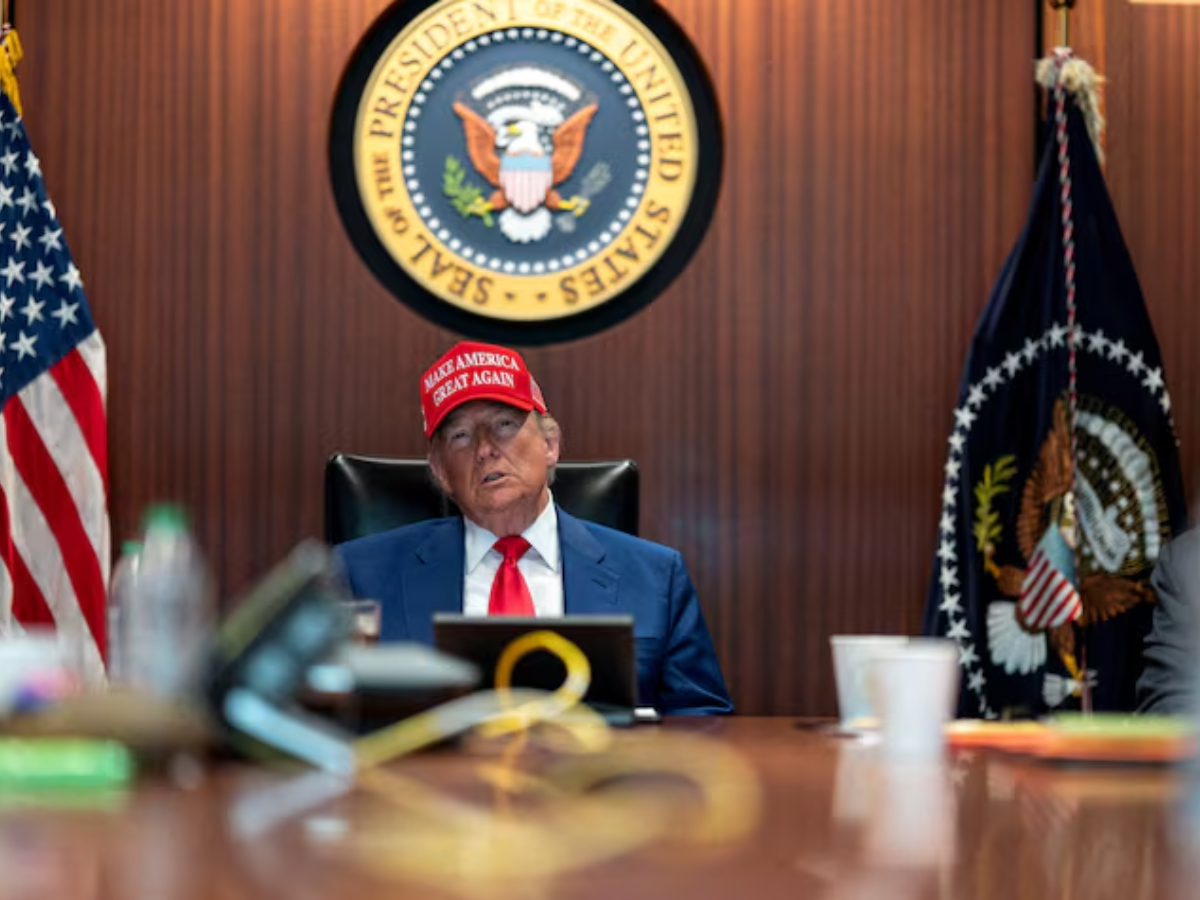
WASHINGTON: More than two months into a conflict that has not produced a decisive military or diplomatic outcome, US President Donald Trump is facing the prospect that the confrontation with Iran could continue for an extended period and leave Washington confronting a larger challenge than before the war began.
The impasse has persisted with both sides publicly projecting confidence and remaining far apart on key issues. Although Iran has put forward a fresh proposal to resume negotiations, Trump rejected it on Friday. He later told reporters he was not satisfied with the offer, while adding that contacts were continuing by phone.
The prolonged deadlock carries political and economic risks for Trump and the Republican Party. An unresolved conflict is likely to prolong wider economic disruption, including elevated gasoline prices in the United States, adding to pressure on a president whose approval ratings have declined ahead of November’s midterm congressional elections.
War aims remain unmet
US and Israeli strikes have significantly weakened Iran’s military capabilities, but several of Trump’s stated objectives remain unachieved. These include goals that have shifted over time, ranging from regime change to blocking Iran’s route to a nuclear weapon.
Concerns over a longer stalemate have increased since Trump cancelled a planned trip by his negotiators to Islamabad last weekend and then rejected an Iranian proposal to stop the war, which had been suspended since April 8 under a ceasefire arrangement.
Tehran had proposed postponing discussion of its nuclear programme until the conflict was formally over and an agreement had been reached on reopening the Strait of Hormuz. Trump rejected that approach, insisting that the nuclear issue must be addressed at the outset.
There was some sign of movement on Friday when Iran’s state news agency IRNA reported that Tehran had sent a revised proposal through Pakistani mediators. The development contributed to a fall in global oil prices, which had surged after Iran effectively shut the strait.
not satisfied
That was how Trump described the latest Iranian proposal when speaking to reporters.
Failure to remove Iranian control over the key oil shipping route by the end of the conflict would represent a major setback for Trump. Laura Blumenfeld, a Middle East expert at Johns Hopkins University in Washington, said, “He’d be remembered as the US president who made the world less safe,”
White House spokeswoman Olivia Wales said Iran’s “desperation” was growing under military and economic pressure and that Trump “holds all the cards and has all the time he needs to make the best deal.”
Options under discussion
With no clear endgame in sight, Trump has in private meetings discussed the possibility of a lengthy naval blockade of Iran, potentially lasting for months, aimed at further restricting its oil exports and pressuring Tehran into a denuclearisation agreement, a White House official said on condition of anonymity.
At the same time, the option of renewed military action remains open. Axios reported on Thursday that US Central Command had prepared plans for a “short and powerful” wave of strikes as well as for taking control of part of the strait to reopen it to shipping.
European diplomats said their governments expected the current situation to continue. One diplomat, speaking on condition of anonymity, said, “It's hard to see how this will end soon,”
Iran, meanwhile, has maintained a defiant posture. Tehran has used its leverage by disrupting shipping in the Strait of Hormuz, through which one-fifth of the world’s oil had moved before the war. Analysts said Iran may emerge from the conflict with greater confidence in its ability to use that pressure point in future.
Jon Alterman of the Centre for Strategic and International Studies in Washington said, “Iran has realised that, even in a weakened state, it can shut off the Strait at will,” He added, “That knowledge leaves Iran stronger than it was before the war.”
Nuclear issue unresolved
Trump, who entered office pledging to avoid foreign entanglements, has also not achieved his main declared objective in launching the February 28 attack on Iran: closing off Tehran’s path to a nuclear weapon. A stockpile of highly enriched uranium is believed to remain buried after US and Israeli strikes last June and could still be recovered and processed further into bomb-grade material.
Iran has said it wants the United States to recognise its right to enrich uranium for what it describes as peaceful purposes. Wales, however, said Trump had “met or surpassed” all military objectives, including action “to ensure that Iran can never have a nuclear weapon.”
Another declared objective — compelling Iran to end support for proxy groups including Hezbollah, the Houthis and Hamas — also remains unmet. Defence Secretary Pete Hegseth, in testimony before Congress, rejected the suggestion that the conflict had become a “quagmire,” even though Trump had initially predicted it would end within four to six weeks.
Renewed peace efforts are unlikely to produce a quick breakthrough because of the wide gaps between the two sides. While Trump has said he will accept nothing short of a long-term answer to the threat posed by Iran, he has at times also appeared to be looking for a way out of a conflict that has become politically costly.
According to Reuters, US intelligence agencies are examining how Iran might respond if Trump were to declare a unilateral victory and scale back. Independent analysts said Tehran would likely see such a move as a strategic success after withstanding the military campaign.
Political costs at home and abroad
Some analysts believe the war could settle into a frozen conflict with no lasting resolution. Such an outcome could prevent Trump from significantly reducing the US military footprint in the Middle East.
It has also created broader strategic costs for Washington, including strains with European allies who were not consulted before the war. Trump has criticised NATO partners for not deploying naval forces to help reopen the strait and has recently spoken about possibly reducing troop levels in Germany, Spain and Italy.
He is also dealing with a more hardline leadership in Iran, now dominated by the Islamic Revolutionary Guard Corps after US-Israeli strikes killed several senior figures, including Supreme Leader Ayatollah Ali Khamenei. Trump’s early call for Iranians to rise up against their rulers has not been heeded.
At home, the political pressure has intensified. Trump’s approval rating has fallen to 34%, according to a Reuters/Ipsos poll, while gasoline prices have climbed above $4 a gallon ahead of midterm elections in which Republicans risk losing control of Congress.
A second White House spokeswoman, Taylor Rogers, said Trump remained focused on preserving his party’s congressional majority and described high gasoline prices as only “short-term disruptions” that would ease as the conflict subsides.
Iranian leaders are aware of Trump’s domestic difficulties and may seek to outlast him politically, even as they face their own economic pressures. Sina Toossi, a senior fellow at the Centre for International Policy, said, “Iran isn’t fractured or folding, it’s playing for time,”
0 Comments
No comments yet. Be the first to join the discussion!