Trump faces mounting questions over Iran war three months after US attack
Three months after the US attack on Iran, President Donald Trump is facing growing questions over whether military gains can be converted into a broader strategic success. Analysts cited in a report say several of Washington’s stated war aims remain unmet.

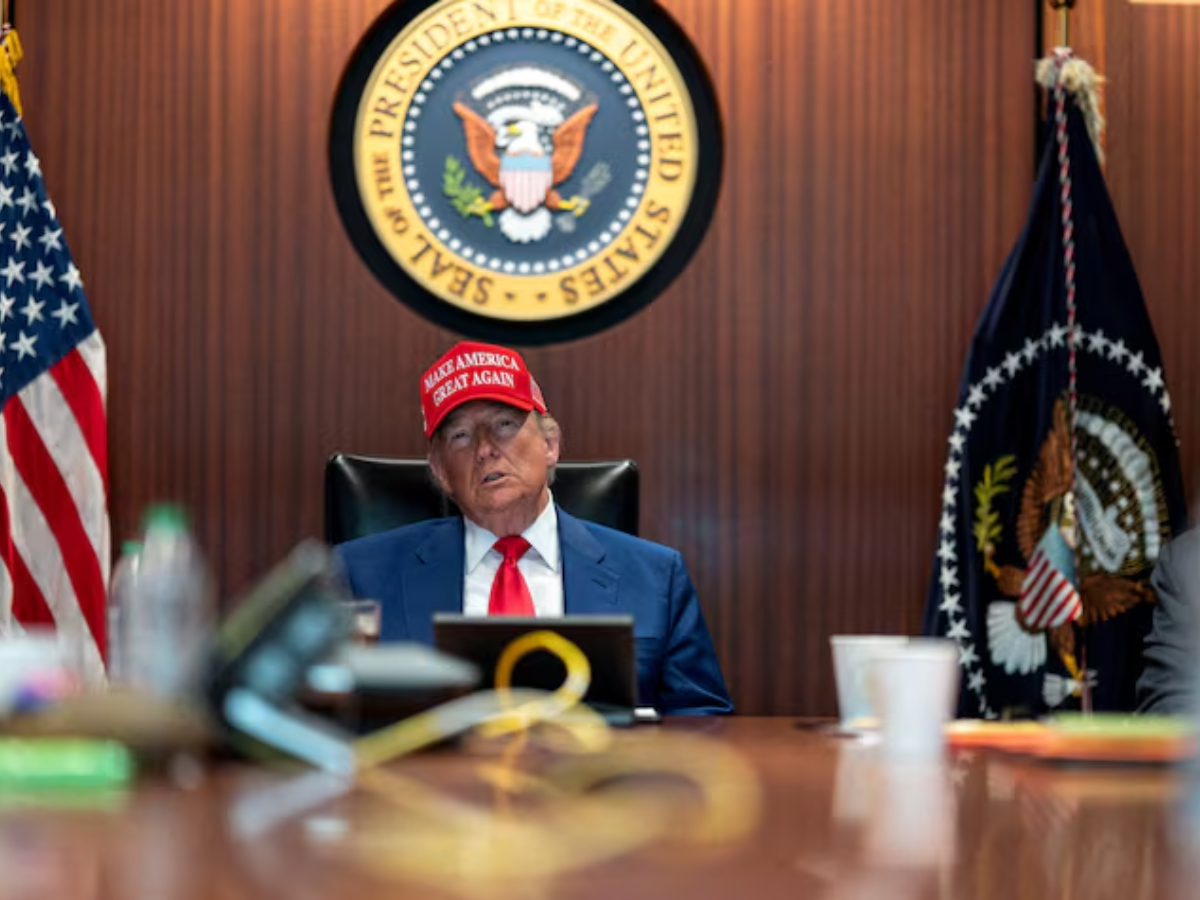
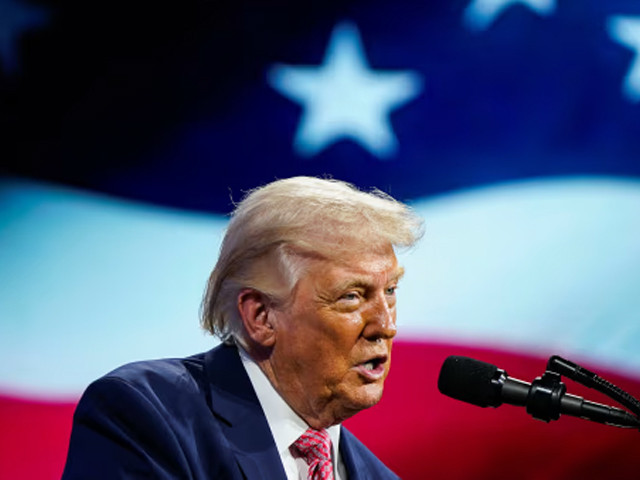
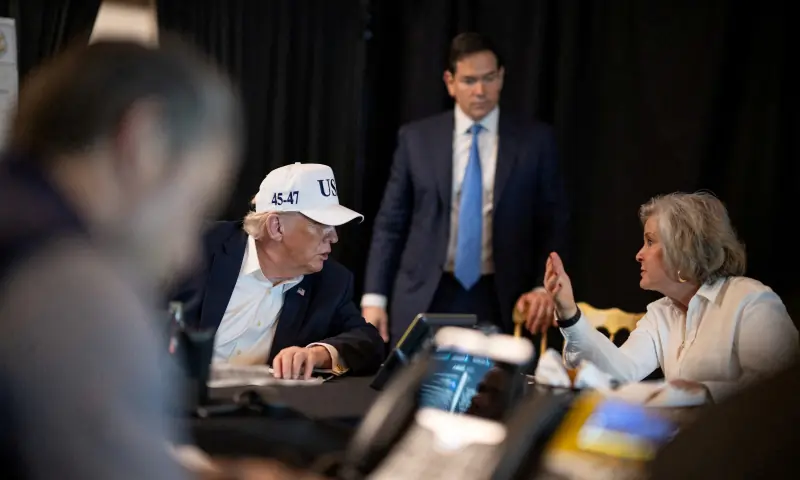
WASHINGTON: Three months after the United States attacked Iran, President Donald Trump is confronting growing scrutiny over whether he can turn battlefield gains into a broader political and strategic outcome that can be presented as a success.
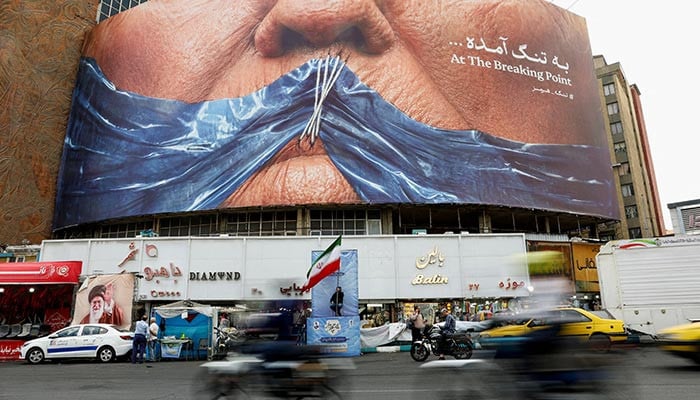
Iran still retains leverage through its control over the Strait of Hormuz, has not accepted major nuclear concessions and remains governed by an intact state structure. That has fuelled doubts among analysts over Trump’s repeated declarations of total victory as the two sides remain caught between uncertain diplomacy and renewed US threats of further strikes, which could trigger Iranian retaliation across the region.
Trump now risks a scenario in which the US and its Gulf Arab partners emerge from the conflict in a weaker position, while Iran, despite military and economic damage, could gain additional leverage after demonstrating its ability to disrupt a route carrying one-fifth of global oil and gas supplies.
Some experts said there is still a possibility that Trump could secure an arrangement through negotiations that allows him to step back without appearing to retreat. Others, however, painted a far bleaker picture.
Aaron David Miller, a former Middle East negotiator for both Republican and Democratic administrations, said the conflict was increasingly looking like a strategic setback for Trump.
“We’re three months in, and it’s looking like a war that was designed to be a short-term romp for Trump is turning into a long-term strategic failure,” said Aaron David Miller, a former Middle East negotiator for Republican and Democratic administrations.
The White House rejected that assessment. Spokeswoman Olivia Wales said the US had achieved or exceeded all of its military goals in Operation Epic Fury.
“President Trump holds all the cards and wisely keeps all options on the table,” she added.
Political and military pressure
Trump returned to office after campaigning against unnecessary military interventions, but has instead drawn the US into a conflict that could leave a lasting mark on his foreign policy record and international credibility.
The continuing standoff comes as he faces pressure at home over high gasoline prices and weak approval ratings after entering an unpopular war ahead of November’s midterm elections. The Republican Party is struggling to keep control of Congress.
More than six weeks after a ceasefire began, some analysts believe Trump faces a difficult choice between accepting an imperfect agreement as an exit route or escalating militarily and risking a longer confrontation. Among the options discussed by analysts is a new round of limited but forceful strikes that could be presented as a final success. Another possibility raised was an attempt by Trump to shift attention to Cuba, which he has suggested, in the hope of pursuing what might appear to be an easier victory.
Some Trump aides have privately acknowledged that he wrongly believed the Iran operation would resemble the January 3 raid that captured Venezuela’s president and led to his replacement.
Alexander Gray, a former senior adviser during Trump’s first term and now chief executive officer of the American Global Strategies consultancy, disputed the view that the Iran campaign was faltering. He said the damage inflicted on Iran’s military amounted to a strategic success, that Gulf states had moved closer to Washington and further from China, and that the final outcome for Iran’s nuclear programme had yet to be decided.
Still, there are indications of Trump’s frustration over his inability to shape public perceptions of the war. He has lashed out at critics and accused the news media of treason.
The conflict has now lasted twice as long as the maximum six-week period Trump had outlined when he joined Israel in launching the war on February 28. While his MAGA base has remained supportive, signs of division have emerged among Republican lawmakers who had initially backed him almost unanimously.
At the start of the war, waves of air strikes sharply reduced Iran’s ballistic missile stockpile, destroyed much of its navy and killed many senior leaders. Tehran responded by blocking the Strait of Hormuz, driving up energy prices, and launching attacks on Israel and Gulf states. Trump later ordered a blockade of Iranian ports, but that move also failed to force Tehran to yield.
Core objectives remain unresolved
Trump had framed the war around several goals: preventing Iran from obtaining a nuclear weapon, ending its ability to threaten the region and US interests, and making it easier for Iranians to remove their rulers. There is no indication these shifting objectives have been met, and many analysts believe they are unlikely to be achieved.
Jonathan Panikoff, a former deputy national intelligence officer for the Middle East, said Iran’s leadership appears to regard mere survival after the US assault as a success and has learned how much influence it can exert over Gulf shipping.
“What they discovered is they can exercise that leverage and with few consequences for them,” said Panikoff, now at the Atlantic Council think tank, adding that Iran appeared confident it could tolerate more economic pain than Trump and outlast him.
Trump’s central stated objective of denuclearising Iran also remains unmet. Tehran has shown little readiness to significantly curb its programme. A stockpile of highly enriched uranium is believed to remain buried after US and Israeli air strikes last June and could still be recovered and enriched further to weapons grade. Iran, meanwhile, says it wants the US to recognise its right to enrich uranium for what it describes as peaceful purposes.
Some analysts said the war may ultimately increase Iran’s incentive to pursue a nuclear weapon as a deterrent, similar to North Korea. Another declared Trump objective, ending Iranian support for armed proxy groups, also remains unfulfilled.
Trump is now dealing with a new Iranian leadership seen as even more hardline than the previous one. After the war, those leaders are still expected to retain enough missiles and drones to continue threatening neighbouring states.
Beyond the battlefield, the conflict has further strained US ties with traditional European allies, most of whom have declined Trump’s requests for help in a war they were not consulted on. China and Russia have drawn lessons from the US military’s difficulties against Iran’s asymmetric tactics and from the depletion of some American weapons supplies.
Robert Kagan, a senior fellow at the Brookings Institution, argued in a recent commentary on The Atlantic’s website that the outcome could prove more damaging to US standing than the withdrawals from Vietnam and Afghanistan because those wars were fought far from the main arenas of global competition.
“There will be no return to the status quo ante, no ultimate American triumph that will undo or overcome the harm done,” he wrote in a recent commentary entitled Checkmate in Iran on the Atlantic magazine’s website.
Comments
No comments yet. Be the first to join the discussion!