May 6, 2026
Poor urban planning disrupts traffic flow
Lahore’s signal-free corridor plan is drawing criticism as residents, planners and officials say narrow U-turns are causing congestion, delays and accidents. More than 130 signals were removed over two decades under the traffic management initiative.

May 6, 2026
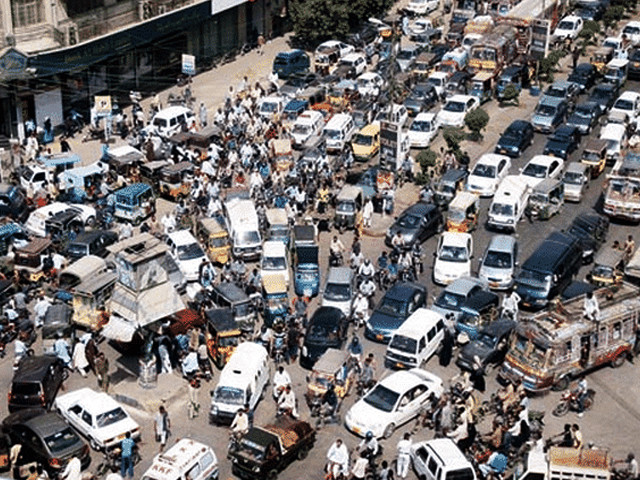
LAHORE: Traffic management changes introduced in Lahore under the city’s signal-free corridor programme are facing growing criticism, with residents and planners saying the replacement of traffic signals with U-turns has added to congestion, raised accident risks and made commuting more difficult, according to a report by The Express Tribune.
Over the past two decades, more than 130 traffic signals in Lahore have been removed and replaced with U-turns intended to improve traffic movement and enhance the city’s appearance. The measures were part of the signal-free corridors initiative launched during former president Pervez Musharraf’s era, alongside flyovers, underpasses and road-widening schemes aimed at easing congestion.
The initiative has brought some improvement in traffic flow in certain areas. However, the sharp rise in the number of vehicles has reduced effective road space on many routes, creating bottlenecks at U-turns and contributing to accidents linked to speeding.
The roads and corridors affected include Canal Road, Jail Road, Ferozepur Road, GT Road, parts of Mall Road, Qartaba Chowk, Azadi Chowk, Walton Road, the Qainchi Flyover area, Defence to Gulberg Boulevard, MM Alam Road, Maulana Shaukat Ali Road, Band Road, Defence Road, Abdul Sattar Edhi Road, Raiwind Road, Pine Avenue and Johar Town Boulevard, among others.
On these roads, traffic signals were removed and small cuts were created to allow U-turns and keep vehicles moving. But in many places, limited road width has left the U-turns too narrow, slowing vehicles and causing traffic build-up. While signal removal has improved movement in some locations, congestion at U-turns often leads to longer travel times, more accidents and increased air pollution from idling vehicles.
Residents report delays and hazards
Residents from different parts of the city described daily difficulties caused by the current layout. Hassan Khalid and Qasim Nagi, who live on Canal Road, said the U-turns create major inconvenience, while traffic police checkpoints set up to catch one-way violators further disrupt movement, turning short trips into long delays.
Zafar Mushtaq, a resident of Mughalpura, said that on Link Road, four traffic signals were removed and replaced with two U-turns. He said traffic movement had improved, but the narrow cuts reduced road width, resulting in jams and fuel wastage.
Nauman Sheikh from Johar Town said the U-turns on Maulana Shaukat Ali Road, which connects Jinnah Hospital to Canal Road and nearby housing societies, are highly dangerous. He said accidents occur daily because both the road and the U-turns offer limited space, while traffic congestion becomes severe during peak hours. Residents have suggested widening both the roads and the U-turns to improve safety and traffic flow.
Officials and planner point to design flaws
Urban planner Mian Sohail Hanif Bhandara criticised the design and execution of the U-turns, saying they had worsened rather than eased traffic conditions.
"U-turns were built without proper consideration of available road space, and many have single-lane cuts instead of the standard double-lane design, which slows traffic further. At traffic signals, drivers can estimate waiting times, but at congested U-turns, it can take up to three times longer to pass. Limited turning space is the main flaw, and widening U-turns would improve traffic flow and reduce accidents," he told The Express Tribune.
Lahore Development Authority Director Iqrar Hussain also acknowledged shortcomings at some locations, saying certain protected U-turns in Lahore have a small turning radius that creates congestion.
"Unnecessary traffic police checkpoints for one-way violations worsen traffic flow. Pedestrian bridges over U-turns are underused, forcing people to cross the road and contributing to accidents. Nearly 100 U-turns were created by removing traffic signals, and authorities are monitoring these locations. Where road widths are insufficient, they are being increased to ensure safer and smoother traffic movement," Hussain told the media outlet.
The report highlights that concerns over the city’s signal-free corridors now centre on whether the existing road design can safely handle Lahore’s growing traffic volume without further widening and redesign at key turning points.
0 Comments
No comments yet. Be the first to join the discussion!