Pakistan voices hope for early resolution of US-Iran conflict as Strait of Hormuz tensions surge
Deputy PM and FM Ishaq Dar says Pakistan’s mediation could end the US-Iran conflict soon, citing advanced “Islamabad Talks.” The Strait of Hormuz faces renewed US-Iran maritime tensions.

DPM Dar says end to Mideast conflict is Pakistan's ‘goal and aim’ as facilitator and mediator
Hopes efforts to mediate end to US-Iran conflict would succeed at earliest, calling it a necessity for 'regional and global stability'
Claims ‘Islamabad Talks’ had reached an ‘advanced stage,’ expressing optimism they would conclude ‘very soon’
Trump dismisses Iran’s military capability, claiming Tehran ‘should wave white flag of surrender,’ asserting US had already destroyed much of its military strength
US President claims Tehran privately sought a deal despite its public rhetoric, praising blockade as tensions escalate in Gulf waters
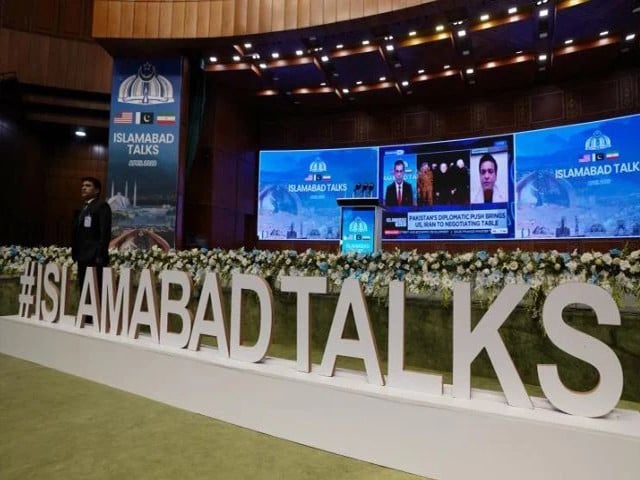
Pakistan brokered April 8 ceasefire and hosted direct US-Iran talks in Islamabad
Iran FM acknowledges Pakistan’s ‘gracious effort’ as maritime tensions intensify in Strait of Hormuz
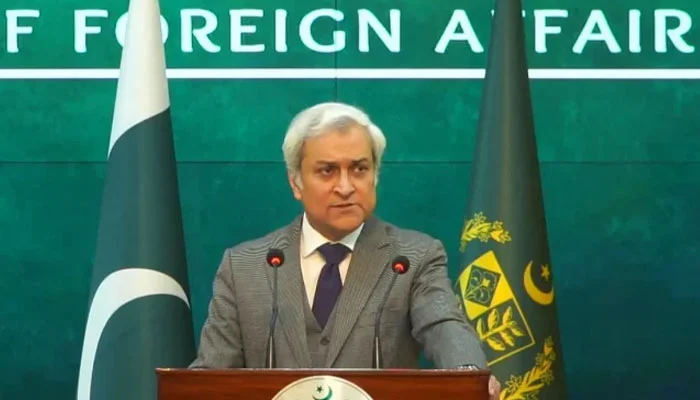
ISLAMABAD/WASHIINGTON/TEHRAN: Deputy Prime Minister and Foreign Minister Ishaq Dar on Tuesday expressed hope that Pakistan’s efforts to mediate an end to the US-Iran conflict would succeed at the earliest, calling it a necessity for regional and global stability.
His remarks came amid heightened tensions in the Gulf, including renewed US maritime actions in the Strait of Hormuz and a strong Iranian response, with Tehran warning of retaliation against any escalation involving countries hosting US bases.
US President Donald Trump on Tuesday dismissed Iran’s military capability, claiming Tehran “should wave the white flag of surrender,” and asserting that the United States had already destroyed much of its military strength.
Speaking to reporters in the Oval Office, Trump said Iran’s forces had been reduced to firing “peashooters” and claimed Tehran privately sought a deal despite its public rhetoric.
BREAKING: Trump: We have completely destroyed Iran's army, Iran's government is full of 'sick people' whom the US will never allow to have nuclear weapons
🔴 LIVE updates: https://t.co/lJa1iSocDR pic.twitter.com/8z4257sGnd— Al Jazeera Breaking News (@AJENews) May 5, 2026
“They play games, but let me just tell you, they want to make a deal. And who wouldn’t, when your military is totally gone?” he said.
“Whatever has happened so far has already dented global GDP to a great degree,” Ishaq Dar told foreign ambassadors and members of the diplomatic corps in Islamabad, reiterating that ending the Middle East conflict remained Pakistan’s “goal and aim” as facilitator and mediator.
He said Pakistan was actively working to bring the United States and Iran back to the negotiation table to secure a peaceful settlement.
“Pakistan has consistently supported stability and restraint in the Middle East,” the deputy prime minister said, adding that he had engaged with around 120 international counterparts since the outbreak of hostilities as part of Pakistan’s diplomatic outreach.
Meanwhile, Trump praised the US blockade of Iranian maritime routes, describing it as highly effective.
“It’s like a piece of steel. Nobody is going to challenge the blockade, and I think it’s working out very well,” he said.
Asked what would constitute a violation of the ceasefire, Trump said: “Well, you’ll find out, because I’ll let you know… they know what not to do.”
He further claimed that Iran “should wave the white flag of surrender,” adding: “If this were a fight, they’d stop it.”
Trump also said the Iranian military had been severely weakened.
“We beat them very badly. Now they’re reduced to little boats with machine guns on the front of them,” he said, claiming that Iran’s navy had been destroyed and that “every single ship they had is resting underwater at the bottom of the sea.”
Back in Islamabad, FM Dar said his engagements with global partners reflected Pakistan’s seriousness in facilitating a truce between Washington and Tehran.
Deputy Prime Minister/Foreign Minister Senator Ishaq Dar briefed the Diplomatic Corps on the first anniversary of #MarkaEHaq, describing it as a symbol of Pakistan’s unity, resilience, and the unwavering resolve of its Armed Forces to defend the country’s sovereignty and… pic.twitter.com/i5CaPGebh2
— Ministry of Foreign Affairs - Pakistan (@ForeignOfficePk) May 5, 2026
He recalled that Pakistan emerged as a key mediator after hostilities began on February 28, following US-Israel strikes on Iran.
After six weeks of conflict, Pakistan brokered a two-week ceasefire on April 8 and later hosted direct talks between the two sides in the federal capital.
Dar said the “Islamabad Talks” held on April 10 and 11 had reached an “advanced stage,” expressing optimism that they would conclude “very soon.”
“We still hope that it will eventually and very soon conclude,” he said.
He said Pakistan had continuously engaged both Iran and the United States since brokering the ceasefire, adding that Islamabad had helped bring both sides to the negotiating table for direct talks for the first time in 47 years.
The deputy prime minister said Pakistan’s mediation efforts had been acknowledged internationally, adding that the country remained in constant contact with global stakeholders as part of its peace efforts.
“The objective is common—that this conflict ends in a dignified manner. It should be a win-win,” he said.
However, Dar noted that Pakistan could not publicly share detailed aspects of its mediation efforts due to the sensitive nature of the process.
His remarks came hours after Iranian Foreign Minister Abbas Araghchi said talks with the United States were progressing with Pakistan’s “gracious effort,” reiterating that there was no military solution to the crisis.
The Iranian foreign minister’s statement followed renewed hostilities between Washington and Tehran in the Gulf on Monday, as both sides escalated tensions over control of the Strait of Hormuz through competing maritime restrictions.
Saudi Arabia urges support for Pakistani mediation
In related development, Saudi Arabia called on Tuesday for exercising restraint and supporting Pakistan-led mediation efforts to reach a political settlement between Iran and the US amid ongoing regional tensions.
Saudi Arabia "calls for de-escalation, restraint, and support for Pakistani mediation and diplomatic efforts to reach a political solution that prevents the region from sliding into further tension and instability, which would not serve the interests of the region and the world," the Foreign Ministry said in a statement on X.
#Statement | The Foreign Ministry expresses the Kingdom of Saudi Arabia’s concern regarding the current military escalation in the region and calls for de-escalation, restraint, and support for Pakistani mediation and diplomatic efforts to reach a political solution that prevents… pic.twitter.com/qHeULfDivT
— Foreign Ministry 🇸🇦 (@KSAmofaEN) May 5, 2026
Expressing concern regarding the "current military escalation in the region," the ministry called for restoring maritime navigation in the Strait of Hormuz to its pre-war state. Riyadh "calls for ensuring the safe and secure passage of vessels without restriction," it added.
The statement came as the situation escalated in the Gulf on Monday, with the United Arab Emirates accusing Iran of launching 15 missiles and four drones on its territory, and Tehran claiming it fired warning shots after US destroyers operating near the Strait of Hormuz ignored initial alerts.
Nuclear program
On Iran’s nuclear programme, he said: “These are sick people, and we’re not going to let lunatics have a nuclear weapon.”
He also said the US engaged in a small military skirmish, without providing details.
Yesterday, the US Centcom claimed it sank six small Iranian boats in the Hormuz waters during the US-launched “Operation Freedom.” An initiative designed to escort cargo ships through the Strait of Hormuz, bypassing the Iranian blockade.
Hegseth says 'ceasefire is not over'
Earlier, US Defence Secretary Pete Hegseth said that a US operation to protect commercial ships from Iran in the Strait of Hormuz was temporary, Washington was not looking for a fight, and the ceasefire with Iran was still in effect.
"The ceasefire is not over," Hegseth told reporters.
"We said we would defend and defend aggressively, and we absolutely have. Iran knows that, and ultimately, the president can make a decision whether anything were to escalate into a violation of a ceasefire," he said.
A fragile truce in the Middle East was under strain on Tuesday after the US and Iran exchanged fire in the Gulf as they wrestled for control of the Strait of Hormuz.
Remarks to media today from Adm. Brad Cooper, CENTCOM commander, on Project Freedom: pic.twitter.com/kIFFLf2vpd
— U.S. Central Command (@CENTCOM) May 4, 2026
US President Donald Trump launched a new operation, called Project Freedom, on Monday as he sought to wrest control of the critical waterway from Iran, which effectively closed the Strait of Hormuz after the US and Israel started the conflict on February 28.
Hegseth said that Iran does not control the strait
"Project Freedom is defensive in nature, focused in scope and temporary in duration, with one mission, protecting innocent commercial shipping from Iranian aggression. American forces won't need to enter Iranian waters or airspace. It's not necessary. We're not looking for a fight," Hegseth said.

Comments
No comments yet. Be the first to join the discussion!