Asia faces uneven economic strain as Iran war disrupts energy supplies
Asian governments are absorbing rising energy costs after disruption linked to the Iran war cut oil flows and strained public finances. Pakistan, Bangladesh and Sri Lanka were identified by S&P Global Market Intelligence as among the most vulnerable in South Asia.

SINGAPORE: Governments across Asia are trying to secure alternative energy supplies and protect their economies from the fallout of the energy crisis triggered by the Iran war, but the financial burden is rising unevenly across the region.
The disruption prompted the Asian Development Bank to lower its growth forecast for developing Asia and the Pacific to 4.7 per cent this year and 4.8pc in 2027, down from 5.1pc for both years earlier. It also raised its inflation outlook for this year to 5.2pc.
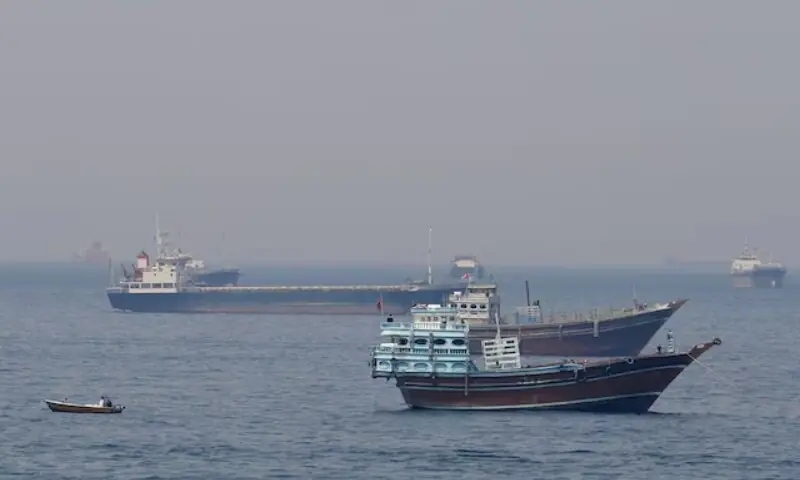
According to Kpler data cited in the report, Asia’s overall oil imports fell 30pc in April from a year earlier to their lowest level since October 2015. The decline followed two months of the near-closure of the Strait of Hormuz, a vital route for around a fifth of global oil and gas supplies. Asia receives 85pc of Gulf crude shipments.
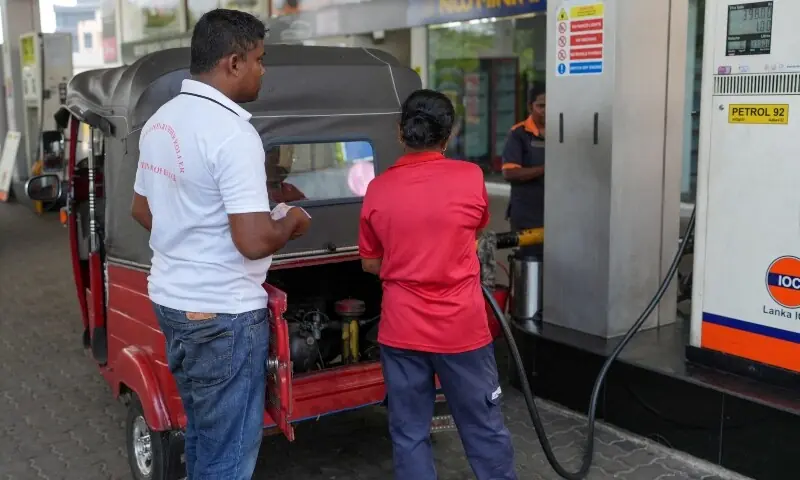
Governments, particularly in South Asia, are facing growing fiscal pressure as they spend billions of dollars on subsidies and waive import duties to soften the impact on consumers.
"The first line of defence … is that the governments decided to absorb the initial shock by either providing subsidies or cutting excise duties on fuel products," Hanna Luchnikava-Schorsch of S&P Global Market Intelligence said.
Pressure on currencies and public finances
Emerging market currencies in Asia have weakened more sharply against the dollar than many global peers. Since the war began at the end of February, the Philippine peso has fallen more than 5pc, while the Thai baht and the rupee have each dropped more than 3pc. The rupiah is down more than 2.5pc. In contrast, China’s yuan has risen 0.8pc against the dollar, Japan’s yen is 0.4pc above pre-war levels after intervention, and South Korea’s won has declined about 1.1pc.
S&P Global Market Intelligence said Pakistan, Bangladesh and Sri Lanka are the South Asian economies most exposed to the pressures created by the crunch. In Pakistan’s case, the country recently issued its first tenders since 2023 to purchase liquefied natural gas. It is seeking to replace supplies it cannot obtain from Qatar, paying $18.88 per million British thermal unit for one cargo, or about $30 million more than market prices before the war, according to Reuters calculations.
"These countries use more of their resources on subsidising domestic public energy enterprises and basically shielding the final consumers from the energy price shock," Luchnikava-Schorsch said and added, "these are also the countries which have the slimmest fiscal buffers.
She said regional economies were still in a better position than they were when the Ukraine war triggered the previous energy shock in 2022.
Different responses across the region
Countries have adopted different strategies depending on their circumstances. India’s state-led refining sector has kept fuel prices unchanged despite the jump in crude costs, absorbing losses of about 100 Indian rupees per litre on diesel and 20 rupees on gasoline. Some analysts, however, expect price increases after state elections ended in April.
China has relied on large reserves, a diversified energy supply chain and restrictions on exports of fuel and fertiliser, though Beijing has made exceptions for some regional buyers including Australia and Myanmar.
Goldman Sachs said the economic impact on Asia has so far been less severe than feared, even as governments draw on fiscal resources, foreign exchange reserves and oil inventories. Still, it cut its 2026 growth forecasts for Japan and some Southeast Asian economies and slightly raised inflation expectations. "How much of the resilience thus far reflects structural factors versus unsustainable declines in buffer stocks?" its analysts said in a note.
Elsewhere, Indonesia has instructed operators to prioritise domestic demand over exports and is stopping LNG shipments that are not under contract. The country is also seeking oil supplies from Africa and Latin America and plans to buy 150 million barrels from Russia by the end of the year.
In Thailand, a source at a state-owned refiner said the company had halted crude purchases as national refined product stocks increased after refineries raised output and a government export ban took effect. The source added that restrictions on energy use and high prices had also reduced demand.
Japan, which sources 95pc of its oil from the Middle East, has increased purchases of US crude despite higher spot prices and longer shipping times. On Friday, Japan started releasing 36 million barrels of crude from stockpiles, marking its second such release since the war began.
Comments
No comments yet. Be the first to join the discussion!