

April 30, 2026
Gutka trade persists in Sindh despite law and repeated crackdowns
KARACHI: Gutka use and trade continue across Sindh despite a 2019 law and repeated crackdowns. Court observations, police data and legal experts point to weak investigations and almost no convictions.

April 30, 2026
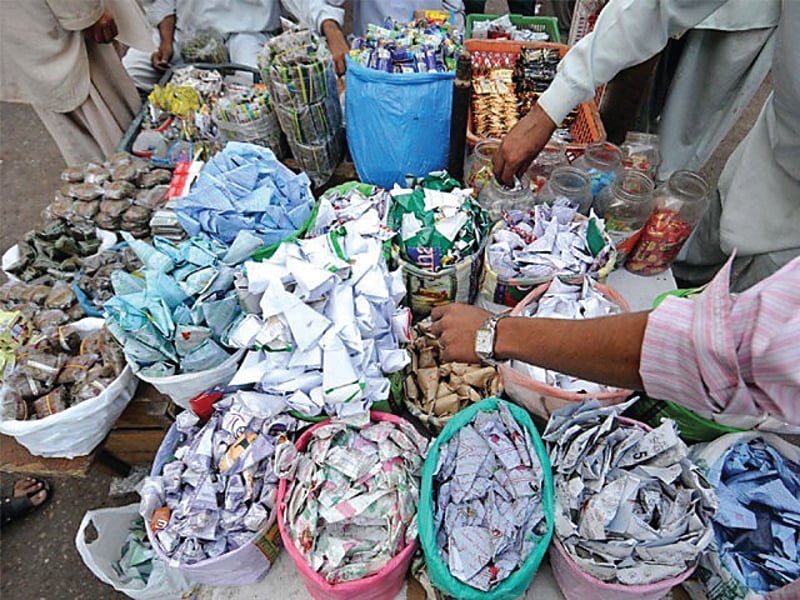
KARACHI: The illegal trade and widespread consumption of gutka continue across Sindh despite legislation and periodic enforcement drives, with weak investigations and a low conviction rate allowing many suspects to avoid punishment.
The issue came under renewed attention during proceedings related to the bail plea of Muhammad Tahir, a gutka dealer arrested in Karachi in 2021 by Sharafi Goth police. While commenting on the matter, Sindh High Court Justice Adnanul Karim said that, according to the World Health Organization (WHO), the rate of oral cancer among men in Pakistan is the highest in South Asia.
The judge said the overall oral cancer rate in Pakistan is around 4 per cent, while in Karachi it rises to as much as 30 per cent because of gutka use. He further observed that every fifth person in Karachi is addicted to gutka, mainpuri and mawa.
According to police, a large quantity of gutka and raw material used in preparing mawa was recovered from Tahir’s house. The seized items included a mawa packing machine, a mawa mixing machine, 100 kilograms of wet betel nut, 6,600 grams of tobacco, 20 kilograms of lime, 64 kilograms of china powder, 26 kilograms of chemicals and 15,500 grams of prepared mawa. Although Tahir’s bail application was rejected, the broader record of prosecutions remains weak.
Low conviction rate
Legal experts say only about 5 per cent of those arrested in gutka-related cases are ultimately convicted by courts. They attribute this to poor police investigations and weak prosecution.
According to Sindh Police data, 10,194 gutka-related cases were registered in 2019, and 5,500 of them are still pending. The report also said that by the end of 2025, 145 gutka dealers had been arrested, but none had yet been convicted.
The Sindh government enacted the Sindh Prohibition of Preparation, Manufacturing, Storage, Sale and Use of Gutka and Mainpuri Act, 2019, in an effort to curb the manufacture, sale and use of gutka. Initially, such cases were heard by sessions courts, but later amendments shifted jurisdiction to judicial magistrates in an attempt to speed up disposal. Despite that change, the conviction rate has not improved and the law has not delivered the intended outcome.
Under the law, those involved in the preparation and sale of gutka, mawa and mainpuri can face prison terms ranging from one to three years along with fines. Equipment and premises used for these activities may also be sealed and confiscated.
Use reported beyond Karachi
Besides Karachi, the gutka and mawa business continues in other parts of Sindh, particularly Hyderabad, Thatta, Sukkur, Larkana, Mirpurkhas and Sanghar.
Zahid Farooq, an urban planning expert associated with the Urban Resource Centre, said the matter had become a social issue.
"In Karachi, not only men but also women and children use gutka. I personally know several people who developed oral cancer due to gutka use. The police either do not take action against those involved in the gutka trade, or if they do, the suspects are released by courts."
Prominent criminal lawyer Shaukat Hayat said many accused are acquitted because of flawed investigations. He said cases submitted by police often contain legal loopholes, making them difficult to prove in court, and stressed the need for better investigation standards.
According to a Sindh Police spokesperson, a recent meeting chaired by Inspector General of Police Sindh Javed Alam Odho decided to intensify action against those selling gutka and mawa. The spokesperson said the IG directed officers to ensure concrete and effective steps under a coordinated anti-narcotics strategy, adding that complaints linked to drugs adversely affect police performance.
0 Comments
No comments yet. Be the first to join the discussion!


