Rights groups call for housing policy, halt to katchi abadi evictions in Islamabad
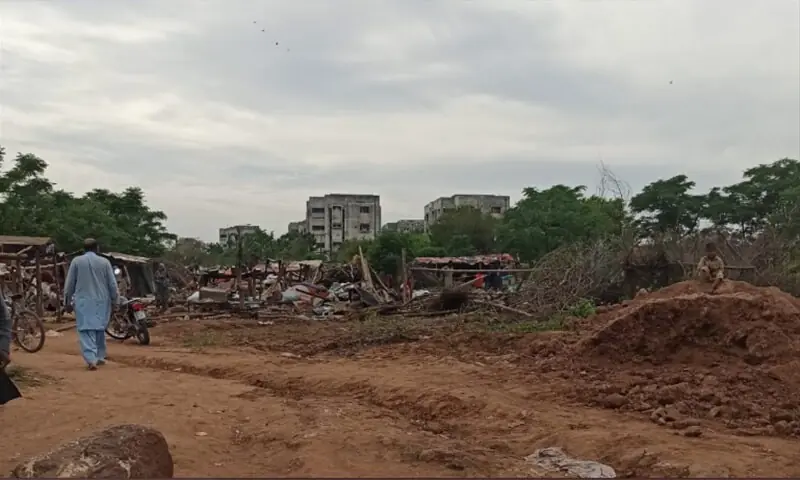
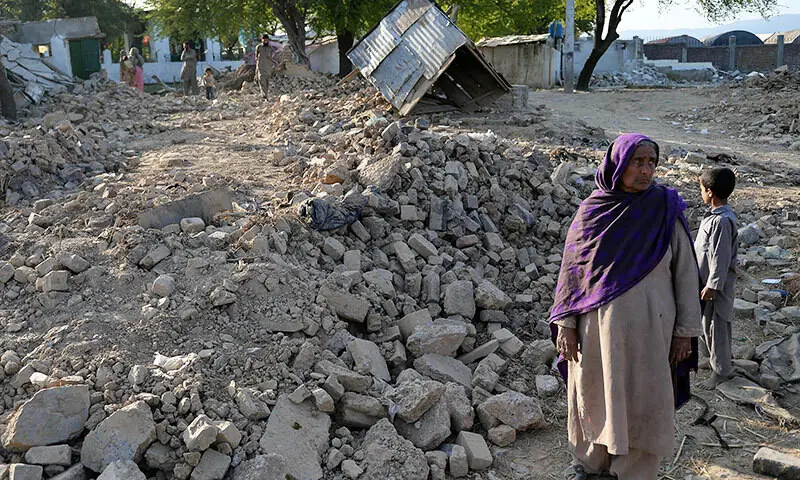
Rights groups, political figures and activists in Islamabad have urged the federal government to frame a housing policy for informal settlements and stop summary evictions. They also objected to the CDA’s proposed framework in the ongoing katchi abadis case.

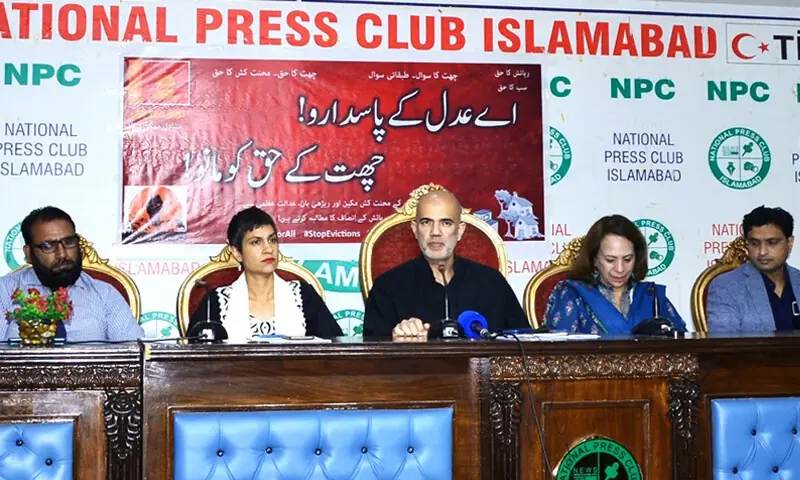
ISLAMABAD: Political leaders, journalists, academics and urban planning experts on Tuesday called on the federal government to put in place a broad policy on informal settlements that guarantees the constitutional right to housing for all citizens.
At a press conference held at the National Press Club, participants associated with the All-Pakistan Alliance for Katchi Abadis, Human Rights Commission of Pakistan, Awami Workers Party, Aurat March, National Commission for Justice and Peace and Alliance for Urban Rights presented written objections addressed to the new Capital Development Authority (CDA) chairman.
The objections sought an end to what the participants described as summary evictions and opposed a proposed regulatory framework that the CDA had submitted to the Federal Constitutional Court in the long-running katchi abadis case pending since 2015.
Among those present were Abid Hasan Minto, Afrasiab Khattak, Farhatullah Babar, Pervez Hoodbhoy, Munizae Jehangir, Shahzeb Jillani, Wusutullah Khan, Arif Hasan, Nadeemul Haque and Alia Amirali, along with the main petitioner, Dr Aasim Sajjad Akhtar.
The speakers said the CDA had consistently failed to fulfil its constitutional responsibility to ensure adequate housing for low-income residents of Islamabad. They also alleged that the authority had repeatedly acted in violation of stay orders issued by superior courts against summary evictions.
They said the CDA was also bound by obligations under its own 1960 ordinance, which, according to them, explicitly refers to the need to regularise slum areas.
Survey and population figures raised
The participants said the CDA had not carried out a comprehensive survey of katchi abadis and other informal settlements since 2002. They noted that during this period Islamabad’s population had increased from 800,000 to nearly 2.4 million.
They further said the CDA continued to recognise only six katchi abadis in the capital, while the federal government’s National Housing Policy 2025 recorded more than 60 katchi abadis in Islamabad with a population of up to 500,000.
The speakers argued that the CDA’s description of katchi abadis as ‘illegal encroachments’ served as a cover for what they called an elitist approach, saying that many gated housing schemes were clearly illegal. They also referred to recent reports that recreational facilities such as the Gun and Country Club and the Islamabad Club had received concessions and were effectively exempted from legal obligations.
Concerns over vendors, villages and environment
Rana Shahbaz of the Anjuman Rehribaan said the CDA also targeted street vendors by regularly confiscating their goods, destroying their carts and imprisoning them for minor offences.
The speakers also voiced concern over what they described as damage to local ecology caused by the CDA’s development policies. They said that along with the destruction of katchi abadis and historic model villages including Saidpur, Malpur and Dhok Talyan, the CDA and the present government had cut down thousands of trees despite court orders and had worsened air quality through unchecked construction activity.
They demanded an immediate halt to the demolition of slums. The participants also referred to recent CDA action, saying Muslim Colony Bari Imam had been completely demolished and that an operation had also been carried out at Shapar Colony in G-7.
Comments
No comments yet. Be the first to join the discussion!