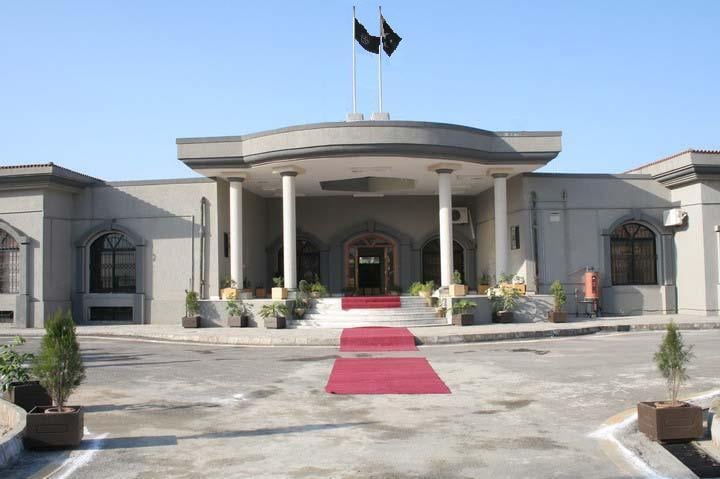
Acting president approves transfer of three Islamabad High Court judges
Acting President Yusuf Raza Gilani has approved the transfer of Justices Mohsin Akhtar Kayani, Babar Sattar and Saman Rafat Imtiaz from the Islamabad High Court. The move follows a Judicial Commission recommendation under Article 200 of the Constitution.

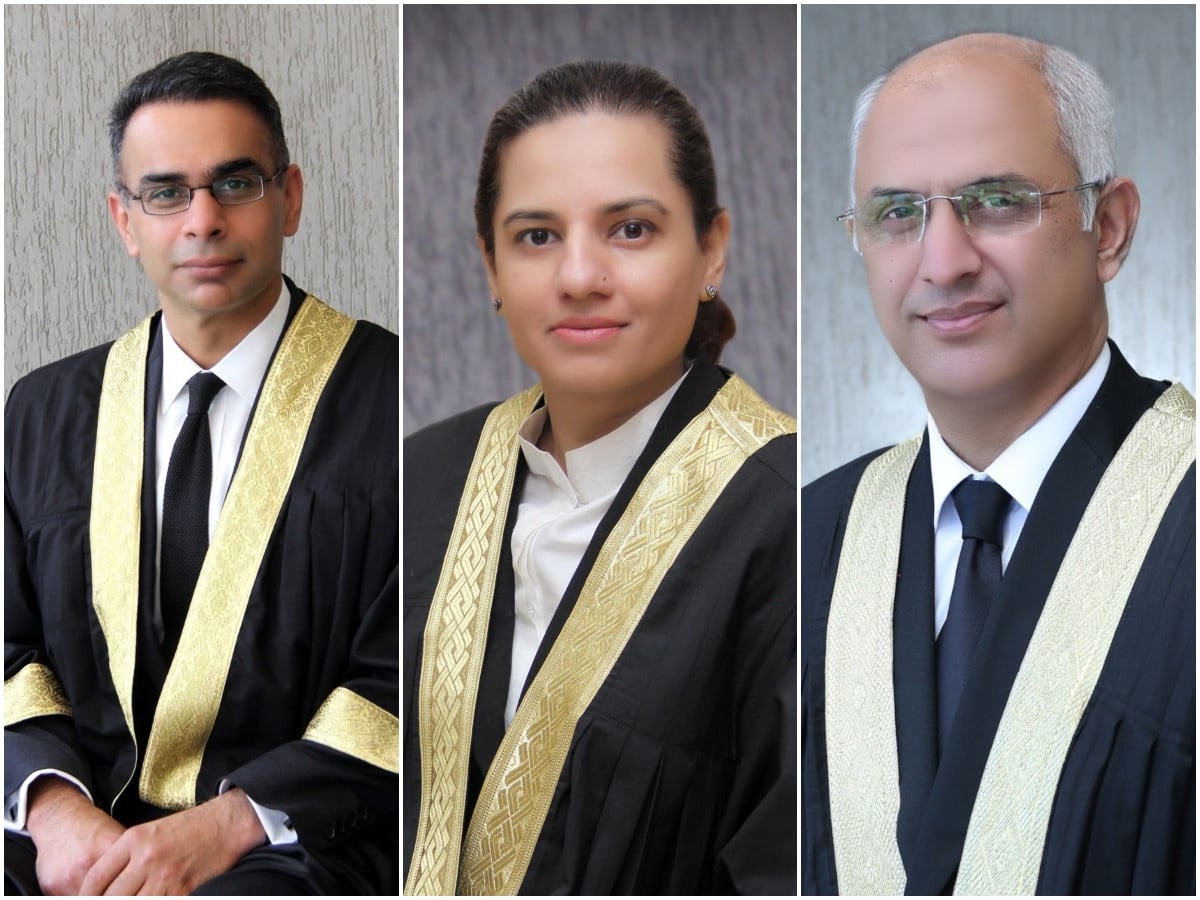
ISLAMABAD: Acting President Yusuf Raza Gilani has approved the transfer of three judges from the Islamabad High Court on the advice of Prime Minister Shehbaz Sharif, according to a notification issued by the Ministry of Law on Wednesday.
The notification said the transfers were made under Article 200(1) of the Constitution and on the recommendation of the Judicial Commission of Pakistan (JCP).
In exercise of the powers conferred under clause (1) of Article 200 of the Constitution of the Islamic Republic of Pakistan, on the recommendation of the Judicial Commission of Pakistan (JCP), the President of the Islamic Republic of Pakistan is pleased to transfer Justice Mohsin Akhtar Kayani to Lahore High Court, Justice Babar Sattar to Peshawar High Court, and Justice Saman Rafat Imtiaz to High Court of Sindh.
A day earlier, the JCP held a series of meetings to examine proposals for the transfer of high court judges. The deliberations took place under the chairmanship of Chief Justice of Pakistan Yahya Afridi.
According to a statement, the meetings were called by the secretary of the Judicial Commission of Pakistan under Article 175A(22) of the Constitution after the commission chairman, while giving reasons, declined to convene a meeting sought by one-third of the total members.
The meetings were convened by the secretary of the Judicial Commission of Pakistan in exercise of powers conferred by clause (22) of Article 175A of the Constitution, as the Chairman of the Commission, while giving reason therefor, declined to convene the meeting on the requisition by one third of the total members.
The statement said the commission discussed several transfer proposals, with the chief justices of the relevant high courts taking part as members of the body. The decisions were taken in line with constitutional powers and the JCP’s procedural rules.
The commission also said proposals to transfer Justice Arbab Tahir and Justice Khadim Hussain Soomro were withdrawn by the members who had requisitioned them. It further decided by majority that any vacancy arising from a judge’s transfer would be filled through additional transfers instead of fresh appointments.
First use of amended transfer provision
The development is the first time the 27th Amendment, passed in November last year, has been applied directly to the high courts. Amendments to Article 200 removed the requirement for a judge’s consent before transfer and allowed the movement of high court judges between provinces on the recommendation of the Judicial Commission.
The three transferred judges were among six Islamabad High Court judges who had written to the Supreme Judicial Council, seeking guidance on how to respond to alleged interference by intelligence agencies in judicial affairs.
Earlier this year, when Justice Sardar Sarfraz Dogar was elevated from the Lahore High Court as chief justice of the Islamabad High Court, the same three judges were among five who did not accept his elevation. They had raised questions over his seniority and the validity of the appointment.
Despite those objections, Justice Dogar took oath as Islamabad High Court chief justice a week later. The five judges who had objected did not attend the oath-taking ceremony, although they had been formally invited.
Background on the transferred judges
Justice Babar Sattar, described in the report as a prominent legal analyst known for outspoken views, was part of Justice Qazi Faez Isa’s legal team in the case challenging the presidential reference filed against him.
The report also recalled a separate controversy involving Justice Saman Rafat Imtiaz last year. She had been heading the Islamabad High Court’s harassment committee but was removed after taking cognisance of a complaint filed by lawyer Imaan Mazari.
The complaint followed a verbal altercation in court involving Islamabad High Court Chief Justice Sarfraz Dogar. It sought an inquiry under the Protection Against Harassment of Women at the Workplace Act to determine whether the chief justice had made gender-based or threatening remarks to Mazari. Justice Saman was subsequently removed from the committee role, and Justice Inaam Ameen Minhas was appointed to head the body.
Justice Mohsin Akhtar Kayani was elevated to the Islamabad High Court bench in December 2015 and is known for rulings in human rights matters, particularly cases involving enforced disappearances.
In March this year, through a 28-page written judgement, Justice Kayani ruled that in the event of divorce, a husband is legally required to return the entire dowry to the wife. He also held that such assets, along with bridal gifts, remain the exclusive property of the woman. The judgement further stated that women are entitled to an equal share in property acquired during marriage, to be divided equally between spouses in cases of divorce or death.
Justice Kayani had also criticised the 27th Amendment during its passage last year. During a hearing related to the Council of Islamic Ideology, he remarked that while the amendment was being processed, the council could also have used the opportunity to seek an expansion of its own authority, quipping that it might have sent proposals for enhanced powers as well.
Comments
No comments yet. Be the first to join the discussion!