

April 28, 2026
Chitral’s Kalash valleys placed on Unesco World Heritage Tentative List
The Kalash valleys in Chitral have been added to Unesco’s World Heritage Tentative List, marking a key step toward possible full inscription. Officials said the move would help preserve both the tangible and intangible heritage of the Kalasha community.

April 28, 2026
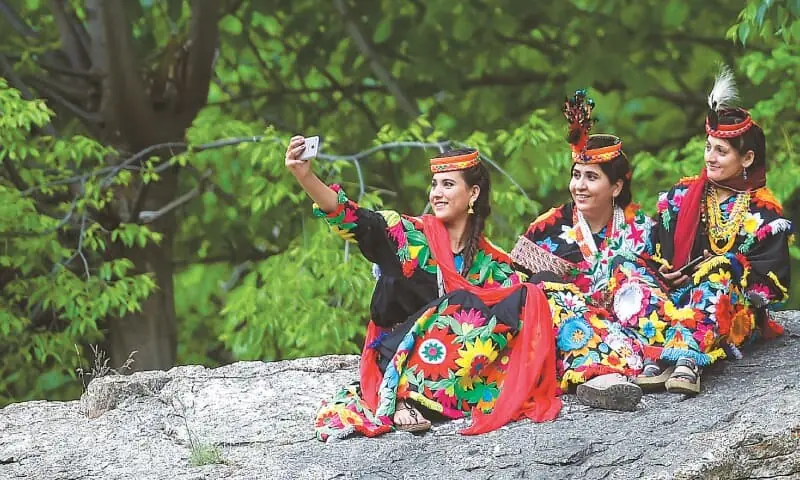
PESHAWAR: The Kalash valleys in Khyber Pakhtunkhwa’s Chitral district have been added to the United Nations Educational, Scientific and Cultural Organisation’s World Heritage Tentative List, according to information available on Unesco’s website.
Unesco says countries are required to prepare an inventory of significant natural and cultural heritage sites within their territory, known as the Tentative List. It states that this is a necessary stage because the World Heritage Committee cannot examine a nomination for inclusion on the World Heritage List unless the site has first been entered on the state party’s Tentative List.
The Kalash area consists of the three remote valleys of Bumburate, Birir and Ramboor in Chitral district. The region is home to more than 4,000 indigenous people who follow a polytheistic faith and maintain distinct cultural traditions.
Khyber Pakhtunkhwa Director General of Archaeology and Museums Dr Abdul Samad said the development marked an important advance for the protection of Kalash culture. He told Dawn that ‘It is the first time an entire community and its cultural practices have been listed by the Unesco World Heritage Tentative List.’
Dr Samad said his department had been working for more than a decade to secure a place for the Kalash cultural landscape on the UN agency’s heritage list. He said the inclusion would help safeguard both the tangible and intangible dimensions of Kalash culture.
He explained that the first stage was the acceptance of the submission by the World Heritage Centre for its tentative list, after which a formal notification by the UN body would follow. He added that after tentative enlistment, a dossier would still have to be submitted to Unesco, including bylaws and other required measures.
According to Dr Samad, the listing has brought Kalash culture onto the national and international cultural map and would support bylaws, community development, and the preservation of both material and non-material heritage, making it a major achievement.
Khyber Pakhtunkhwa Governor Faisal Karim Kundi also welcomed the development in a post on X, calling it a ‘major milestone’. He said KP was ‘home to some of the world’s most breathtaking landscapes and unique cultural traditions, and this recognition is long overdue’. He added that it was ‘A well-deserved moment that brings global attention to the beauty and heritage of our region’.
Unesco description of the Kalasha cultural landscape
On its website, Unesco says, ‘The Kalasha Valley cultural landscape possesses outstanding universal value (OUV) as an extremely rare and exceptionally well-preserved example of a living indigenous cultural system’.
It says the system has continued for centuries in its original geographical and cultural setting. Unesco notes that despite historical changes, outside influences and social pressures, the Kalasha community has retained its distinct identity.
These features are not abstract ideas or symbolic references to the past, as these are actively practised and clearly connected to the physical landscape, where specific places serve as designated locations for particular ceremonies and ritual activities. The landscape itself is directly involved in sustaining and expressing cultural life.
Unesco says the area’s tangible heritage includes more than 140 documented ceremonial structures, ritual platforms, ancestral graveyards with distinctive wooden carvings, and traditional villages. It adds that each site has its own name, purpose and meaning in the community’s collective memory and identity.
The organisation says the intangible heritage is also extensive and structured. According to Unesco, ‘It includes a complete and structured system of religious rituals and seasonal festivals. It also includes a strong tradition of oral storytelling, unique musical forms, traditional dances, distinctive clothing, and customary laws overseen by a council of elders. These elements do not exist separately from one another. Instead, they form a unified and working system that continues to regulate daily life, land management, social relationships, spiritual practices, and community decision-making in a fully integrated way,’ it said.
0 Comments
No comments yet. Be the first to join the discussion!


