USA-Iran talks collapse, illusions remain
US-Iran direct negotiations in Islamabad end in deadlock after 21 hours. The Strait of Hormuz, nuclear red lines, and regional pressures leave no agreement—diplomacy pauses, not resolves.

Too wide a gap between the sides for agreement
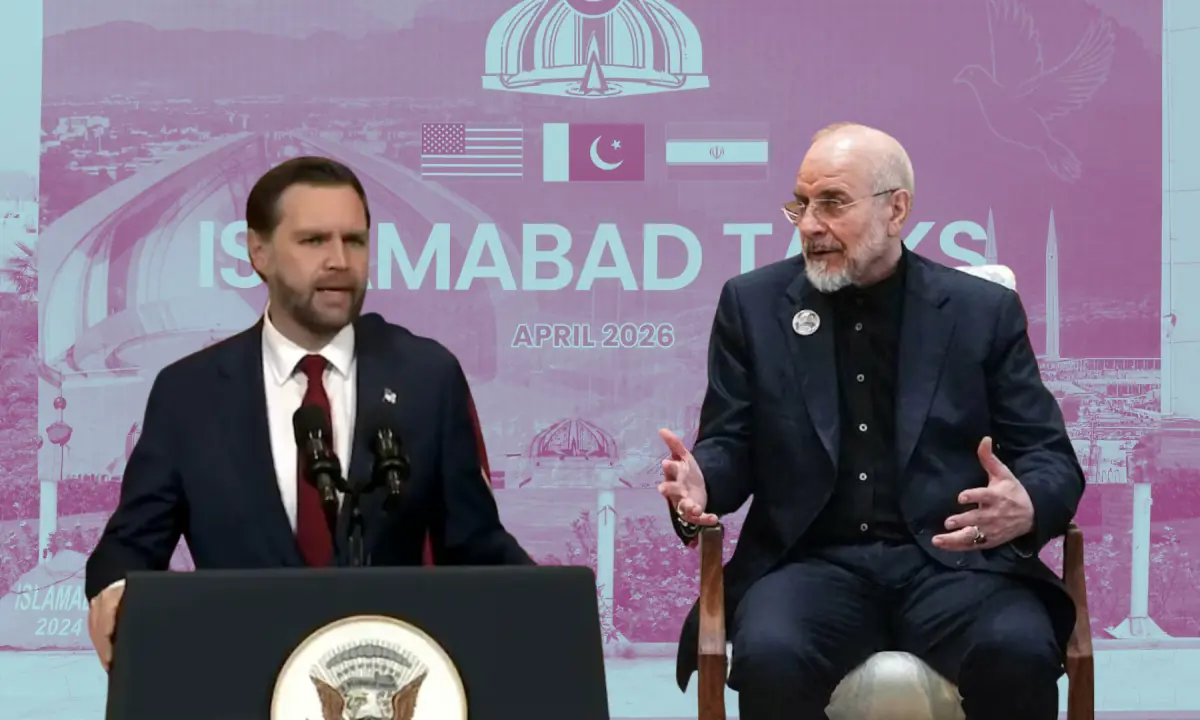
As the dust settles over Islamabad, the much-anticipated direct negotiations between the USA and Iran have ended not with a breakthrough, but a pause— one that exposes the structural fault lines of this conflict. After an intense 21-hour uninterrupted diplomatic marathon, there was no agreement. Despite urgency, pressure, and global attention, the gap between the two remains wide.
The US delegation, led by JD Vance, acknowledged the deadlock with unusual clarity. Despite what he described as “intensive” and “substantive” discussions, Iran “chose not to accept” American terms. This was not a procedural delay or technical pause— it was a strategic failure to reconcile competing visions of the post-war order. The talks did not collapse abruptly; they exhausted themselves, which in many ways is even more revealing.
What makes this outcome more striking is the contradiction at the highest level of US leadership. Even as negotiations were ongoing— and indeed as they stretched deep into the night—Donald Trump maintained that the SA had already won the war. His assertion that “we win regardless” now stands in sharp contrast to the reality of failed negotiations. If victory had truly been secured, diplomacy would have been a formality. Instead, it has become a necessity— one that has, so far, failed to deliver results.
At the centre of this deadlock lies the Strait of Hormuz, the world’s most critical strategic chokepoint. Control over itremains the primary point of contention. The USA insists on restoring full navigational freedom and removing Iranian leverage, while Iran views control as its most powerful bargaining chip.
This tension was dramatically illustrated during the talks themselves. Washington announced that two US Navy destroyers had entered the strait to begin mine-clearing operations, signaling an attempt to project authority and normalize passage. Iran, however, rejected this narrative, asserting that any movement in the waterway falls under its control and that its forces had challenged the US presence. Regardless of which version is accepted, the strategic conclusion is unavoidable: the USA cannot exercise uncontested control over the Strait. This not only weakened Washington’s negotiating position but also injected additional mistrust into an already fragile process.
Another major factor shaping the outcome of the talks was the rigidity of core demands on both sides. The USA insisted on a binding commitment that Iran would not develop nuclear weapons— a position still non-negotiable in Washington. Iran presented equally firm red lines: ceasefire in Lebanon, reparations, lifting of sanctions, release of frozen assets, and recognition of its sovereign rights under international frameworks. These positions were not merely negotiating stances, but strategic doctrines, leaving little room for compromise within a single round of talks.
Compounding this complexity is the evolving regional dynamic— particularly the role of Erdoğan. Early in the conflict, the USA explored leveraging Kurdish groups operating in and around Iran as proxy forces. This approach, however, was swiftly blocked by Turkey. Viewing Kurdish factions as extensions of the PKK insurgency, Ankara issued strong warnings that any US support for such groups would directly threaten Turkish national security.
In the final analysis, the events in Islamabad reveal a sobering truth. This is not a conflict that can be resolved through force alone. It is a war defined by interdependence— of energy, alliances, economics, and diplomacy. The collapse of talks does not mark the end of the process, but it does expose the illusion at its core. Victory has been declared— but no outcome secured.
President Erdoğan leveraged Turkey’s NATO position and his direct engagement with President Trump to force a policy reversal. The USA ultimately stepped back from arming Iranian Kurdish groups and offered assurances to Turkey. This episode is crucial— it demonstrates that even in wartime, US strategic options are constrained by alliance politics, and that regional actors like Turkey can decisively shape the trajectory of conflict.
Equally telling was the hesitation among Kurdish groups themselves, many of whom feared becoming disposable instruments in a larger geopolitical struggle. Their reluctance further undermined Washington’s proxy strategy, leaving it with fewer tools to exert pressure on Iran.
Meanwhile, the economic narrative surrounding the war has taken an unusually blunt turn. President Trump has openly framed the disruption of the Strait as beneficial to the USA, arguing that it forces global markets to turn toward US oil and gas. In this interpretation, the war becomes a commercial advantage, a mechanism for redirecting global energy dependence.
This perspective suggests that geopolitical conflict is being evaluated not in terms of stability or human cost, but through the lens of economic gain. Thousands have been killed, infrastructure devastated, and entire populations displaced. To frame such destruction as economically advantageous raises profound moral and strategic questions about the nature of modern warfare.
At the same time, Israel’s continued military operations in Lebanon against Hezbollah played a significant role in the failure of the talks. Iran insisted that any ceasefire must extend to Lebanon, while Israel— under Netanyahu— refused to halt its campaign. This divergence created an additional layer of conflict that the Islamabad negotiations could not bridge.
Public sentiment across the region and beyond is also shifting. In Israel, protests are growing against what many see as endless war without clear strategic benefit. In the USA, both traditional and digital media are increasingly questioning the rationale behind continued military engagement and the broader influence shaping US foreign policy decisions.
Despite significant damage, Iran has emerged from the conflict with enhanced strategic leverage. Its control over the Strait remains intact, and its negotiating position has hardened rather than weakened. Moreover, Iran’s exploration of alternative financial systems— bypassing the dollar and traditional banking channels— poses a longer-term challenge to US economic dominance.
The broader Middle East is also undergoing a quiet transformation. Gulf states are reassessing their reliance on US security guarantees, while regional powers like Turkey are asserting greater independence. These shifts point toward a more multipolar regional order, where US influence, while still significant, is no longer uncontested.
Amid this complexity, Pakistan’s role as mediator stands out as a rare diplomatic success. By bringing the USA and Iran to the same table, Islamabad demonstrated its capacity to act as a bridge between adversaries. The involvement of Prime Minister
Shehbaz Sharif and military leadership underscores Pakistan’s growing importance in global diplomacy.
The uninterrupted 21-hour negotiation itself remains a critical takeaway. It reflects a shared recognition of the stakes and a willingness to engage deeply. However, the failure to reach agreement highlights the depth of mistrust and the rigidity of strategic positions on both sides. The talks did not fail due to lack of effort— they failed because the foundations for compromise are not yet in place.
What happens next remains uncertain. There are indications that talks may resume, suggesting that diplomacy is not entirely dead. But the pause in negotiations also signals that any future progress will require significant shifts in position— something neither side appears ready to undertake immediately.
In this context, President Trump’s declaration of victory appears less a reflection of reality and more a political narrative aimed at shaping perception. It may also signal an underlying recognition that the limits of military power have been reached.
In the final analysis, the events in Islamabad reveal a sobering truth. This is not a conflict that can be resolved through force alone. It is a war defined by interdependence—of energy, alliances, economics, and diplomacy. The collapse of talks does not mark the end of the process, but it does expose the illusion at its core.
Victory has been declared— but no outcome secured.
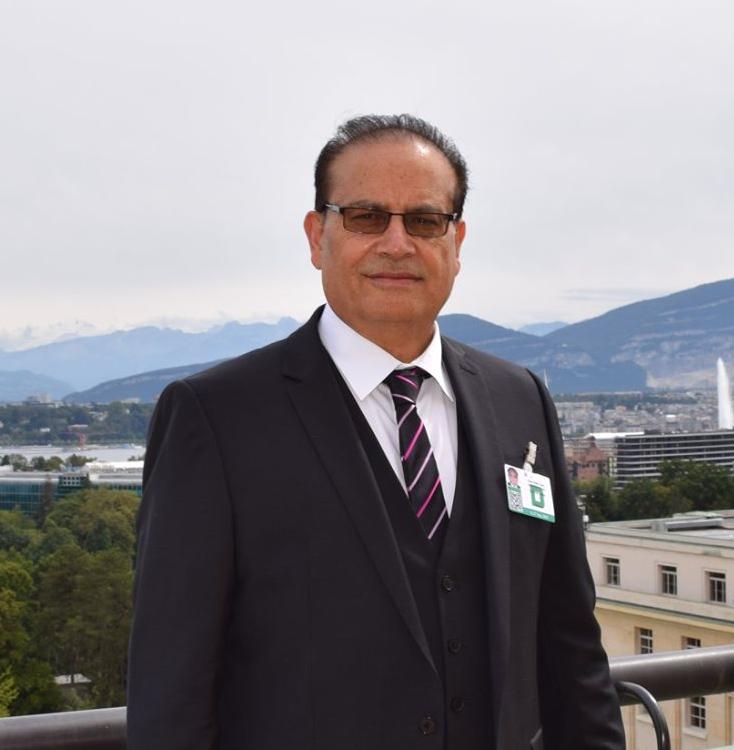
The writer retired as Press Secretary the President, and is former Press Minister at Embassy of Pakistan to France and former MD, Shalimar Recording & Broadcasting Company Limited
View all articles →Comments
No comments yet. Be the first to join the discussion!