

Analysts say US-Iran talks in Islamabad may resume despite no agreement
Analysts and journalists said the lack of an agreement in US-Iran talks in Islamabad did not necessarily mark the end of the diplomatic process. Both sides blamed major differences, while commentators said further negotiations were likely.

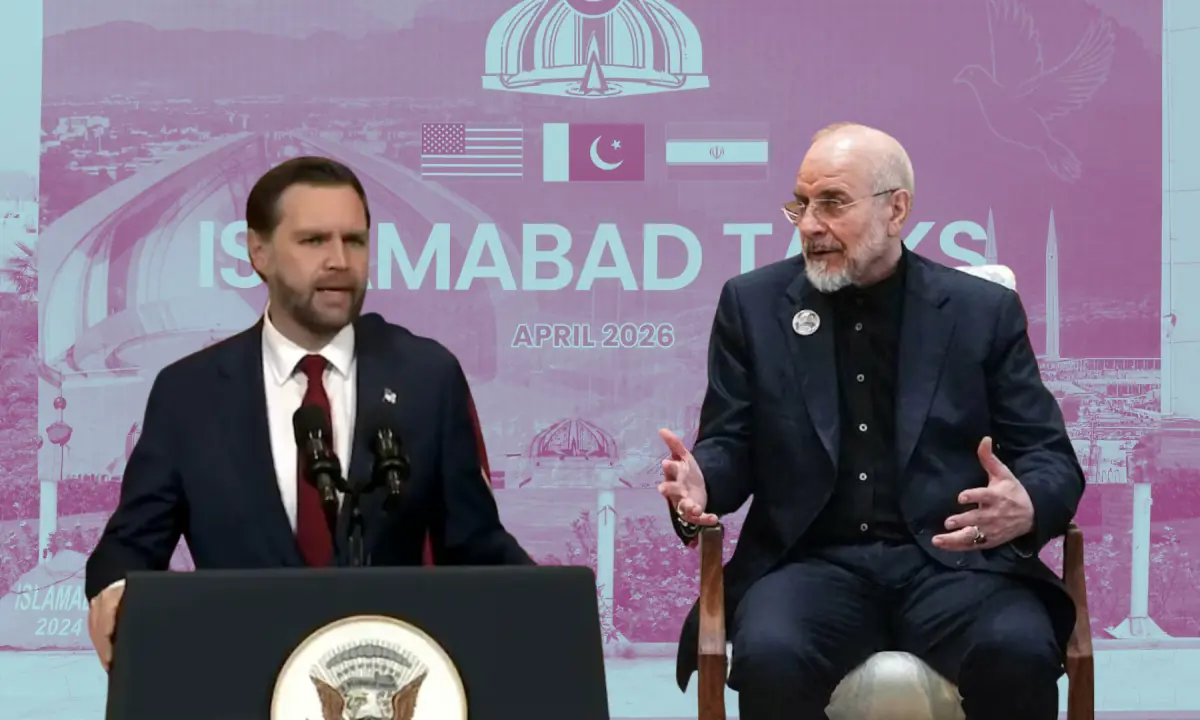
ISLAMABAD: The United States and Iran concluded 21 hours of high-level negotiations in Islamabad without reaching an agreement, though analysts say the talks are unlikely to end the diplomatic process and may lead to another round of engagement.
According to a Dawn report, which compiled reactions and expert commentary following the negotiations, US Vice President JD Vance confirmed that no deal had been reached, saying Washington had presented its “final and best offer” and outlined clear red lines, particularly on Iran’s nuclear programme. Iranian officials, meanwhile, said progress was blocked by what they described as “excessive” and “unlawful” US demands, even as both sides acknowledged limited areas of convergence during the discussions.
In its monitoring of post-talk developments, Dawn also gathered views from a range of analysts, journalists and commentators, who suggested that the absence of an agreement should not be interpreted as a breakdown of the process.
Washington-based scholar Michael Kugelman said the talks were “not over” and indicated that further rounds could follow, although the venue remained uncertain. He noted that the level of US representation in Islamabad reflected a serious attempt to secure a negotiated outcome.
Foreign affairs columnist Daniel DePetris said a comprehensive deal could not realistically be achieved in a single negotiating window. He described the talks as part of a longer process, arguing that issues such as nuclear limits, sanctions relief and maritime security required sustained engagement rather than a one-off summit.
Journalist and analyst Raza Ahmad Rumi said the discussions reflected a “structural deadlock” between Washington’s focus on verifiable constraints and Tehran’s demand for sanctions relief and strategic autonomy. He added that the process should be seen as “diplomacy, not a one-shot negotiation”, warning that failure could increase regional and economic risks.
Journalist Iftikhar Firdous highlighted differing diplomatic approaches from both sides, saying Iran framed the talks in long-term ideological terms while the US focused on leverage and outcomes. He said Pakistan’s facilitation role was expected to continue, adding that the process “doesn’t end here”.
Anchorperson Kamran Yousaf described the Islamabad engagement as the “most serious effort yet” between the two countries, noting that while key issues — including the Strait of Hormuz — remained unresolved, the fact of sustained direct engagement was itself significant. He said multiple proposals had been exchanged but differences remained too wide to bridge at this stage.
Columnist and analyst Dr Tehmina Aslam Ranjha said Islamabad had succeeded in creating “space for dialogue in a moment charged with mistrust”, calling Pakistan’s facilitation a notable diplomatic development even without an agreement.
Earlier, US Vice President JD Vance said Washington would return with its final proposal, while Iranian officials stressed that any progress depended on “good faith” and recognition of Tehran’s rights, including sanctions relief and broader strategic assurances.
Diplomatic sources said the talks involved several rounds of expert-level exchanges covering nuclear, economic, legal and regional issues, but core disagreements persisted over enrichment limits, sanctions relief mechanisms, and regional security arrangements.
While no follow-up schedule has been announced, analysts cited in Dawn said the scale and intensity of engagement in Islamabad suggests the process is still alive, with further negotiations considered more likely than a complete collapse.
Comments
No comments yet. Be the first to join the discussion!


