Pressure builds for diplomacy after US-Iran talks conclude without agreement
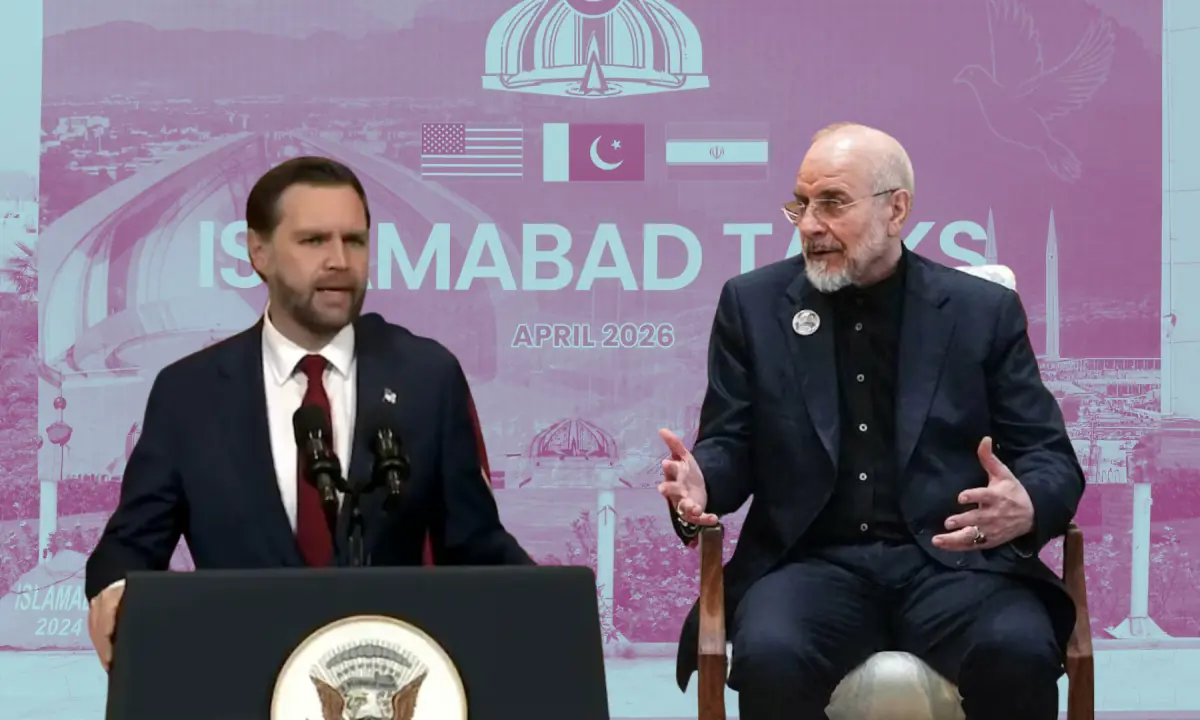
High-level US-Iran talks in Islamabad ended without a deal to end the Middle East war. Both sides avoided open hostilities, while leaders urged diplomacy to continue and preserve the ceasefire.

Iran and the United States ended high-level talks in Islamabad on Sunday without reaching an agreement to end the war in the Middle East, but both sides stopped short of returning to open hostilities. In the immediate aftermath, leaders around the world called for diplomacy to continue and urged both governments to keep pursuing a peaceful outcome.
US Vice President JD Vance departed Pakistan after the meeting, which was described as the most senior direct engagement between Washington and Tehran since 1979. He said the United States had presented Iran with its final proposal and was now waiting for Tehran’s response.
He said Washington was leaving the talks with a straightforward offer and that the next step depended on whether Iran chose to accept it.
Iran’s parliamentary speaker, Mohammad Bagher Ghalibaf, said the Iranian delegation had offered constructive proposals, but that the other side had failed to win its trust during this round of negotiations.
According to reports from both Iranian and US sources, the main sticking points included who would control the Strait of Hormuz shipping lane and whether Iran would retain any right to enrich uranium under a future agreement.
With the Islamabad talks ending without a breakthrough, international leaders quickly stressed the need to keep the process alive. Pakistan’s Foreign Minister Ishaq Dar, whose government hosted the talks and served as mediator, said it was vital for both sides to remain committed to the ceasefire.
He added that Pakistan would continue supporting dialogue between the Islamic Republic of Iran and the United States in the days ahead.
A spokesperson for the European Union said diplomacy remained essential to ending the war in the Middle East. Referring to the talks hosted by Pakistan, EU foreign affairs spokesman Anouar El Anouni praised Islamabad’s mediation efforts and said Brussels would support further attempts to reach a settlement in coordination with its partners.
The Kremlin said Russian President Vladimir Putin had spoken with Iranian President Masoud Pezeshkian and expressed readiness to help move the peace process forward. According to the Russian readout, Putin reiterated his willingness to support a political and diplomatic resolution and to assist efforts aimed at securing a just and lasting peace in the region.
In the United Kingdom, health minister Wes Streeting said the lack of a breakthrough was disappointing, but argued that unsuccessful talks did not mean diplomacy had failed. He said negotiations often fall short before they eventually succeed, and that there was still value in continuing to try.
Australian Foreign Minister Penny Wong also said the immediate priority should be preserving the ceasefire and returning to negotiations. She described the outcome of the Islamabad talks as disappointing, but said efforts to reach an agreement must continue.
Comments
No comments yet. Be the first to join the discussion!