The future of the Middle East amid the talks
Pakistan’s last-minute diplomacy helped US and Iran agree to negotiate after decades. Talks ended without a deal, with the Strait of Hormuz and nuclear pressure shaping next steps.

Pakistan still has a key role
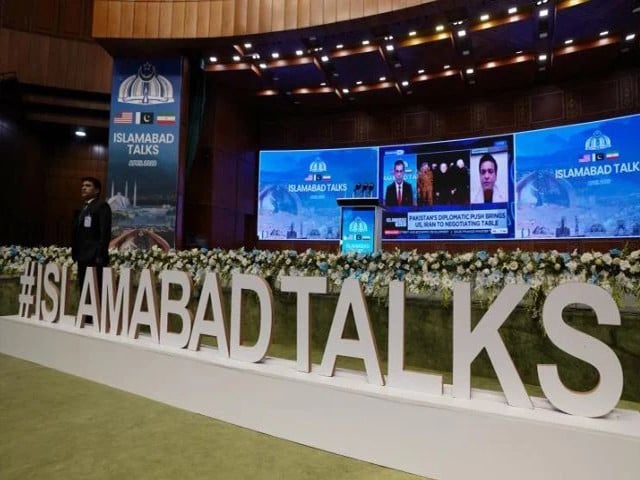
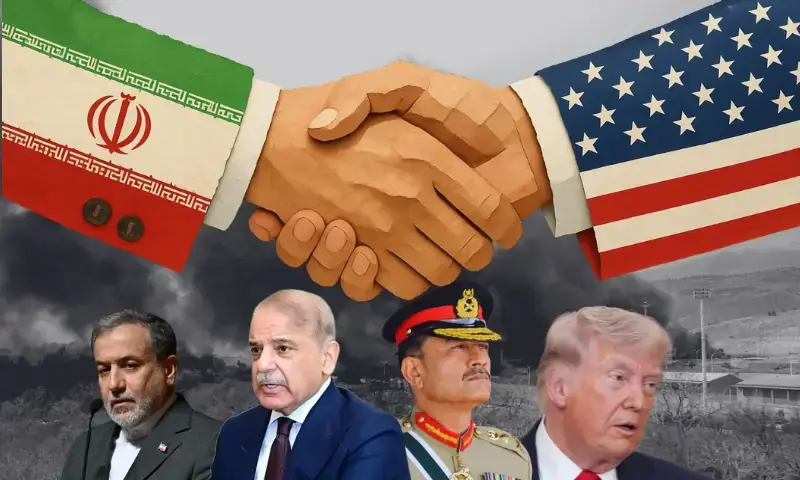
The last-minute peace efforts by Pakistan paid dividends as both parties, the USA and Iran, agreed to negotiate. It was a huge diplomatic success for Pakistan. Pakistan averted a crisis that could have been devastating for the region. As the top leadership of both countries sat down for the first time in 47 years, their positions during the war determined their posture at the negotiating table.
The talks for now have been concluded but there is a glimmer of hope still left. There was little hope that any sort of deal could be achieved in a session or a day.
There are many examples from history where initial deadlocks turned into breakthroughs with time. Even in the case of the USA and Iran, there is an example from the past. For instance, the US-Iran nuclear deal was achieved in months not in a session or a day.
The USA might have come with expectations of negotiations with a weaker Iran. But, Iran, on the other hand would have never allowed the USA to snatch whatever advantage it had against the US in the form of the Strait of Hormuz.
Despite a mighty army and a status as a superpower, the USA can not carry on fighting just because it has the power and resources to do so. Wars have definite costs and even powerful countries are not immune to them. On the other hand, Iran has to defend itself. As it did during the war. The longer Iran resists, the higher the price the USA has to pay. The tactics adopted by Iran during the war have surprised the world. It has resisted two nuclear powers. It still has a lot of drones and missiles that have made the USA and Israel think.
The USA has tried everything from destroying Iran's military capability to obliterating the nuclear programme and even threatening the use of nuclear weapons. But, Iran, against all odds, defied the US and Israeli attacks. So, the USA would no longer want to continue its military offensive without any fruitful results.
The talks have collapsed and the main reason is the nuclear programme of Iran, which the USA has declared many times that it has obliterated. The nuclear programme was never an issue at least for now. But the emphasis on the nuclear programme might be a pressure tactic. And a real discussion would have been around the Strait of Hormuz.
The USA would want to reach a pre-war-like scenario and devise a mechanism that would give it control over the Strait of Hormuz and prevent Iran from gaining any leverage from it in the future. On the other hand, Iran would want to make sure that its leverage over the Strait of Hormuz does not go away and in future events of betrayals of trust, it can gain leverage over the Strait of Hormuz.
The Islamabad talks have shown that there is still hope of negotiations and past examples are proof that negotiations can make the hardest of tasks easy.
Amid the sequence of events, the deadlock is bound to persist. In the coming days, the USA would exert pressure on Iran in the form of a naval blockade along with infrastructure destruction and strikes on the leadership. Iran's confidence during the talks however suggests that it is prepared for the worst and would not give away their leverage.
Here, the role of mediators becomes even more complex and important. As the direct talks are over, the back-door diplomacy will be the key.
We might see a breakthrough in a couple of days, but for that to happen, a lot will depend on how good a mechanism is devised regarding the Strait of Hormuz. And to what extent both parties would concede.
For the USA, anything less than control of the Strait of Hormuz is a defeat that it will not be willing to accept, while for Iran any gain regarding the control of Hormuz will be a victory for now.
The USA in order to achieve the above-mentioned objective has announced the naval blockade of the Strait of Hormuz. This will mean no ship will pass through this sea route which pays tax to Iran. By doing this, the USA is trying to announce its presence around the Strait and limit the Iranian leverage over the Strait.
The naval blockade of the Strait of Hormuz is not as easy as it looks. Yes, it will affect the aspirations of Iran but on the other hand, it will have a devastating impact on the global economy. The countries that are most likely to be affected by the closure of the Strait of Hormuz would try to bring an end to this war more than ever because they can no longer stay irrelevant. Having said that, this might be a tactical ploy of the USA rather than an actual threat.
So the best possible scenario is an agreement in the foreseeable future with mediation efforts from Pakistan, as Pakistan seems to be the go-to option for both. Some other countries may also take part in the mediation process as well. For instance, Iran could get assurance and trust that it would not be attacked in the future along with other bargains while the Strait of Hormuz opens for all as it was before the war.
While the other scenario looks devastating for the region. The clashes will intensify over the Strait of Hormuz. And, this will be devastating for the region. The Islamabad talks have shown that there is still hope of negotiations and past examples are proof that negotiations can make the hardest of tasks easy.

Comments
No comments yet. Be the first to join the discussion!