Netanyahu contradicts Pakistan's claim of wider truce between US-Iran, says Lebanon fighting will continue
Hours after Pakistan’s PM said the US-Iran ceasefire covers “everywhere, including Lebanon,” Netanyahu clarified it won’t stop Israel’s Lebanon campaign against Hezbollah.

LAHORE: Israeli Prime Minister Benjamin Netanyahu on Wednesday said a newly announced US-Iran ceasefire would not apply to Lebanon, contradicting Pakistan’s claim that the truce covered “everywhere, including Lebanon and elsewhere”.
The clarification came after Prime Minister Shehbaz Sharif announced that the United States, Iran and their allies had agreed to an “immediate ceasefire everywhere”, describing the move as a “sagacious gesture” and inviting both sides to Islamabad for talks on April 10 to reach a conclusive agreement.
In a statement posted on X, Netanyahu said Israel supported US President Donald Trump’s decision to suspend strikes on Iran, but stressed that the two-week ceasefire “does not include Lebanon”. He said Israel would continue its operations there, adding that the country backed efforts to ensure Iran no longer posed a “nuclear, missile and terror threat” to the region and beyond.
Shehbaz, in his announcement, said both sides had shown “remarkable wisdom and understanding” and remained constructively engaged in advancing peace. He said the ceasefire was “effective immediately” and expressed hope that the proposed “Islamabad Talks” would lead to sustainable peace, adding that more positive developments were expected in the coming days.
The development follows a statement by President Trump, who described the arrangement as a “double sided CEASEFIRE”. He said the United States had already met and exceeded its military objectives and was “very far along” in reaching a definitive agreement with Iran on long-term peace in the Middle East.
Trump said Iran had presented a 10-point proposal that he termed a “workable basis” for negotiations, adding that he expected an agreement to be “finalised and consummated” during the two-week ceasefire period. He also said he was holding off on a threat to end Iranian civilisation and would suspend attacks on the country for two weeks.
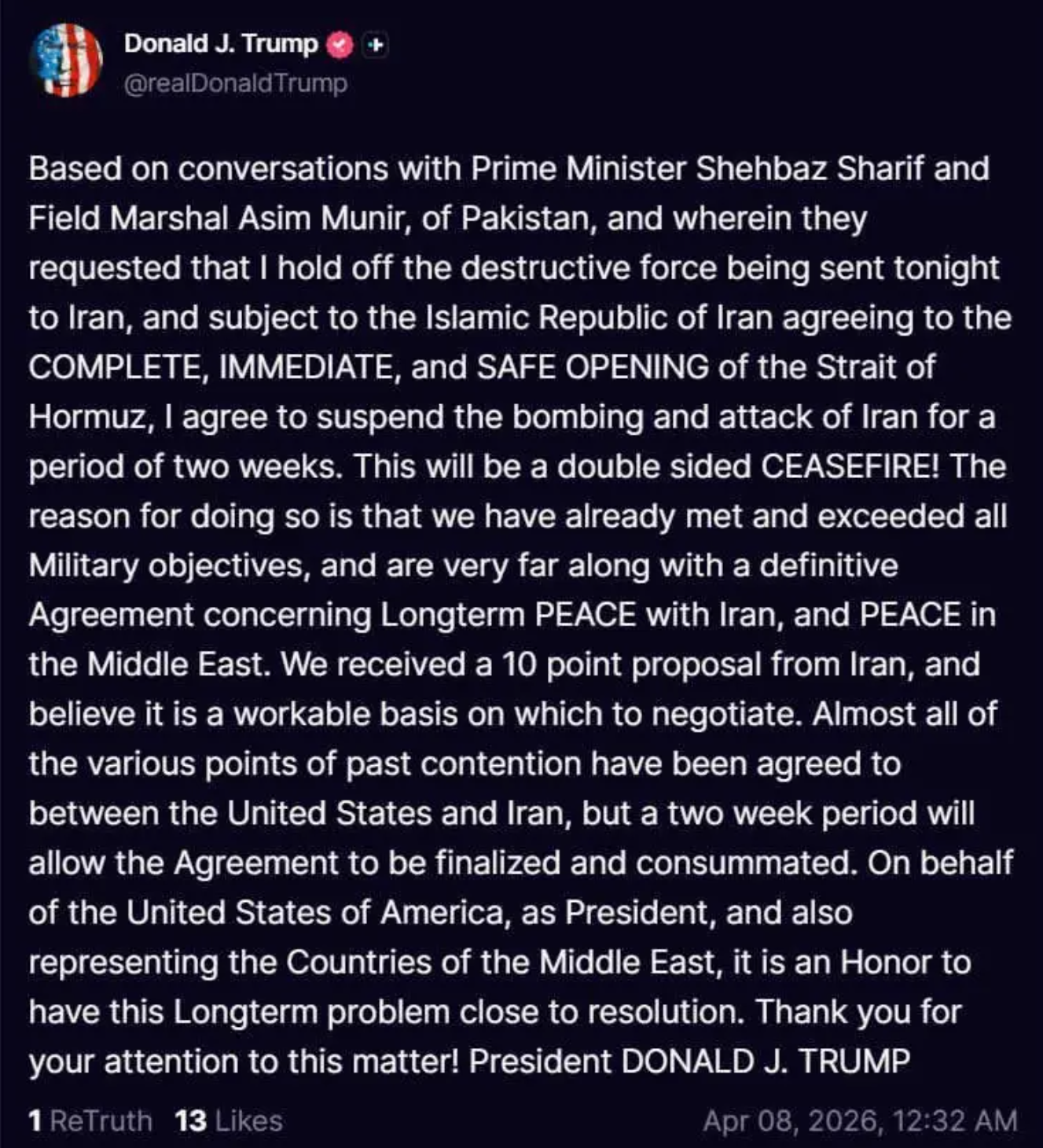
The ceasefire comes amid tensions centred on the Strait of Hormuz, a strategic waterway that handles about one-fifth of global oil shipments. Trump had linked the truce to Iran’s willingness to pause its blockade of oil and gas supplies through the strait during the negotiation period.
Earlier, Shehbaz had urged Trump to extend a deadline imposed on Iran and called on Tehran to reopen the Strait of Hormuz for two weeks as a goodwill gesture. He had also appealed to all warring parties to observe a ceasefire to allow diplomacy to achieve a conclusive end to the conflict, saying efforts for a peaceful resolution were progressing “steadily, strongly and powerfully”.
Iran’s National Security Council confirmed that it had agreed to the ceasefire and would enter talks with the United States in Islamabad on Friday, based on its 10-point proposal. The council said the plan included demands for the withdrawal of US combat forces from the region, lifting of sanctions by the United States and international bodies, release of frozen Iranian assets, and compensation for war-related damages. It also called for Iranian oversight of the Strait of Hormuz and the ratification of any final agreement through a binding United Nations Security Council resolution.
At the same time, the council said Tehran would participate in negotiations with “complete distrust” of the United States and warned it was ready to respond with “full force” to any misstep during the ceasefire period. It added that the two-week timeline could be extended by mutual agreement.
Separately, the Islamic Resistance in Iraq, an umbrella group of Iran-backed armed factions, said it would suspend its operations in Iraq and across the region for two weeks in line with the ceasefire.
The conflict began on February 28 following US and Israeli strikes on Iran, triggering a wider regional confrontation. Lebanon became part of the conflict on March 2 when Hezbollah launched attacks on Israel, saying the strikes were in retaliation for Israel’s killing of Iran’s Supreme Leader Ayatollah Ali Khamenei and for what it described as repeated violations of a previous ceasefire in Lebanon.
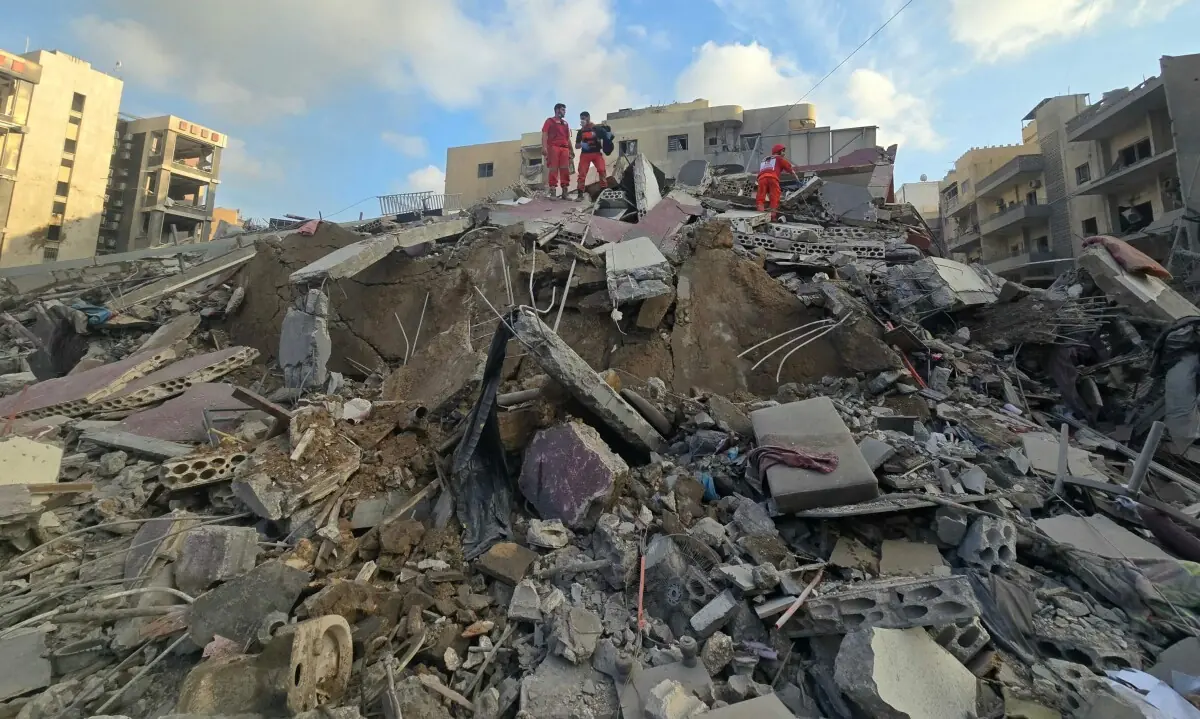
According to Lebanese authorities, Israeli attacks since then have killed more than 1,500 people and displaced over one million. Israeli forces have also launched an incursion into southern Lebanon, stating that the objective is to secure additional territory as a buffer zone.
There has been no immediate response from Hezbollah or the Lebanese government to Netanyahu’s statement. The Israeli position, however, indicates that while a pause in hostilities may be in place between Washington and Tehran, fighting linked to the broader conflict is set to continue in Lebanon.
Comments
No comments yet. Be the first to join the discussion!