When global oil moves, Pakistan feels the pain
Pakistan’s fuel price has crossed 500 rupees per litre, showing how global oil shocks and domestic policy squeeze daily life. The article argues real relief needs infrastructure, jobs, and skills—not just short-term fixes.

Fuel costs in Pakistan have crossed 500 rupees per litre, a burden that goes far beyond filling a tank. For millions of families, it is a stark reminder of how fragile daily life has become. Each litre carries not just the market price but heavy levies and taxes, a symbol of global forces and domestic policy converging to squeeze ordinary citizens. Yet the uncomfortable truth is unavoidable that no government can fully shield Pakistan from the swings of the global oil market. Wherever oil commands a higher price, it will flow. Even if hundreds of free tankers arrived at the ports, market realities would remain unchanged. Trucks, factories, farms, and cities, everything that sustains daily life runs on oil, and Pakistan has no choice but to move with it.
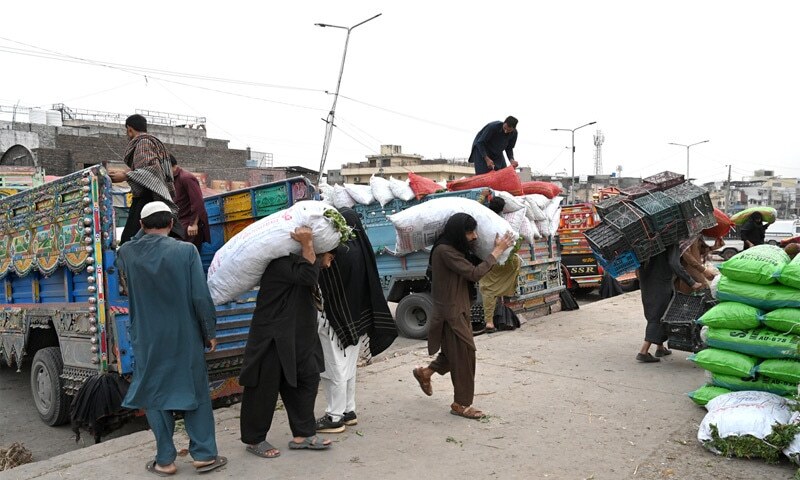
Some commentators propose simple solutions to reduce consumption, cut trips, or adopt alternative transport. But these ideas, while well-intentioned, miss the structural reality. Milk, bread, and medicines are delivered on motorbikes; goods traverse cities and provinces on diesel trucks. Small adjustments in individual behaviour cannot offset systemic dependence. Families, businesses, and markets cannot function without fuel. Real solutions must address the infrastructure, logistics, and energy systems that underpin daily life, not rely solely on symbolic gestures.
The challenge is compounded by domestic social structures. Many households rely on a single earner to support multiple dependents, creating a fragile model that collapses under rising prices. Women who are nearly 51 percent of the population remain largely outside the workforce, and formal job creation has not kept pace with demographic growth. Young people and women often lack opportunities to contribute economically. In contrast, countries across Europe and North America encourage multiple household members, including women and teenagers, to work or gain early employment experience. Part-time jobs in retail, services, and other sectors not only generate income but also build skills, resilience, and adaptability. Expanding workforce participation in Pakistan, especially among women, alongside creating accessible employment opportunities, could help families better withstand economic shocks and elevate living standards.
Professional stagnation further limits resilience. Many adults remain in the same role for decades, with raises tied to tenure rather than performance or skill. This rigidity reduces flexibility and leaves households exposed to inflation and market volatility. By contrast, in dynamic labour markets worldwide, continuous learning and skill acquisition are essential. Workers switch roles, take on new responsibilities, or pursue additional qualifications to remain competitive. Pakistan urgently needs programs that expand access to training, certifications, and flexible career pathways, enabling adults to adapt, increase earnings, and help their families navigate rising costs.
So, what can Pakistanis do when global fuel prices and inflation are beyond their control? The answer is straightforward but demanding: diversify income and invest in skills. Every capable adult in a household should contribute to earnings, reducing vulnerability when prices rise. Professionals must continuously update expertise and qualifications to remain employable across roles or sectors. Families cannot wait for global markets to stabilize or for policy fixes to shield their wallets. Economic resilience depends on foresight, adaptability, and decisive action, preparing today for the shocks of tomorrow.
But individual effort alone is insufficient. This is a lesson in strength, culture, and governance. Governments play a decisive role in shielding citizens from global volatility while building long-term capacity. Across the world, countries have cushioned the impact of fuel shocks through a mix of subsidies, structural reforms, renewable energy investment, and workforce development. Germany and Nordic nations, for example, support dual-income households and continuous vocational training, enabling families to absorb economic turbulence. Singapore and South Korea prioritize upskilling programs and flexible labour markets, ensuring citizens remain employable even as industries evolve.
Pakistan cannot afford to lag. With half its population underrepresented in the workforce and formal job creation lagging, rising fuel costs and inflation hit hardest where vulnerability is greatest. Bold government action is essential: expand employment opportunities, incentivize women and youth to enter the labour market, and fund vocational and professional training. Paired with individual initiative, these measures would create a more resilient society, capable of weathering global shocks without deepening poverty and inequality.
The world moves at its own pace, fuelled by energy, commerce, and technology. Pakistan cannot pause it. Survival and progress requires a dual approach: citizens must adapt, learn, and diversify income, while governments must invest, regulate, and create opportunities. Only by combining individual initiative with structural reform can Pakistan build an economy resilient enough to thrive amid uncertainty, rather than simply endure the next global shock.
The writer has a PhD in Political Science, and is a visiting faculty member at QAU Islamabad. He can be reached at [email protected] and tweets @zafarkhansafdar
View all articles →Comments
No comments yet. Be the first to join the discussion!