

KP textbook board seeks approval to develop and publish new schoolbooks
The KP Textbook Board has asked the provincial government to let it develop and publish schoolbooks itself. Officials say the move would require a policy amendment and could save around Rs60 million paid annually in royalties.

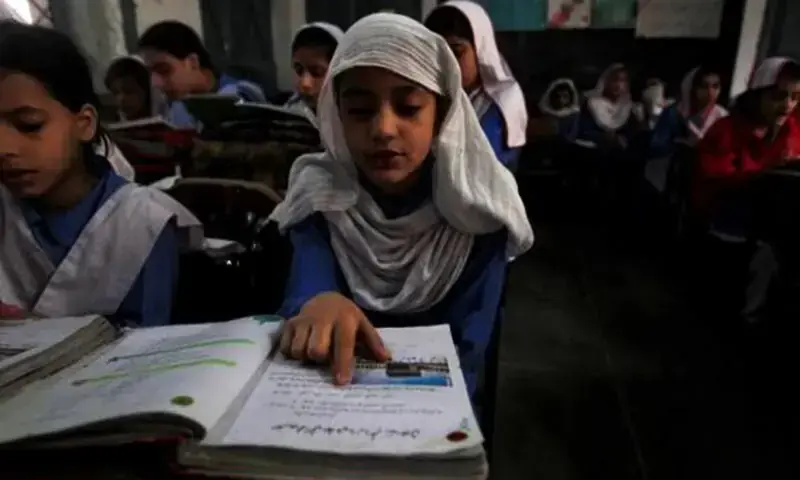
PESHAWAR: The Khyber Pakhtunkhwa Textbook Board has asked the provincial government to allow it to prepare new school textbooks itself and publish them directly, a move officials say could save around Rs60 million paid every year to private publishers in royalties.
According to officials of the Khyber Pakhtunkhwa Textbook Board, the proposal also includes an amendment to the Khyber Pakhtunkhwa Textbook & Learning Material Policy, 2017, because the current policy does not permit the board to publish textbooks on its own.
The board has proposed adding clause 3.2-B to the policy. The suggested clause says: “The textbook board is authorised to develop new textbooks under clauses 3.2 or 3.2-A, or to develop new textbooks itself and act as a publisher using its own resources, in the best public interest.”
Officials said the elementary and secondary education department has already sent a summary to the chief minister so it can be placed before the provincial cabinet for approval. However, they said the summary has not reached the chief minister during the last three months and has instead been moving between departments.
A textbook board official said, “The summary has yet to reach the cabinet due to the influential publishers.” The same official said publishers who receive millions of rupees in royalties have approached authorities and asked them to stop the board from publishing its own books.
The official said a publisher can continue claiming royalties on schoolbooks for 50 to 60 years. He also said private publishers were adding unnecessary material to increase the size of books and, in turn, raise royalty payments, without taking into account the difficulties faced by students.
According to the official, oversized books were consuming the time of both teachers and students. He said publishers generally hired writers and paid them once, while continuing to receive royalties from the textbook board for decades.
The official further said that if the provincial government accepted the proposal, the board would prepare books by engaging prominent educationists. He said this would help improve the quality of content while also reducing the burden on public funds.
He also said there was no evidence showing that textbooks developed by private publishers were better in quality than those produced directly by the textbook board. In addition, he said the board’s limited control over review schedules led to delays in making textbooks available to students after they were developed by private publishers.
The Khyber Pakhtunkhwa Textbook Board was set up under the Khyber Pakhtunkhwa Textbook Board Ordinance, 1971. Under that law, its mandate was to produce and publish textbooks and supplementary reading material from nursery to Grade 12.
Before the National Textbook & Learning Material Policy was introduced in 2006, the board used to develop its own textbooks under the 1971 ordinance. After the 18th Amendment, education became a provincial subject and the national policy was replaced by the Khyber Pakhtunkhwa Textbook & Learning Material Policy 2017.
Under clause 3.2 of the 2017 policy, the textbook board is required to develop textbooks through private publishers against payment of royalty.
Comments
No comments yet. Be the first to join the discussion!


