The tangled web over Tehran
Pakistan hosts quadrilateral talks with Egypt, Turkey and Saudi Arabia to broker US-Iran engagement. But Iran seeks guarantees, while concerns grow that any ceasefire could set up renewed US-Israel pressure.

Pakistan is basking in the attention it is getting as one of the mediators between the USA and Iran, but it seems not to have noticed that the attempt at ingratiation will not necessarily lead to an improvement in relations.
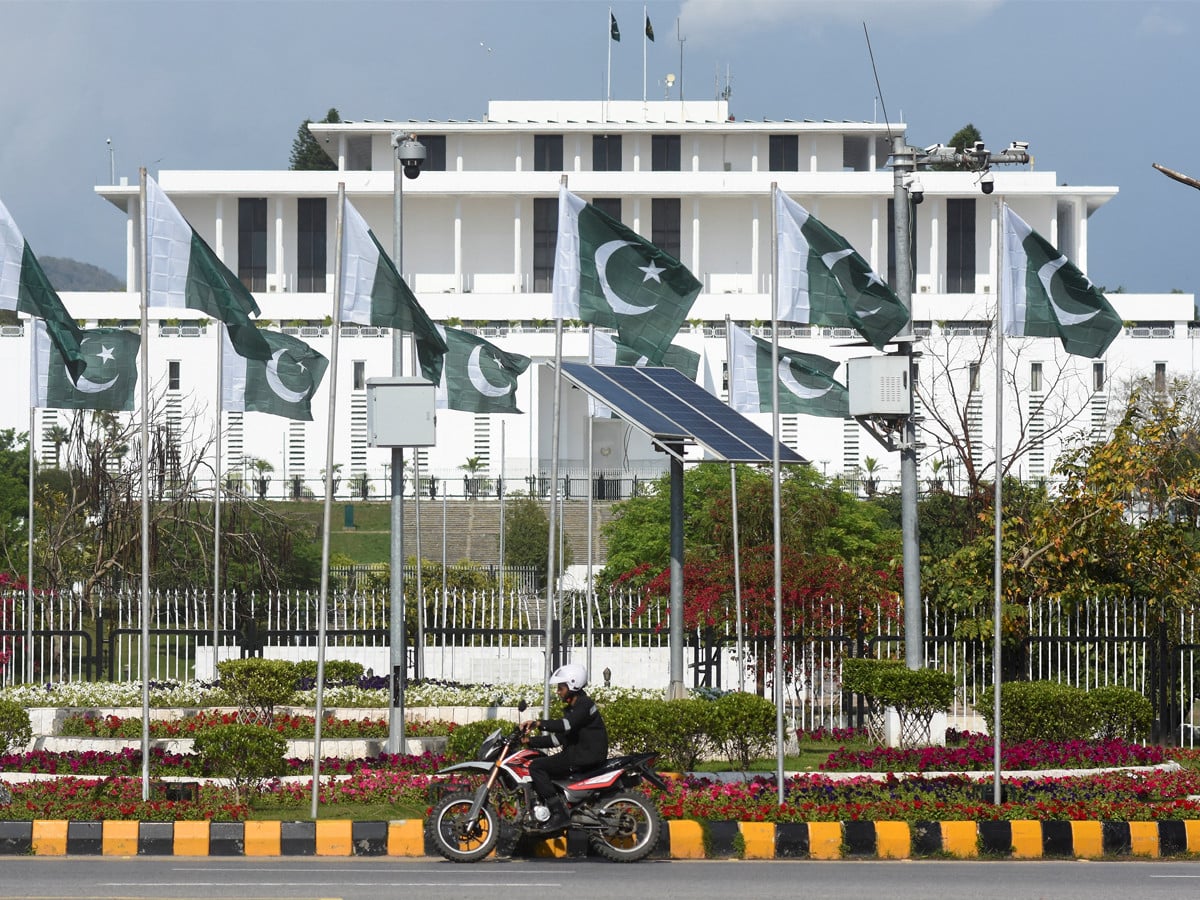
Pakistan is very much in the forefront of efforts. While the goal of getting the USA and Iran to send representatives to Pakistan has not yet materialized, Pakistan has hosted quadrilateral talks, with Egypt, Turkey and Saudi Arabia all sending their Foreign Ministers.
Pakistan’s first pause should be at Saudi Arabia’s presence. Initially, the backchannel efforts did not involve Saudi Arabia. However, now it has been included. This is despite the fact that it is one of the parties being attacked. While all of the other three, including Pakistan, have got their own interests, Saudi Arabia is more deeply involved than any, because not only are its oil exports being hurt because of the Hormuz Strait closure, but its oil installations have been subject to Iranian attack. It and Turkey both host US bases and forces.
Pakistan should keep in mind that any ceasefire it can help cobble together will only be to enable the USA and Israel to gather themselves for a greater effort. Iran has demanded that a ceasefire include international guarantees that there will not be a repetition. It must not be forgotten that the US-Israeli attack on Iran has become an annual event, and will not end with the USA and Israel accepting that they cannot bend Iran to their will
Egypt and Turkey also recognize Israel, while Saudi Arabia was about to recognize it when the Gaza crisis began. Indeed, the Gaza crisis may well have been caused by that decision as Hamas hoped to stop it by its attack on Israel. US President Donald Trump has chosen this moment to ask Saudi Arabia to recognize Israel, as if he wants that as a symbol of success against Iran. It is to be presumed that his ultimate goal for Iran would be to recognize Israel, as it had done during the reign of the Shah; when it became the second Muslim-majority country to recognize Israel, the first having been Turkey. Iran de-recognized it after the 1979 Revolution.
Pakistan was thus among the three CENTO countries which had not recognized Israel. It has never deviated from the Quaid-e-Azam’s vision of Palestine as being linked to the Kashmir issue: both peoples denied the right of self-determination, both countries illegally occupied, both the result of the hasty decolonization by the British.
India’s first PM Jawaharlal Nehru had not established diplomatic relations with Israel because he paid lip-service to the cause of Palestinian liberation, but when India realized the commonality, that both had to control Muslim populations deprived of the right of self-determination, it established diplomatic relations in 1992. Since then, relations have burgeoned.
Before that, RAW and Mossad had coordinated, to the extent that it was planned for Israeli jets to attack Pakistan’s nuclear facilities, using Indian bases to take off from, as they could fly from Tel Aviv, not without alerting Iran. The attack never took place, but it should be clear that after the putative Iranian bomb, the Pakistani bomb is next.
It seems that the country most active against nuclear proliferation is Israel. It took out Iraq’s Osirak reactor in 1981, then Syrian nuclear facilities in 2007, and just under 20 years down the line has taken part in attacking Iran’s nuclear facilities. It is second only to India in propagating the myth of the Pakistani ‘Islamic bomb’. Syria, Iraq, Iran and Pakistan form a contiguity with Iran in the middle. Israel’s policy of taking no chances has meant that it has long tried to maintain a monopoly, and has as many as 400 nuclear warheads itself. It has a triad in place, which means a nuclear weapons programme even more sophisticated than India’s.
A triad means the ability to launch nuclear weapons from air, sea or land. Israel may use missiles on the land, or cruise missiles from either its five Dolphin-class submarines or one squadron each of F15s or F16s. The Dakar-class submarines due to be inducted from 2031 are still diesel-electric, but are of the air-independent power type, which makes them more like the nuclear submarines used for second-strike capability. India has acquired a nuclear submarine from Russia for this very purpose, while Pakistan depends for a second-strike capability on the off-chance that a submarine with a nuclear-armed cruise missile is on patrol when the need arises.
It has been one of the arguments for recognizing Israel: that it would convince it that Pakistan would never use its nuclear weapons against Israel, that it was meant only to provide deterrence against India. However, Israel is bound to see the Strategic Mutual Defence Agreement it signed with Saudi Arabia as a threat, even though Saudi Arabia is an ally, and Pakistan is also, even though it maintains relations with China, the USA’s main rival now.
Israel is the Zionist project primarily, even though it has also been a sort of US colony. Though the 19th century European pogroms were horrific, and the Holocaust was unspeakable, there is a strand of paranoia in Zionist thinking. That means that its prejudice against nuclear weapons is not amenable to reason. Even if Pakistan and Saudi Arabia were to recognize Israel, it would still assume that the Pakistani bomb was against it, and proceed to its destruction. India would help with relish.
It should not be forgotten that Pakistan has before tried to help the USA more than once. Perhaps the first example was its joining the Baghdad Pact, which later became CENTO. Then it joined CENTO. However, the acme came when Pakistan played a role in the US courtship of China. It was more like a comedy than a spy thriller: US National Security Adviser Henry Kissinger came to Pakistan, then it was said he was ill, and confined to his hotel room. He then sneaked out to fly to Beijing, where he met Chinese PM Chou enlai and laid the groundwork for President Richard Nixon’s groundbreaking visit there.
The reward: the breaking into two of the country as a result of the 1971 War. It does not seem the USA deliberately planned the East Pakistan crisis, but it certainly fell in with Indian plans. The legend of the US 7th Fleet, whose arrival was awaited by the East Pakistani garrison, is almost a symbol of how the USA is supposed to have betrayed its SEATO ally.
The trend of using Pakistan continued in Afghanistan, where the USA combatted the USSR by proxy, and left Pakistan to deal with the mess. It did the same after fleeing Afghanistan in 2024, leaving Pakistan to deal with the Taliban, with the result that there is now a shooting war going on.
The pro-US arguments go back to the Korean War, when it is pointed out that Pakistan did not send troops there, something which it is said would have won undying US gratitude, the way it won Turkey undying friendship. Of course, the USA has seen fit to give Kurdish nationalism a fresh lease of life by providing the Kurds an area around Mosul. That is a blow to Turkey, which has long struggled with its Kurdish problem. Indeed, Turkey is the only country with a Kurdish minority (the others being Iraq, Iran and Syria), which sees itself as having a problem.
Pakistan must be careful, because one of the fault lines in Iran that could be exploited are Baloch separatists (who have also been the reason for the 2024 missile exchange). If the USA becomes generous with the Iranian Baloch, then India will try to stir the pot with the Pakistani Baloch separatists. India will be all the more anxious to work with the USA because of the resentment which it is expressing over Pakistan’s role in peacemaking. It should not be assumed that Pakistan can insulate itself from US attempts to rattle Iranian unity, by acting as a go-between in the current negotiations.
Pakistan should keep in mind that any ceasefire it can help cobble together will only be to enable the USA and Israel to gather themselves for a greater effort. Iran has demanded that a ceasefire include international guarantees that there will not be a repetition. It must not be forgotten that the US-Israeli attack on Iran has become an annual event, and will not end with the USA and Israel accepting that they cannot bend Iran to their will.

Comments
No comments yet. Be the first to join the discussion!