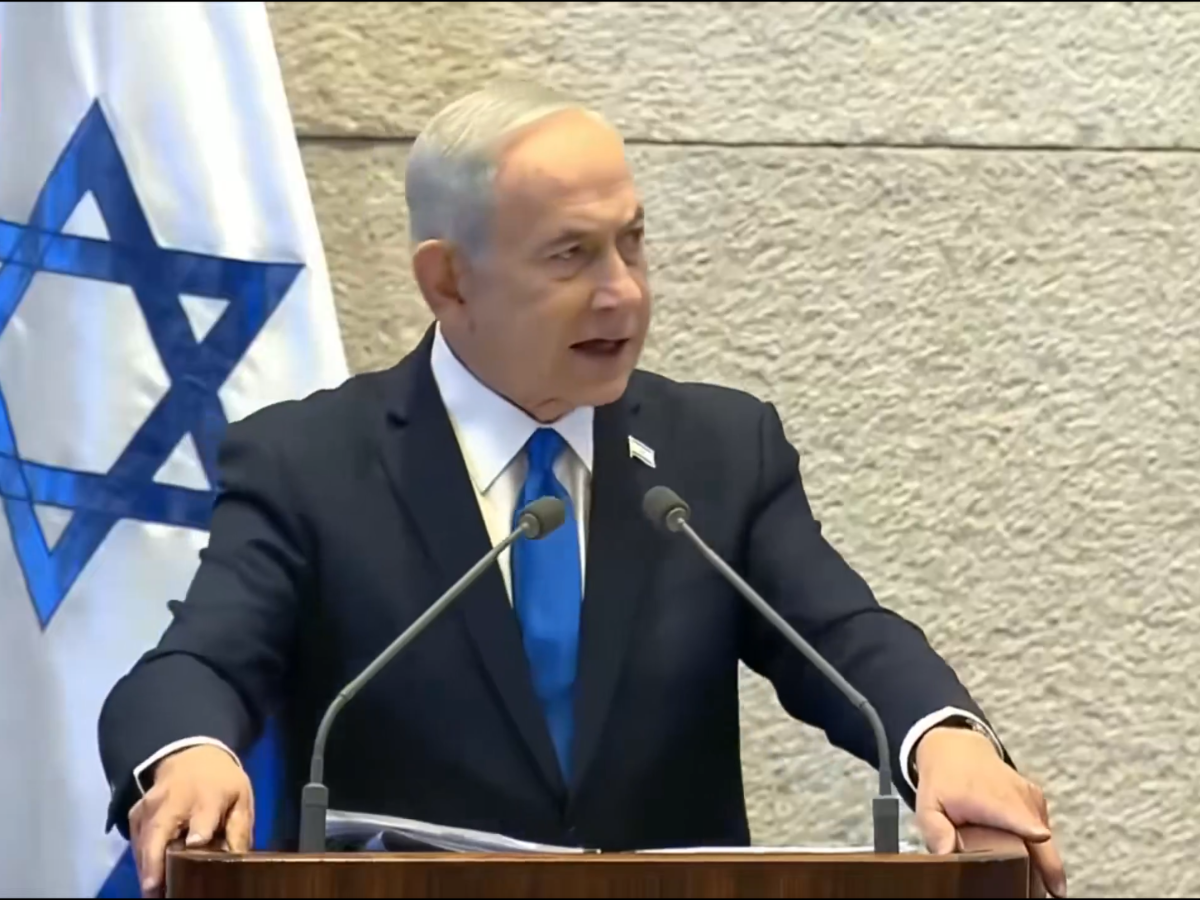
Netanyahu proof-of-life video sparks fresh AI claims over ‘disappearing ring’
Israeli PM Netanyahu's recent video to dispel death rumors has sparked new AI claims after viewers noticed a disappearing ring. The scrutiny highlights challenges in verifying video authenticity.

Israeli Prime Minister Benjamin Netanyahu has released another video aimed at countering widespread rumours about his death, but the clip has instead triggered fresh speculation online after viewers pointed to visual irregularities, including a ring that appears to briefly vanish.
The video, shared on his official social media account, shows Netanyahu interacting casually with civilians outdoors, appearing relaxed and engaging in conversation. The footage was circulated as part of efforts to dispel claims that he had been killed or injured during the ongoing Israel-Iran conflict.
However, social media users quickly scrutinised the clip, with several highlighting a moment where a ring on his finger appears to disappear and then reappear as he moves his hand. The observation, amplified through slowed-down versions of the footage, has reignited debate over whether the video is authentic or digitally altered.
The controversy builds on earlier speculation that questioned the authenticity of previous videos released by Netanyahu. In one instance, online users claimed to have spotted a “sixth finger” in a separate clip, prompting allegations that artificial intelligence or deepfake technology had been used.
In response to those earlier claims, Netanyahu had posted a video from a café in Jerusalem, joking about the rumours and holding up both hands to show five fingers. That footage was verified by independent reporting, but it too became the subject of online debate.
The emergence of repeated “proof-of-life” videos reflects the scale of misinformation circulating during the ongoing conflict. Rumours about Netanyahu’s death were initially amplified on social media and by some regional outlets following intensified military strikes between Israel, the United States, and Iran.
Despite official denials and multiple public appearances, scrutiny of each new video continues, with minor visual anomalies—such as lighting distortions or motion artefacts—being interpreted by some as signs of manipulation. Analysts note that such inconsistencies are often the result of compression, camera movement, or video quality rather than evidence of AI generation.
The episode highlights growing challenges in distinguishing real footage from manipulated or misleading content, particularly during periods of conflict when information flows rapidly and verification remains limited.
Comments
No comments yet. Be the first to join the discussion!