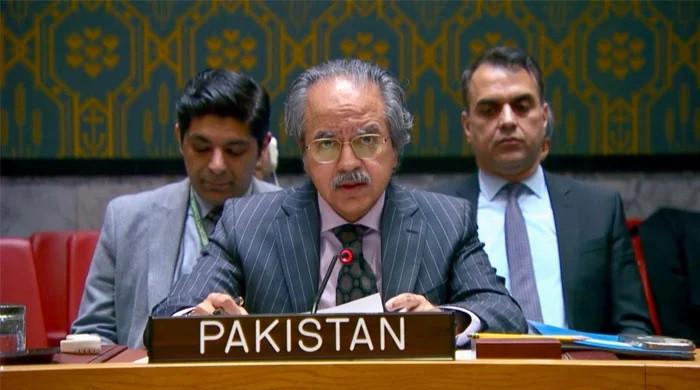
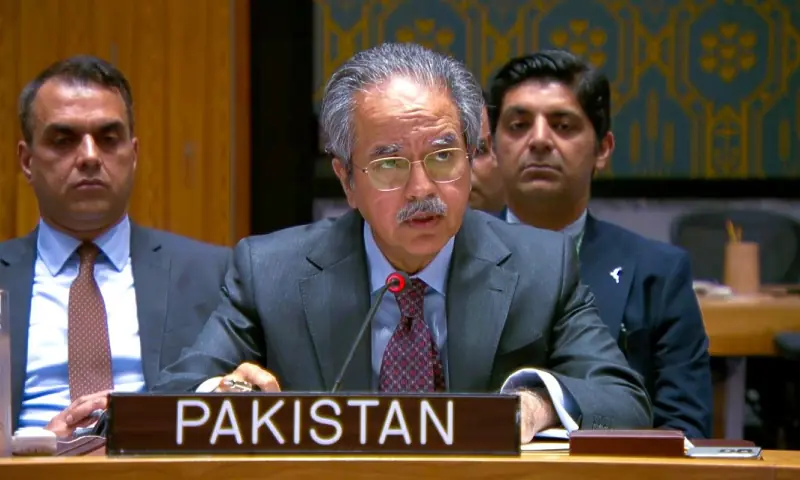
At UNSC, Pakistan demands end to terror safe havens in Afghanistan
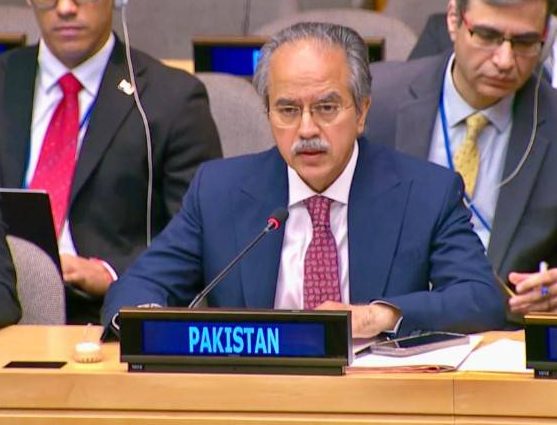
UNITED NATIONS: Pakistan on Friday renewed its call for Afghan territory to stop being used for terrorism against neighbouring states, urging concrete steps to prevent “external spoilers” from exploiting instability during a session of the United Nations Security Council.
The Council unanimously adopted a draft resolution extending the mandate of the Monitoring Team assisting the 1988 Afghanistan Sanctions Committee—which oversees the Taliban sanctions regime—for another 12 months, until February 17, 2027. All 15 members voted in favour of the resolution, which was prepared and tabled by the United States.
Addressing the Council, Pakistan’s Permanent Representative to the UN, Asim Iftikhar Ahmad, expressed serious concern over the continued presence of militant outfits on Afghan soil, including Tehreek-e-Taliban Pakistan (TTP), the Balochistan Liberation Army and its Majeed Brigade, Islamic State Khorasan (ISIL-K), and Al-Qaeda.
“With the adoption of this resolution, the Council sends a clear message to the Taliban authorities that Afghan territory should not be used to threaten or attack any country,” he said, according to highlights of his remarks shared on X.
Ahmad stressed that member states must ensure kidnappers, hostage-takers, and terrorist groups do not benefit from ransom payments or political concessions and called on the Taliban to take sustained and verifiable counterterrorism measures.
“The Council has spoken with a unanimous voice,” he said, adding that Afghanistan’s authorities must choose between isolation and integration as a responsible member of the international community.
A day earlier, Foreign Office spokesperson Tahir Andrabi said a recent report by the UNSC’s 1267 Sanctions Committee had reinforced Pakistan’s longstanding position that terrorist groups—particularly the TTP—continue to operate from Afghan territory. He noted that the February 4 report indicated the TTP had resurged following the Taliban’s 2021 takeover.
The renewed diplomatic push comes amid a surge in deadly attacks inside Pakistan.
Last Friday, at least 36 people were killed and around 169 injured in a suicide bombing at Imambargah Khadijah al-Kubra during Juma’a prayers—the deadliest attack in Islamabad in over a decade and the most devastating nationwide since the Peshawar Mosque bombing in January 2023.
On January 31, coordinated assaults across Balochistan left 18 civilians dead, while security forces killed 92 militants during clearance operations, according to the military’s media wing. The Balochistan Liberation Army claimed responsibility, describing the attacks as the second phase of “Operation Heroof.” Authorities have accused the group and its suicide wing, the Majeed Brigade, of acting as proxies in a broader hybrid warfare campaign against Pakistan.
Khyber Pakhtunkhwa alone recorded 1,588 terrorism-related incidents in 2025—nearly a 50 per cent increase compared to the previous year. While security forces foiled 320 major plots, 137 police personnel lost their lives in the line of duty, underscoring the escalating security challenge confronting the country.
Comments
No comments yet. Be the first to join the discussion!