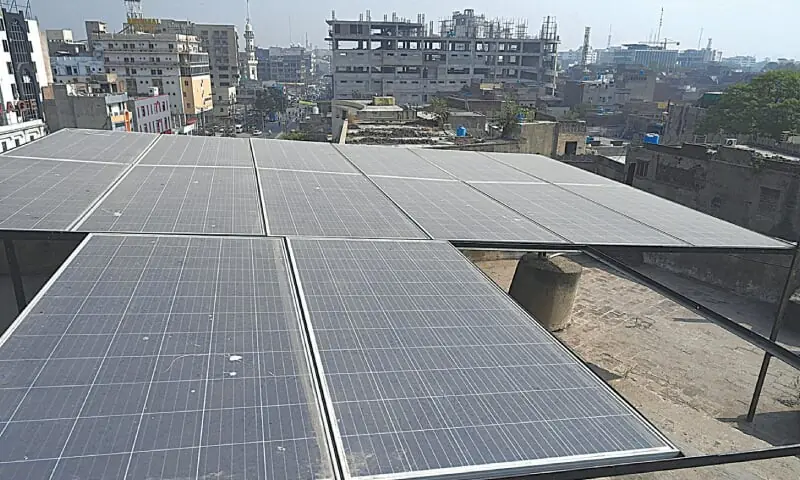
Solar Policy Whiplash
Pakistan’s rooftop solar boom was built on a promise: invest in panels, connect to grid, and excess electricity will cancel out consumption unit for unit. That promise has now been abruptly rewritten.
Last week, the National Electric Power Regulatory Authority shifted the country from net metering to net billing — not only for future users, but for the 466,000 households that had already signed multi-year agreements with distribution companies. Under net metering, exported units offset imported units at full retail price. Under net billing, surplus electricity is sold to the grid at a fixed buyback rate — around Rs 26 per unit for existing users — while consumers continue to purchase electricity at the higher retail tariff. In simple terms: sell low, buy high.
Within a day, the political temperature rose. The power minister assured lawmakers that existing consumers would not be affected. The prime minister instructed the Power Division to file an appeal. The message shifted from regulatory finality to possible reconsideration. The uncertainty is now the story.
Governments have every right to reform policy. Net metering, generous by design, effectively allowed households to use the grid as a battery. That arrangement may have made sense when rooftop solar penetration was limited. But as installations grew — concentrated in urban, relatively affluent neighborhoods — the financial strain on distribution companies intensified. Cross-subsidies widened. Consumers without solar panels bore a larger share of fixed grid costs.
Many countries have confronted the same tension. India has gradually revised compensation structures for rooftop solar, balancing expansion with grid sustainability. Vietnam, after an initial surge under generous feed-in tariffs, recalibrated rates to manage fiscal and infrastructure pressures. Net billing models, in principle, better reflect the difference between wholesale power costs and retail tariffs. Over time, such reforms can produce a more sustainable system.
But sustainability requires credibility.
Existing solar users entered into five- and seven-year contracts under the 2015 regulatory framework. While those agreements contained provisions allowing regulatory intervention, the spirit of policy stability matters as much as the letter of the law. When rules change retroactively, even if technically permissible, investment confidence erodes. Today it is rooftop solar; tomorrow it could be electric vehicles, storage, or any other emerging sector.
The government’s swift softening may reflect more than technical reconsideration. Net-metering households are not randomly distributed. They are concentrated among middle- and upper-income urban consumers — politically vocal, socially influential and economically significant. Their discontent carries weight. But policymaking cannot oscillate between technocratic decree and political retreat.
The deeper issue is clarity. If Pakistan intends to transition from net metering to net billing, it must say so plainly. It should define timelines, honor existing commitments where feasible, and outline a transparent glide path for reform. Policy should not be rewritten through confusion.
Most important, the solar revolution extends far beyond 466,000 prosumers. Falling panel prices, unreliable grid supply and rising tariffs have made distributed generation a structural feature of Pakistan’s energy landscape. Investors, manufacturers and ordinary households are watching closely.
Reform may be necessary. But reform without clarity becomes policy whiplash

The Editorial Department of Pakistan Today can be contacted at: [email protected].
View all articles →Comments
No comments yet. Be the first to join the discussion!