
















By: Musa Saeed and Mariam Saleh Khan
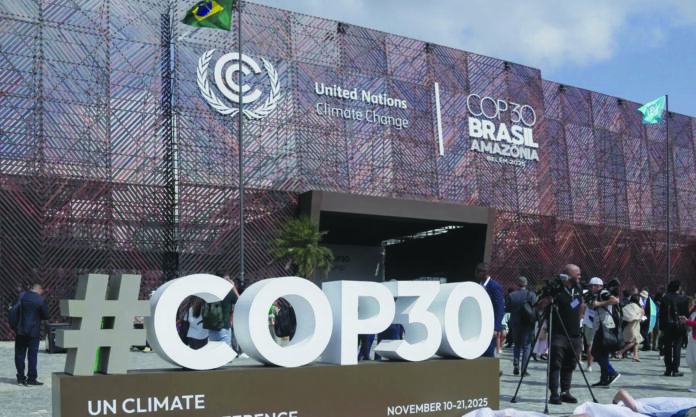
COP30 has concluded in Belém, Brazil, a symbolic host city at the edge of the Amazon, one of the planet’s most vital climate regulators and one of the regions increasingly battered by extreme heat and humidity. The event closes a decade since the Paris Agreement first promised to limit global warming and protect vulnerable countries. Yet as delegates return home, Pakistan remains exposed to the same escalating risk that climate negotiations struggle to contain: extreme, and increasingly lethal, heat.
HEAT IS THE CLIMATE CRISIS PEOPLE ARE ALREADY DYING FROM: Heat has emerged as the deadliest climate risk worldwide. Often described as the “silent killer” because it leaves little visible destruction, extreme heat causes an estimated half a million deaths every year, more than floods, cyclones, wildfires, and earthquakes combined. It strains health and energy systems, reduces labour productivity, and disproportionately affects low-income communities, outdoor workers, women, and the elderly.
As global temperatures rise, both dry heat and humid heat are intensifying. In increasingly humid conditions, the body’s main cooling mechanism begins to fail. Sweat no longer evaporates efficiently, making it harder to shed heat and easier for core body temperature to rise to dangerous levels. Prolonged exposure under such conditions can push core body temperature toward heat stroke, worsen cardiovascular and respiratory disease, damage kidneys, and lead to organ failure and death, even among otherwise healthy people.
Humid heat events have more than doubled since 1979. Increasingly, they do not subside at night. During prolonged humid heat events, even nighttime offers no relief, especially in dense cities with poor ventilation, limited green cover, and heat-trapping construction. Heat accumulates day after day. This is no longer a future risk. It is happening now.
PAKISTAN IS ALREADY LIVING IN THAT FUTURE: Pakistan, the world’s fifth most populous country, is among the most climate-vulnerable nations globally, and extreme heat lies at the centre of that vulnerability. In April 2025, parts of the country recorded temperatures as high as 45°C, weeks earlier than what was historically typical. Jacobabad, often described as one of the hottest places on Earth, is a wet-bulb temperature hotspot that has already breached human survivability thresholds multiple times, where heat and humidity combine to overwhelm the body’s ability to regulate its temperature.
Heat is not new to Pakistan. What is new is the speed and intensity of change. Rapid warming is overwhelming the ability of people, cities, and institutions to adapt. Densely populated urban areas, where Pakistan is urbanising faster than any other South Asian country, are particularly exposed. Extreme heat combines with inadequate housing, unreliable electricity, and limited access to cooling.
Between 2012 and 2021, an estimated 25,000 deaths per year in Pakistan were attributable to heat, around 40 percent higher than in the 1990s. These figures are widely considered underestimates, reflecting the absence of robust systems for recording heat-related illness and mortality. The economic toll is equally severe. Billions of working hours are lost each year, particularly in agriculture and construction, translating into large sums of foregone income.
In short, lethal heat in Pakistan is not a projection for 2050 or 2100. It is a present condition.
A decade after Paris, the lesson is clear. Diplomacy can bend the curve of risk, but only delivery will protect lives. As negotiations continue inside climate-controlled halls, millions elsewhere are already negotiating survival with heat. For Pakistan, COP30 must be a moment of truth, not another missed warning.
WHY THE PARIS AGREEMENT STILL MATTERS: This is where COP30, and the Paris Agreement it marks ten years of, becomes critical.
When the Paris Agreement was adopted in 2015, the world had already warmed by about one degree Celsius above pre-industrial levels and was heading toward catastrophic warming of more than 3.5°C by the end of the century. Paris established 1.5°C as both a scientific and moral benchmark, aligned countries around net-zero emissions, redirected global finance, and laid the groundwork for adaptation and loss-and-damage mechanisms.
Today, the world is around 1.3°C warmer. Current national pledges still place us on track for approximately 2.6°C of warming, but that is significantly lower than where the world was headed before Paris. That difference is not academic. It determines how often heat becomes lethal, how long work becomes unsafe, and whether nights allow bodies to recover.
For Pakistan, the difference is stark. Under current warming, the average person already experiences significantly more extreme heat days each year than a decade ago. At 2.6°C, that number rises sharply. At 4°C, extreme heat would dominate nearly four months of the year. Full delivery on Paris commitments could avoid roughly a month of dangerous heat annually for Pakistan alone.
This is not abstract diplomacy. It is risk reduction measured in lives and livelihoods.
CITIES, HEALTH, AND THE NEXT FRONTIER OF CLIMATE ACTION: Heat exposure is intensifying globally, but urbanisation is accelerating the danger. Cities amplify heat through dense construction, limited green space, and waste heat from transport and cooling systems. The IPCC finds, with very high confidence, that future urbanisation will increase city temperatures regardless of background climate change. By mid-century, nearly 70 percent of the world’s population will live in cities.
Climate negotiations have begun to recognise heat as a public health emergency. Recent COPs have integrated health more clearly into adaptation discussions and embedded it within the Global Goal on Adaptation. These are important steps, but they risk remaining symbolic unless translated into implementation in urban neighbourhoods, where heat is felt not as a statistic but as exhaustion, illness, and lost income.
COP30 offered an opportunity to make that shift. Initiatives focused on urban heat planning and sustainable cooling, such as the “Beat the Heat” implementation drive signal a move from declarations to delivery. For countries like Pakistan, this is where global commitments must begin to resemble protection.
PAKISTAN SHOULD HAVE DEMANDED DELIVERY AT COP30: Pakistan is already living in the future heat many other regions still have a chance to avoid. COP30 should be the moment it says so plainly.
This means aligning firmly with efforts to keep the 1.5°C goal within reach, while pushing adaptation, especially heat resilience, higher on the global agenda. It means showcasing heat action plans and urban resilience initiatives, while demanding accessible finance and technology for cooling, housing, and public health systems.
Most importantly, it means reframing heat not as a seasonal inconvenience, but as a public health emergency and a development threat.
A decade after Paris, the lesson is clear. Diplomacy can bend the curve of risk, but only delivery will protect lives. As negotiations continue inside climate-controlled halls, millions elsewhere are already negotiating survival with heat. For Pakistan, COP30 must be a moment of truth, not another missed warning.
The writers are part of the Weather and Climate Services, an independent think tank focusing on climate change research.