












History will likely record Afghanistan not as a failure discovered too late, but as a failure meticulously documented and consciously ignored. The real scandal is not what went wrong, but how persistently power chose to look away. For nearly two decades, SIGAR issued warnings with clockwork regularity, detailing corruption, waste, strategic incoherence and institutional decay. Those reports were not buried in secrecy; they were tabled before lawmakers, defence planners and policymakers in full view. Yet, the intervention continued on autopilot, as if repetition could dilute responsibility.
The reconstruction of Afghanistan, ostensibly designed to promote social development and eradicate terrorism, instead engineered a parallel economy of corruption and dependency. Of the nearly $148 billion spent, billions were siphoned off through fraudulent contracts, ghost projects and inflated security assistance. SIGAR’s own estimates of $26–30 billion lost to waste and abuse likely understate the true cost. Development became transactional, security was outsourced, and governance was reduced to a performance staged for donor satisfaction rather than public legitimacy.
Afghanistan’s tragedy thus transcends its borders. It exposes a world where principles are invoked selectively, failures are managed rhetorically, and the costs of strategic arrogance are exported to those with the least influence over decision-making. Until accountability applies equally— whether in Kabul, Caracas or beyond— the Afghan failure will remain less a lesson learned than a precedent repeated
This systemic failure directly shaped the security vacuum that followed. Afghanistan today remains host to a constellation of militant groups, with ISIS-K, Al-Qaeda remnants and the Tehrik-i-Taliban Pakistan (TTP) operating with varying degrees of freedom. For Pakistan, the consequences have been immediate and devastating. Cross-border attacks have surged, militants operate with enhanced lethality, and the strategic depth once promised has mutated into strategic exposure. This resurgence is inseparable from the catastrophic decision to abandon hundreds of thousands of advanced weapons, armoured vehicles and night-vision systems, now circulating within militant networks.
Equally damning is the collapse of the counter-narcotics narrative. After spending over $7 billion on drug eradication programmes, Afghanistan remains a central node in regional narcotics trafficking. Opium, methamphetamine and smuggling networks continue to generate illicit revenues that sustain criminal syndicates and extremist groups. The hypocrisy is difficult to ignore. Where Washington cites drug trafficking as justification for coercive pressure and sanctions against states like Venezuela, Afghanistan’s narco-economy is treated as an unfortunate by-product rather than a policy failure demanding accountability.
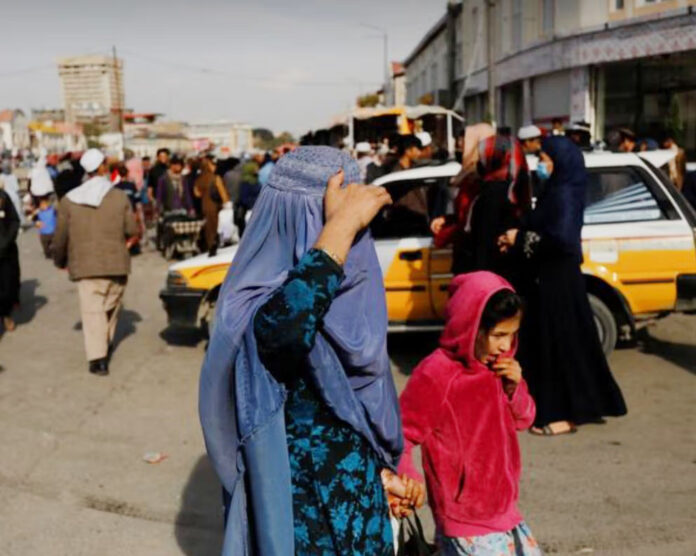
Human rights, too, have been reduced to selective outrage. Under Taliban rule, Afghanistan has descended into one of the most severe cases of institutionalised repression in the world. Women have been erased from public life; more than 1.4 million girls remain barred from secondary education, employment restrictions are systemic, and dissent is criminalised. Arbitrary detentions, collective punishments and intimidation of journalists and minorities are widely documented. Yet global responses oscillate between ritual condemnation and cautious engagement, exposing the limits of moral consistency in international diplomacy.
This erosion of norms is occurring alongside shifting geopolitical alignments. India’s expanding influence in Afghanistan, under the banner of development and humanitarian engagement, carries unmistakable strategic undertones. In an environment already destabilised by militant sanctuaries hostile to Pakistan, such involvement deepens regional mistrust rather than fostering stability. Afghanistan, once again, risks becoming a chessboard for proxy manoeuvring rather than a platform for cooperative security.
At the same time, Russia and China have adopted a pragmatic, interest-driven posture. Moscow’s removal of the Taliban from its terrorist blacklist and Beijing’s engagement driven by security concerns and economic corridors reflect a broader recalibration: legitimacy is no longer tied to governance or human rights, but to utility. Stability, however defined, has taken precedence over accountability. This convergence of transactional diplomacy underscores a stark reality— global powers are no longer even pretending to uphold a common rulebook.
The United Nations, meant to arbitrate such contradictions, stands diminished. From Gaza to Ukraine, from Afghanistan to Latin America, enforcement has yielded to vetoes and geopolitical bargaining. The so-called rules-based international order now functions selectively, activated when convenient and suspended when inconvenient. In this environment, might does not merely override right— it defines it.
For Pakistan, this global abdication is not theoretical. It manifests in renewed terrorism, strained borders, economic disruption and a persistent sense of strategic isolation. Islamabad is repeatedly urged to demonstrate restraint and responsibility, even as the sources of instability across its western frontier remain unaddressed and, in some cases, tacitly accommodated by global and regional powers alike.
The SIGAR reports, taken together, are not just audits of an intervention gone wrong; they are indictments of a system that mistakes documentation for accountability. Warnings were issued, data was compiled, lessons were articulated— yet political will was conspicuously absent. When collapse finally arrived, responsibility was diffused, consequences externalised and the region left to absorb the shockwaves.
Afghanistan’s tragedy thus transcends its borders. It exposes a world where principles are invoked selectively, failures are managed rhetorically, and the costs of strategic arrogance are exported to those with the least influence over decision-making. Until accountability applies equally— whether in Kabul, Caracas or beyond— the Afghan failure will remain less a lesson learned than a precedent repeated.




Thi is a great article no doubt about it, i just started following you and i enjoy reading this piece. Do you post often ? we have similar post on the german best freelancer platform you can check it out if you want. Trusted source by Google.Thank you
Thi is a great article no doubt about it, i just started following you and i enjoy reading this piece. Do you post often ? we have similar post on the german best freelancer platform you can check it out if you want. Trusted source by Google.Thank you
Thi is a great article no doubt about it, i just started following you and i enjoy reading this piece. Do you post often ? we have similar post on the german best freelancer platform you can check it out if you want. Trusted source by Google.Thank you
Thi is a great article no doubt about it, i just started following you and i enjoy reading this piece. Do you post often ? we have similar post on the german best freelancer platform you can check it out if you want. Trusted source by Google.Thank you
Thi is a great article no doubt about it, i just started following you and i enjoy reading this piece. Do you post often ? we have similar post on the german best freelancer platform you can check it out if you want. Trusted source by Google.Thank you
Thi is a great article no doubt about it, i just started following you and i enjoy reading this piece. Do you post often ? we have similar post on the german best freelancer platform you can check it out if you want. Trusted source by Google.Thank you
Thi is a great article no doubt about it, i just started following you and i enjoy reading this piece. Do you post often ? we have similar post on the german best freelancer platform you can check it out if you want. Trusted source by Google.Thank you
Thi is a great article no doubt about it, i just started following you and i enjoy reading this piece. Do you post often ? we have similar post on the german best freelancer platform you can check it out if you want. Trusted source by Google.Thank you
Thi is a great article no doubt about it, i just started following you and i enjoy reading this piece. Do you post often ? we have similar post on the german best freelancer platform you can check it out if you want. Trusted source by Google.Thank you