












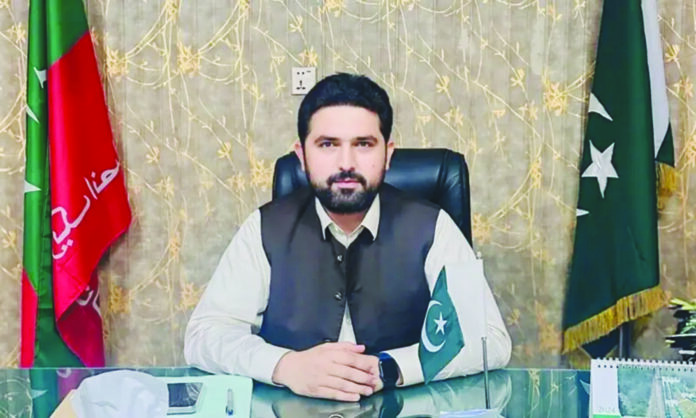
When the new Chief Minister of Khyber Pakhtunkhwa was announced recently, not by voters or public mandate, but by a directive from a jailed leader, a chilling reality became impossible to ignore; KP is no longer governed for its people. It is governed on behalf of a leader imprisoned, by decisions made behind bars, by loyalty above competence. The province has been turned into a personal fiefdom, its dignity bartered for allegiance. Chosen over more experienced and seasoned politicians, the province is now led by someone whose selection raises urgent questions about priorities; governance or political calculus. While the jailed leader wields authority over his party, the move exposes a province sidelined, its future and development quietly sacrificed as internal politics take centrestage. KP’s leadership now risks serving strategy over substance, optics over outcomes, leaving the people to bear the consequences.
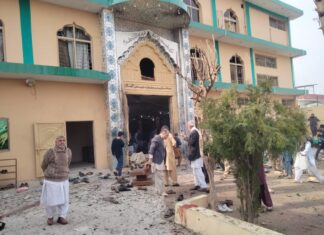
What was once legitimate political leadership has been reduced to an exercise in fealty. The previous Chief Minister, Ali Amin Gandapur, resigned not because of public demand or electoral failure, but because he was ordered to. His successor, Sohail Afridi, was not chosen by popular demand or declared through transparent consensus, but was appointed at the command of the jailed leader. While the leaders’ families and party elites enjoy cushioned seats, flashing protocols, and late-night celebrations, the reality outside their convoys is one of fear and bloodshed. Terrorism has tightened its grip once again and with no real monitoring, no urgency, and no seriousness from those in power, militants roam with disturbing confidence. The streets where children once played now echo with the sound of explosions and gunfire. The people of KP are left to fend for themselves while leaders chase approval from a prison cell, leaving terrorists a free field to operate.
In just the first 11 months of 2025, the province has endured over 660 terror attacks, killing 178 civilians and 92 police officers, leaving hundreds injured. Nearly half of these attacks struck the southern belt, Bannu, North Waziristan and neighbouring districts where fear has become a daily routine and sacrifice a recurring headline. The destruction extends beyond bombs and bullets. KP’s future is being quietly stolen. Five million children, a staggering one-third of the province’s young population, are out of school. With every passing year, more children fall through the cracks as classrooms overflow and resources collapse. 13 percent of children aged 5-17 are trapped in child labour, many in conditions that threaten their safety and dignity. Each number represents a silenced dream, a lost scientist, a vanished teacher, a future that never stands a chance.
This is KP today: no gas, endless load-shedding, roads crumbling under every tire, and basic services frozen in time. The province is sliding backward, stranded in the lantern era, while hollow promises of ‘tabdeeli’ mock its people. This is not progress, this is abandonment. A generation wanders the streets, degrees in hand, ambition suffocated by unemployment. Entire families are sinking below the poverty line as inflation strips away dignity. Security is shattered, opportunity is scarce, and the future is shrinking. Behind the political theatre, while loyalty is celebrated and convoys flash by, KP bleeds, its people trapped, its potential stolen, the province collapsing under neglect.
Is this what representation looks like? A province led not by conviction or courage, but by the desperate need to impress a man behind bars. When leaders pledge loyalty upward instead of accountability downward, the public interest becomes collateral damage. Those entrusted with safeguarding KP should have been the first to sound the alarm, to insist that the province is sinking, that its people are slipping backward while the rest of the country advances. Silence prevails, and loyalty has become a leash so tight that even speaking the truth is treated as rebellion. Governance transforms into a hollow ritual, decisions made not for 40 million citizens, but for the comfort of one man. What remains is not a government, it is a patronage network sustained by blind obedience, even as the province sinks deeper into crisis.
KP does not need empty slogans or repeated oaths, it needs justice for victims of violence, secure and well-equipped schools for every child, universal access to vocational and skill development, and scholarships to nurture talent. It needs jobs for its youth, support for entrepreneurs, investment in industries, modern transport networks, reliable energy, clean water, sanitation, and robust housing.
KP needs a Chief Minister who delivers security, justice, jobs, education and dignity. It needs policies, not orders; it needs governance, not guardianship; it needs accountability, not allegiance. The people of KP deserve more than a token leadership that only speaks when its master commands. If the political machinery continues to function on chains of loyalty, KP is doomed to repeat cycles of instability and neglect. Each day spent satisfying loyalty over leadership, each policy delay, each ignored plea from the streets, drags the province deeper into instability.
KP does not need empty slogans or repeated oaths, it needs justice for victims of violence, secure and well-equipped schools for every child, universal access to vocational and skill development, and scholarships to nurture talent. It needs jobs for its youth, support for entrepreneurs, investment in industries, modern transport networks, reliable energy, clean water, sanitation, and robust housing. Social protection and healthcare must be accessible and effective, including maternal, child and mental health services. The province also needs safe public spaces, parks, cultural programmes, sports facilities, and libraries to nurture a vibrant society. Law and order must be restored, corruption reduced, and governance made transparent and accountable. Chains of loyalty have never built a future, they only sustain servitude.


naturally like your web site however you need to take a look at the spelling on several of your posts. A number of them are rife with spelling problems and I find it very bothersome to tell the truth on the other hand I will surely come again again.