















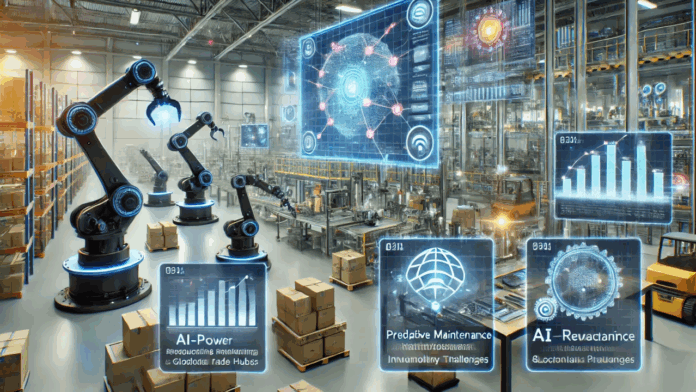
In the recently released ‘World Economic Outlook [WEO] Update’ by International Monetary Fund (IMF) with the title for this edition ‘Global economy: steady amid divergent forces’ while the title, along with the assertion in the Report that ‘Global growth is projected to remain resilient at 3.3 percent in 2026 and at 3.2 percent in 2027: rates similar to the estimated 3.3 percent outturn in 2025.’ The forecast marks a small upward revision for 2026 and no change for 2027 compared with that in the October 2025 World Economic Outlook (WEO). This steady performance on the surface results from the balancing of divergent forces. Headwinds from shifting trade policies are offset by tailwinds from surging investment related to technology, including artificial intelligence, more so in North America and Asia than in other regions, as well as fiscal and monetary support, broadly accommodative financial conditions, and adaptability of the private sector’ rightly points out divergent forces affecting global economic outlook, and that this creates a ‘balancing’ effect, the writer believes that euphoria needs to be managed with greater care, and caution, and experiences of the likes of 1990s ‘dot-com’ bubble should be kept in mind, especially as the world overall grapples with a difficult debt distress situation, and important competing demands for investments, like to transition quickly to a green economy, in the fast-unfolding climate change crisis, because any amount of AI advancement needs an adequately liveable world.
In addition, the related ‘Pandemicene’ phenomenon to the climate change crisis requires quickly, and deeply building not only the health sector, but also induces greater globalized effort, which in turn, requires adequately reforming the World Trade Organization (WTO), and global trade policy – and overall economic policy, and financial architecture– away from neoliberal philosophy. In that sense, more sustainable development, and risk mitigation requires more diverse investment than AI sucking unwarrantedly high levels of investment. The mistake of following the ‘market fundamentalism’ bandwagon has already cost the global economy– not to mention the likely negative impact of this on the very life and livelihood of people in the first place– dearly from years of allocative inefficiencies– as evidenced from lack of availability of vaccines, to appropriate ways to share it globally, and from the very lack of availability of adequate levels of global health systems in the first place– caused as a consequence of this.
Aptly depicting major concerns facing the global economy, and asking for greater caution in terms of investments into AI, renowned economist, Mohamed El-Erian pointed out in his January 23, Financial Times published article ‘The twin “factories” spurring global growth are both at risk’ as ‘The favourable tail is a stronger global economy that benefits earlier than most expect from the productivity surge powered by US AI and Chinese green tech. This would solidify a 1990s-like period of sustainably higher growth, declining debt burdens and better distribution of wealth. The other tail is more reminiscent of the era of 1970s-type stagflation marked by global protectionism, disruptive bond and currency markets and financial deleveraging. …Investors also need to be agile and consider the pace of AI adoption rather than just focusing on the companies delivering foundational models. They will need to seek out what is likely to be a much smaller set of AI-related winners. Debt investors, particularly, should be conservative in assessing balance sheet strength and capital structure seniority. Overall, investors should not rely on what worked well last year. They need to adapt to the eroding power of the two big macro engines that supported markets and economies through what has now become systemic uncertainty and volatility.’
Moreover, trade as the primary component among headwinds, may carry all the more weight in an environment of inadequate dealing with core issues stemming from neoliberal underpinning of global trade, allowing biased treatment, where developed countries continue to get away with continuing with protections, and support, while the developing countries have to grind their way for similar such allowances, and that too at the back of very thorny experience during Covid pandemic – where under the garb of intellectual property rights (IPRs) walls more protection was allowing to big vaccine companies, than the universal necessity of vaccine required, especially when a meaningful amount of these vaccines in the first place, received a lot of taxpayer’s money – has already put serious cracks in the already weak level of trust over the years with uneven application of WTO rules for developed, and developing countries.
For instance, in the (2008) book ‘Beyond World Bank agenda: an institutional approach to development’ the apparent lack of action against rich, advanced countries, in general, against provision of subsidies by WTO, where in turn these subsidies suppressing global commodity prices, especially in the case of prices for raw commodities, like agricultural commodities, which are the mainstay of balance of payments of developing countries; not to mention the negative impact of this in terms of exports of farmers in developing countries in particular being outcompeted in terms of market share, both in terms of price, and also in terms of quantity produced. Such unfair trading system globally, not bode well for the macroeconomic stability, and economic growth efforts, not to mention the negative impact it creates in fighting poverty, inequality, and enhancing resilience, and political voice, which is an important determinant of producing positive impact on democratic outcomes, including generating much-needed pressure on political, and economic elites to pursue deep non-neoliberal, and non-austerity based economic reform.
Such unfair trading system globally, not bode well for the macroeconomic stability, and economic growth efforts, not to mention the negative impact it creates in fighting poverty, inequality, and enhancing resilience, and political voice, which is an important determinant of producing positive impact on democratic outcomes, including generating much-needed pressure on political, and economic elites to pursue deep non-neoliberal, and non-austerity based economic reform.
The book pointed out in this regard ‘Subsidies in developed countries have also driven prices downward. In a recent submission to the World Trade Organization (WTO), Brazil argued that the United States paid subsidies of $12.4 billion to American cotton producers between August 1999 and July 2003. During this time, the subsidies helped raise cotton production by 20 percent, increased the American share of the world cotton market from 17 to 42 percent, and created a fall in world prices from 72 to 29 cents per pound. Based on its econometric study, Brazil estimated that without the subsidies, U.S. cotton exports would have fallen by 41 percent and the world price of cotton would have risen by 12.6 percent…’
This situation of global trade, in turn, likely create a lot of negative impact for developing countries like Pakistan, whose main exports include textile, and raw cotton, and which are also dealing with the climate change onslaught, given it is among the top-ten most climate change challenged country, and needs revenues, and larger reserves to move much more quickly towards a more resilient, green economy. The same book pointed out with regard to the above-mentioned provision of subsidy to the American producers of cotton, as ‘The implication of this statistic for poor cotton-producing countries, whose dependency on cotton is clearly more pronounced than is that of the United States, are obvious. The poorest African countries were hit the hardest. Four African countries – Benin, Mali, Burkina Faso, and Chad – relied on cotton from between 54 percent and 78 percent of their total exports. Oxfam (2004) estimates that annual losses in West and Central Africa due to U.S. and European cotton subsidies totalled roughly $250 million.’ Although the example is a bit dated, these unfair allowances continue in the global trading system, and require strengthening the role of the World Trade Organization (WTO).
Moreover, a January 21 published article ‘The WTO needs an overhaul’ in FT by ‘EU commissioner for trade and economic security’ highlighted the importance of strengthening WTO for global trade, which in turn, as the recent WEO report rightly highlights ripples in trade affairs producing headwinds for the global economy, and which is also important to address concern flagged by the except from the book quoted above.
The article indicated in this regard ‘To ensure fairness, we need to address asymmetries among members in market openness and a commitment to fair competition. Developing countries should be treated with a more targeted, needs-based approach. We must increase transparency and provide stronger remedies to counter the negative impacts of state intervention. We must also rethink how the “most favoured nation” principle functions and whether the current balance of rights and obligations remains fit for purpose. …We need a frank discussion on the link between MFN status and reciprocity, taking into account members’ actual levels of market openness, their commitment to fair competition and transparency, and their evolving weight in global trade. This must include exploring options to allow for more agile and targeted adjustments of tariff treatment in response to changing realities and threats to our economies. Access to lower tariffs cannot be unconditional: it must be earned through stronger, credible commitments to the core principles of free and fair trade.’



يمكن للعملاء التواصل مع شركة الإنجاز مباشرة عبر رقم الهاتف 0509002239 للاستفسار أو حجز الخدمات والحصول على استشارة سريعة مع متابعة كاملة لجميع الخدمات
أما خدمات العزل فتشمل عزل الفوم بالرياض وعزل الفوم بجدة حيث تساعد على حماية المباني من الحرارة المرتفعة والرطوبة والتسربات مما يقلل استهلاك الطاقة ويطيل عمر المباني مع ضمان بيئة داخلية مريحة وآمنة
r1g0wr