











By Adnan Ahmad Javed
Pakistan does not suffer from a shortage of human rights laws. It suffers from the far more difficult challenge of translating those laws into everyday reality.The country’s constitutional and legal framework for human rights is extensive. The Constitution guarantees equality before the law, freedom of speech and religion, protection against arbitrary arrest, and the right to due process.
These are not merely aspirational clauses; they are enforceable rights that form the foundation of Pakistan’s legal order. Beyond this, Pakistan has ratified key international human rights conventions covering women, children, labour, and civil liberties, giving its legal architecture both domestic and global legitimacy.
At the centre of this framework stands the judiciary. The Supreme Court and provincial high courts exercise constitutional oversight and routinely hear cases involving enforced disappearances, unlawful detention, bonded labour, environmental protection, and police excesses. Public interest litigation has expanded access to justice by allowing citizens and civil society groups to approach courts even when victims lack the means to do so themselves. Judicial human rights cells have further lowered barriers, transforming courts from passive arbiters into active constitutional guardians.
Institutionally, Pakistan has also invested in human rights mechanisms. The Ministry of Human Rights operates at the federal level, mirrored by provincial departments. Independent statutory bodies such as the National Commission for Human Rights and the National Commission on the Status of Women investigate complaints, issue policy recommendations, and monitor state conduct. Over the past decade, landmark legislation — including workplace harassment laws, domestic violence statutes, and child protection frameworks — has reinforced the state’s stated commitment to international rights standards.
Yet a wide gap persists between law and lived experience. Structural weaknesses continue to undermine implementation. Poverty, illiteracy, judicial delays, and weak policing allow violations to endure, especially in rural and marginalised communities. Women still face social and institutional barriers in reporting violence. Religious minorities remain vulnerable to both legal and societal pressures. Bonded labour, though illegal, continues in parts of agriculture and industry. Access to justice too often reflects economic power rather than legal entitlement.
Freedom of expression highlights this contradiction. While constitutionally protected, journalists and digital creators increasingly operate under pressure. Media restrictions, online regulation, and periodic internet shutdowns raise serious questions about proportionality and accountability. Though often justified in the name of stability or security, these measures fuel ongoing debate about the shrinking space for dissent.
Security concerns further complicate the human rights landscape. Counterterrorism and internal security policies operate in a context shaped by decades of conflict. The state frequently faces criticism for prioritising security over due process. Courts have repeatedly stressed that constitutional protections cannot be suspended in the name of security alone, yet the tension between liberty and enforcement remains unresolved.
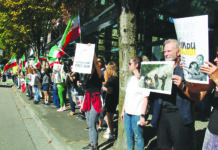
Civil society continues to serve as a crucial accountability pillar. Human rights groups, journalists, lawyers, and activists document abuses, provide legal aid, and bring international attention to enforced disappearances, labour exploitation, gender violence, and minority rights. At the same time, increasing regulatory controls and political sensitivities have constrained their operating space, weakening an essential check on state power.
Ultimately, Pakistan’s human rights record reflects genuine intent but uneven execution. The problem is not legislation; it is enforcement. Until police reform, judicial efficiency, and administrative transparency are treated as human rights imperatives rather than technical adjustments, violations will continue to outpace remedies. Pakistan has shown it can legislate. The real test is whether it can protect. Human rights credibility is built not through promises or periodic laws, but through justice delivered daily — without fear, delay, or discrimination.