
















What is most unsettling about unilateral interventions today is not their brazenness, but their growing normality. Actions that would once have triggered diplomatic uproar are now presented as routine exercises of authority, wrapped in legal jargon and strategic necessity.
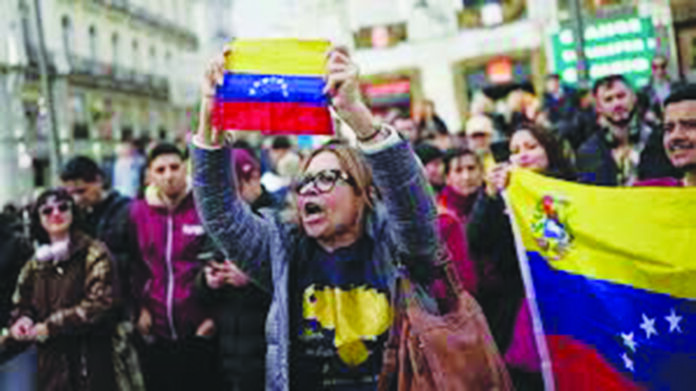
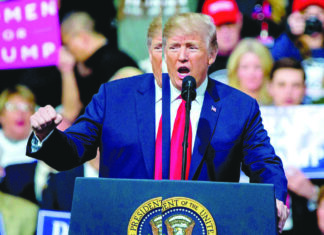
The US operation against Venezuela’s leadership— described as a law-enforcement act rather than a use of force— marks another step in this troubling direction. It signals a world in which power no longer waits for permission, and law is invoked after the fact to justify what has already been done.
International law was built precisely to prevent such behaviour. The United Nations Charter, adopted in 1945, was a collective response to the catastrophic consequences of unchecked power. Article 2(4) prohibits the threat or use of force against the territorial integrity or political independence of any state. Only two exceptions exist: self-defence against an armed attack (Article 51) and action authorised by the UN Security Council. There is no third category for “morally justified raids,” regime ousters, or executive operations dressed up as policing. When a powerful state decides unilaterally that another country’s leadership is illegitimate and acts on that decision, it is not enforcing law; it is replacing law.
Defenders of such actions often argue that extraordinary circumstances demand extraordinary measures. Yet this argument is as old as empire itself. Russia invokes security imperatives to justify its actions in Ukraine, dismissing sovereignty as a technicality. China frames its coercive policies in Hong Kong and toward Taiwan as internal matters beyond external scrutiny.
Israel normalises permanent occupation and settlement expansion in Gaza and the West Bank by invoking existential threats, despite repeated violations of international humanitarian law affirmed by the UN and the International Court of Justice. India, too, has transformed the internationally recognised dispute of Jammu and Kashmir into an internal administrative issue through unilateral constitutional changes, prolonged militarisation, and demographic engineering. The common thread is not ideology but method: power first, legality later.
What makes the USA–Venezuela episode particularly consequential is precedent. When Washington claims the right to project its domestic law beyond its borders— without multilateral consent— it weakens its ability to object when others do the same. The ICJ’s judgment in Nicaragua v. United States (1986) was unequivocal: the use of force to influence the political order of another state violates international law, regardless of motive. That ruling remains binding jurisprudence. Ignoring it does not make it obsolete— it makes the system optional.
Equally alarming is the erosion of constitutional restraint at home. The US Constitution deliberately divides war powers, requiring congressional authorisation, consultation, and oversight. When the executive bypasses these checks, invoking expansive doctrines or emergency powers, it undermines the very legal culture it claims to export. Domestic shortcuts and external overreach are two sides of the same coin.
This selective approach to law is not confined to one theatre. The unilateral and contested recognition of Somaliland— outside African Union frameworks and without a UN process— illustrates how sovereignty is increasingly dispensed through strategic endorsement rather than multilateral consensus. The continued settlement expansion in the West Bank, carried out in defiance of the Fourth Geneva Convention and repeatedly criticised by the UN, shows how illegality can be normalised through repetition and diplomatic fatigue.
In Kashmir, the promise made by the UN on 5 January 1949— affirming the Kashmiri people’s right to self-determination through a free and impartial plebiscite— has been hollowed out not by legal ambiguity but by sustained political avoidance. Pakistan’s position has remained anchored in those resolutions; India’s approach has been to exhaust them into irrelevance.
History offers a sharp contrast. East Timor’s people were eventually allowed a UN-supervised referendum after decades of repression, once international resolve overcame geopolitical hesitation. Kosovo’s political future was reshaped through sustained international engagement, debated openly within multilateral forums, including the ICJ’s advisory opinion (2010). These cases demonstrate that self-determination and sovereignty are not impractical ideals; they are selectively applied principles. Where compliance challenges powerful allies or strategic interests, law is deferred indefinitely.
The broader pattern is unmistakable. International law is not being abolished; it is being curated. It is invoked rigorously against adversaries and diluted for friends. This is not a rules-based order but a preference-based one. As legal scholar Martti Koskenniemi has long argued, when law becomes an instrument of power rather than a constraint upon it, legitimacy collapses. The result is not stability but a proliferation of unilateralism, each justified by the last.
There are lawful alternatives. International law provides tools for accountability: multilateral sanctions, international indictments, diplomatic isolation, negotiated transitions, and sustained mediation. These mechanisms are slower and politically frustrating, but they preserve the distinction between enforcement and aggression. Shortcuts may appear efficient, but they corrode the very architecture that prevents global disorder. As the UN Secretary-General has repeatedly warned, the erosion of the Charter’s core principles risks returning the world to a pre-1945 condition— one governed by spheres of influence rather than shared rules.
The consequences are already visible. Smaller states learn that sovereignty is conditional. Powerful states learn that restraint is optional. And populations trapped under occupation or coercion— whether in Gaza, Kashmir, or elsewhere— learn that rights exist on paper but not in practice. In such a world, self-determination becomes a slogan rather than a guarantee, activated when convenient and suspended when costly.
This is why the Venezuela episode matters beyond Latin America. It is a test case for whether international law still functions as a limit on power or merely as its vocabulary. If executive action can replace multilateral consent, if domestic law can be exported at will, then no state is secure once it falls out of favour. The question is not whether particular leaders deserve censure; many do. The question is who decides— and by what authority.
To accept unilateral force as normal is to accept a world governed by hierarchy rather than law. That world does not need formal colonies to function imperially. It needs only silence, fatigue, and the steady lowering of expectations. International law survives not by rhetoric but by restraint. When restraint disappears, power fills the void.
What we are witnessing, then, is not the return of empire in name but its persistence in practice. Imperial power without colonies thrives on selective legality, executive impatience, and the quiet acquiescence of others. If this trajectory continues, the promise of a law-governed international order will remain intact only in speeches— while reality moves, decisively, in the opposite direction.



9xs7l9