












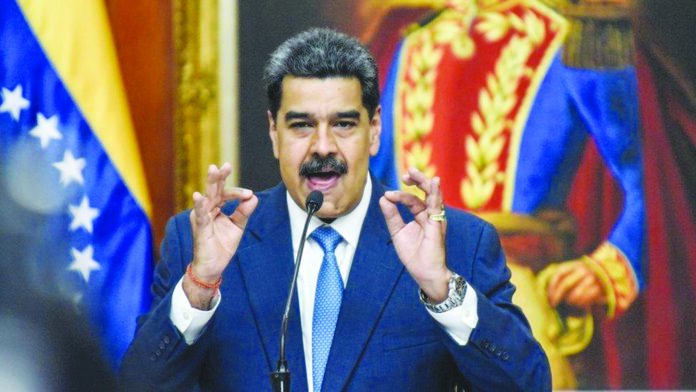
History doesn’t repeat itself, Mark Twain said, but it often rhymes. On 3 January, Washington struck a familiar chord. Thirty-six years after US troops seized Manuel Noriega and flew him to Florida in handcuffs, US forces once again extracted a Latin American leader and deposited him on US soil. This time it was Nicolás Maduro, Venezuela’s long-serving president, detained alongside his wife and transferred to a federal detention center in New York to face drug-related charges.
The official justification was law enforcement. The subtext was power. The motive, barely concealed, was energy.
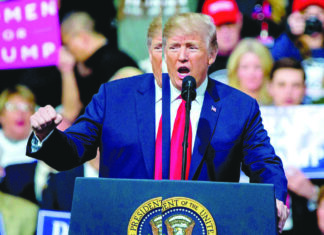
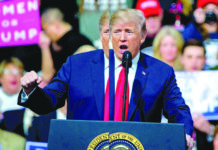
Hours after Maduro’s removal, US President Donald Trump dispensed with diplomatic euphemism and went straight to the point: the USA would “tap” Venezuela’s oil reserves and sell them abroad. The statement mattered less for its legality than for its candour. Regime change, in this case, was not framed as a humanitarian intervention or a democratic rescue mission. It was presented as a transaction. Oil in exchange for order. Energy in exchange for sovereignty.
This logic has a long pedigree. When Noriega fell in 1989, the Panama Canal was the strategic prize. Control over a chokepoint mattered more than the character of the man who ran the country. In Venezuela, the prize is subterranean. The country sits atop the world’s largest proven oil reserves, larger even than Saudi Arabia’s. For decades, that fact has shaped Venezuela’s politics, distorted its economy, and invited foreign meddling. It has also made the country indispensable and expendable at the same time.
Maduro’s real offence was not authoritarianism. Washington has tolerated worse, and often for longer. His cardinal sin was ideological defiance combined with material leverage. Like Hugo Chávez before him, Maduro framed the US dollar not as a neutral medium of exchange but as an instrument of US power. Venezuela joined efforts to trade energy outside the dollar system, flirted with alternative payment mechanisms, and aligned itself rhetorically and diplomatically with countries eager to weaken dollar dominance.
That is where history turns instructive. In 2000, Saddam Hussein announced that Iraq would sell oil in euros rather than dollars. Three years later, Iraq was invaded on the pretext of weapons of mass destruction that were never found. The euro experiment ended. Iraqi oil returned to dollar pricing. In 2009, Muammar Gaddafi proposed a gold-backed African dinar that would allow oil trade beyond the dollar’s reach. Two years later, NATO planes flew over Libya in the name of humanitarian protection. Gaddafi was dead by October. Libya collapsed into chronic instability. Its oil, once again, was denominated in dollars.
The pattern is not subtle. Challenge the monetary architecture that underpins global energy trade, and consequences follow. The stated reasons vary— terrorism, human rights, narcotics— but the outcome is remarkably consistent. The currency regime survives. The country does not.
What distinguishes the Maduro operation is not the motive but the method. Never before has the USA directly removed a sitting South American head of state through overt military action. Central America and the Caribbean have long histories of intervention. South America, by contrast, was usually managed through pressure, proxies, or coups with plausible deniability. This time, the gloves came off.
That shift reflects more than presidential bravado. It signals a recalibration of US strategy in a post–war-on-terror world. As jihadist networks recede from centrestage, Washington has rebranded its security doctrine around “narco-terror.” Drug cartels now occupy the conceptual space once reserved for al-Qaeda. Criminal networks are cast not merely as law enforcement problems but as existential threats justifying military responses.
In that framework, Venezuela becomes a test case. Today it is Caracas. Tomorrow it could be elsewhere. Trump’s language has been suggestive. He has mused about reclaiming the Panama Canal, floated the annexation of Greenland, joked about Canada as the 51st state, and repeatedly declared that “the cartels are running Mexico.” His Secretary of State has issued warnings to Cuba. Rhetoric, in this administration, has a way of becoming rehearsal.
Supporters argue that such assertiveness restores American credibility. They are wrong. Credibility does not come from demonstrations of force alone. It comes from outcomes. And the historical record of regime change is not encouraging. Iraq did not become a stable democracy. Libya did not become a functioning state. Afghanistan did not become a reliable ally. In each case, the removal of a ruler was easier than the construction of a political order.
Venezuela now faces the same dilemma. With Maduro detained, the country’s Supreme Court installed Vice President Delcy Rodríguez as acting president. She promptly demanded Maduro’s release and declared him Venezuela’s “only president.” The scene was less a transition than a standoff. Institutions that were already brittle are now under extreme strain. The economy, already battered by sanctions, mismanagement, and capital flight, faces deeper uncertainty. Oil production, which Washington claims to covet, cannot be stabilized by force alone.
Nor should the operation be confused with democracy promotion. Trump made that clear himself when he said the USA would “run” Venezuela temporarily and finance the effort through oil revenues. US energy companies would return, assets would be compensated, contracts rewritten. This is not nation-building. It is balance sheet politics.
There is a word for this approach, and it is not flattering: extraction. The belief that energy security justifies political domination is as old as empire. It has rarely produced stability. More often, it produces dependency, resentment, and resistance. The local population pays the price, while foreign powers move on once costs exceed benefits.
None of this is to romanticize Maduro’s rule. Venezuela under his leadership has been repressive, corrupt, and economically disastrous. But bad governance does not nullify sovereignty, and criminal charges do not confer ownership rights over a nation’s resources. The precedent being set is larger than Venezuela. It tells energy-rich states that autonomy is conditional. It tells the rest of the world that rules apply selectively.
The deeper irony is that this strategy betrays a certain insecurity. A confident power does not need to seize presidents to secure oil. It invests, negotiates, and competes. A power that resorts to abduction reveals anxiety about decline, about supply chains, about the durability of the systems it once took for granted.
Energy remains the lifeblood of modern economies. But when energy becomes the sole lens through which foreign policy is conducted, imbalance follows. The USA has been here before. The outcomes are written in the ruins of Baghdad and the chaos of Tripoli. Caracas may soon join that list.
History may rhyme, but it also accumulates. The question is not whether the USA can seize oil-rich states. It is whether it can live with the consequences of doing so, again and again, in a world that is no longer as forgiving— or as dependent— as it once was.