















The security environment in South Asia is stratified, strained and tense historically. It is in this delicate framework that the emerging military thinking in India demonstrates an increasing propensity to warfare operationalization of the concept of limited war against Pakistan. This means a war that has a limited set of goals and the amount of force used is adjusted so that nuclear warfare is avoided. On paper, it seems like a tidy strategic remedy, which would let India rebuke Pakistan, indicate firmness, but avoid a comprehensive war. This reasoning is, in practice, very problematic. Limited-war thinking upsets the deterrence, puts confusion into crisis behaviour and it is more likely that both of these nuclear-armed nations will end up accidentally escalating into a situation they did not want.
Nuclear weapons are the shroud of doom that would generally demand a high level of precaution. After the Kargil crisis of 1999, the Indian strategic planners realized the rude awakening that conventional military superiority would not necessarily translate into practical military options.
There was always the threat of a loss of control over escalation. New Delhi, in turn, tried to develop doctrines, which would show some sternness without stepping beyond the nuclear boundaries. Meanwhile, political ambition, quicker reactions, higher influence in regions, and conspicuous military might stimulated the politics of compressing time and space in decision-making. These aspirations are based on a very weak premise, namely, that the political tempers, nuclear signalling and popular affections will be dependable during the midst of a crisis.
Out of this reasoning came the Cold Start doctrine. It stressed high levels of mobilization, short run attacks on Pakistani soil and vindictive attacks carefully maintained below putative nuclear red lines. Haste was supposed to eliminate diplomatic intervention and rob Pakistan of the time to respond. Pakistan however perceived Cold Start in a very different manner. For Islamabad, it was not a military technicality but a threat to national security.
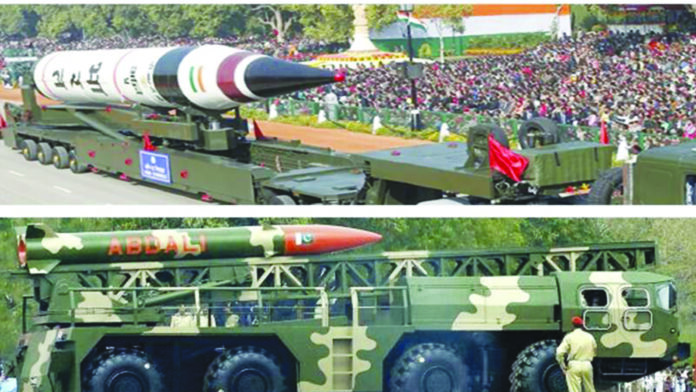
Pakistan, in its turn, went to Full Spectrum Deterrence, which included the creation of the short-range nuclear weapon like the Nasr missile, specifically designed to indicate that even small attacks would attract the nuclear response. Therefore, a doctrine that was to prevent nuclear war rather escalated nuclear weapons to the next step up the conflict ladder, making them more dangerously accessible.
The actual flaw of the limited-war thinking of the Indian side is that it presupposes the possibility to predict and contain the escalation. The South East Asian strategic environment is not a sterile laboratory. It is characterized by high levels of mistrust, prevalent violence, unresolved boundaries, as well as extreme forms of nationalism.
During crises, there is domestic political pressure, which requires strong responses. Sensationalism turns threats into a spectacle and adds to the emotional stories in the media. Leaders are catapulted into action sooner than good sense can permit them to act. The Pulwama-Balakot incident of 2019 showed how fast events can run, faster than intentions: what started as a response action soon turned into aerial combat, mobilization of the crisis, and nuclear signaling.
Speed, surprise, and carefully measured force doctrines are apparently decisive but very unstable. South Asia will not be spared crises whereby incidents like Pulwama, Balakot or Pahalgam will prove to be way past the motives of the decision-makers. In a region where perception often moves faster than policy, one must ask whether any war can truly remain “limited,” or is the idea itself a risky fiction?
Recent tensions in the vicinity of Pahalgam demonstrated once again how the local incidents would can gain the strategic ground within a few nights. Within these circumstances, the concept of a well-packaged conflict fails miserably when the element of miscalculation is introduced.
The Indian interest in limited war is also dependent on domestic politics as well as regional ambition. The rhetoric of military independence and superpower ambition is supported by anticipations of dominant leadership. The muscular rhetoric of targeting Pakistan is politically beneficial to the actors of the electoral process. This gives a strategic culture in which coercion is natural and diplomacy tends to be less important.
With time, however, militarized reactions weaken the stability of the region. These overshadow discussion, delay confidence enhancing actions, and create an arms race that drains the important resources of developing the society and governance. The final result is that the public sphere is becoming more influenced by security discourses at the expense of human well-being.
Deterrence theory also reveals the weakness of the assumptions of limited war. The classical deterrence assumes rationality in decision making, effective communication and shared perceptions of red lines.
South Asia flouts all these conditions. The political systems are varied, the capacity of crisis-management institutions is imbalanced and historical grievances are bitter. The premise by India that Pakistan would silently take minimal action on any limited strike ignores the fact that the nuclear doctrine of Pakistan is actually formulated to curb any such undertakings.
The best way to have credible deterrence in the region is not by relying on the weapons that the respective states possess, but by each state being aware of the threshold of the other. When either party explores the boundaries to attempt to prove something about space to engage in controlled conflict, chances of accidental escalation increase exponentially. The use of tactical nuclear weapons adds more issues of command and control, fog of war, and split-second pressures of making decisions, and a misjudgement is much more probable.
There is the instability of external influences. The USA, China, and Russia are drawn into the Indian-Pakistan crisis over and over again, not as bystanders but as participants whose agendas have a strategic purpose. In some Western interpretations, the limited-war ambition of India is seen as a subset of the counter-terrorism policy, whereas some argue that it is encouraging dangerous behaviour in a nuclear district. In the meantime, the strengthening of the China-Pakistan alliance, particularly the China-Pakistan Economic Corridor, increases the strategic interests of any conflict. Even a local conflict might quickly invite external mediation, and turn a presumably localized crisis into a multi-actor regional struggle.
It is against this backdrop that regional thinking needs a severe re-calibration. Coercive faiths cannot resolve the fundamental causes of animosity, which are disputed landmass, political resentments, transnational militancy, and deep rooted suspicion. Faster military plans will not help South Asia but enhance political imagination. Trustworthy communication pathways, ongoing diplomatic interaction and institutionalised confidence-building tactics are required. Track-II diplomacy by academics, retired officials, youth groups and civil society can maintain a conversation even when standard politics are at a dead end. Economic interdependences, cultural exchange programmes, and collaboration in common issues like climatic disasters and humanitarian disasters can slowly turn the relationship to be based on interest rather than rivalry.
The concept of limited war in nuclearised South Asia is eventually a seductive mirage. Contemporary war is rarely fought one-dimensionally, and crises are rarely followed through to initial intentions. The assumption that India made on the micromanagement of conflict in the shadow of the nuclear weapon is incorrect, not only in its effect in underestimating the unpredictability of the politics of the region, but also the emotion of the masses on each side.
Speed, surprise, and carefully measured force doctrines are apparently decisive but very unstable. South Asia will not be spared crises whereby incidents like Pulwama, Balakot or Pahalgam will prove to be way past the motives of the decision-makers. In a region where perception often moves faster than policy, one must ask whether any war can truly remain “limited,” or is the idea itself a risky fiction?