











From terrorist attacks in Khyber Pakhtunkhwa and Balochistan to the rapid circulation of intolerant narratives online, Pakistan is once again facing a troubling resurgence of extremist violence. Despite decades of counterterrorism operations, extremism continues to regenerate, exposing the limits of responses that rely overwhelmingly on force. Yet one of Pakistan’s most powerful and underutilised resources in countering violent extremism remains overlooked: educated women.
At this crucial juncture, Pakistan must simultaneously confront the interconnected challenges of preventing extremism, achieving political stability and safeguarding the rule of law. Within the framework of United Nations Security Council Resolution 1325 on Women, Peace and Security, and in line with Pakistan’s National Action Plan on UNSCR 1325, sustainable counter-extremism requires long-term social investment that recognises women not merely as victims of violence, but as essential actors in peacebuilding and prevention. In this context, provincial departments of education and textbook boards must integrate peace, tolerance and religious harmony into primary and secondary curricula, while ensuring that textbooks meaningfully reflect the social, political and intellectual contributions of Pakistani women.
These principles should also be embedded within teacher training programmes, with women-led civil society organizations playing a central role in shaping relevant professional courses. Beyond the classroom, media development organizations, working in partnership with civil society, particularly women’s groups, should establish watchdog mechanisms to uphold ethical and non-sensationalist reporting. Furthermore, structured media literacy initiatives for youth can strengthen critical thinking and disrupt gendered extremist narratives. Collectively, in accordance with Pakistan’s commitments under the Women, Peace and Security agenda, empowered women, responsive institutions and responsible media can form a durable and inclusive security framework against extremism in Pakistan.
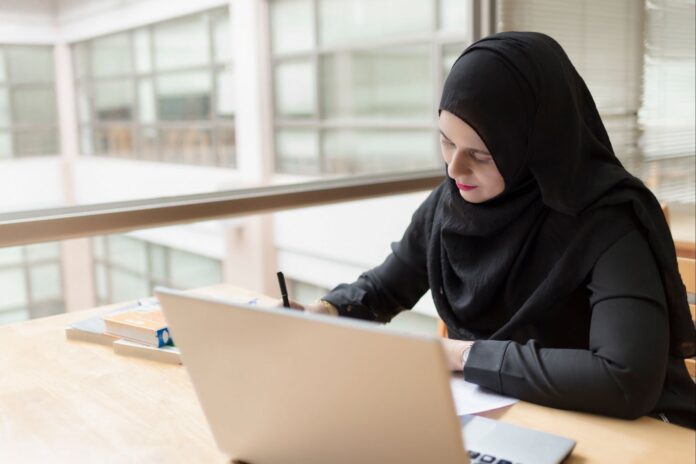
Countering violent extremism is not merely a security challenge; it is also a social and ideological struggle. Extremist movements depend on rigid patriarchy, unquestioned authority and the exclusion of women from public and intellectual life. Education directly undermines this worldview. An educated woman represents critical thinking, autonomy and the ability to question narratives that legitimise violence in the name of religion or identity. This is precisely why extremist groups have consistently targeted girls’ schools, female teachers and women activists as they recognise educated women as a threat to their ideological control.
In Pakistan’s social context, radicalisation rarely begins in formal institutions alone. It often takes root within families, where beliefs are first shaped and reinforced. Educated women, particularly mothers and sisters, are frequently the first to notice behavioural shifts, ideological rigidity or emotional vulnerabilities that precede violent extremism. Their capacity to engage, question and guide at this early stage offers a form of prevention that is far more sustainable than late-stage state intervention.
Empowering educated women in the fight against extremism is not an externally imposed agenda or a symbolic gesture. It is a strategic necessity rooted in Pakistan’s own social realities. Extremism cannot be defeated through force alone. It must be challenged in homes, classrooms and narratives. By sidelining educated women, Pakistan weakens its own defences against radicalisation. By integrating and trusting them, it strengthens the foundations of a more resilient, inclusive and peaceful society.
Education also equips women to challenge extremist interpretations of religion and culture. Extremist propaganda thrives on simplistic binaries; believer versus unbeliever, honour versus shame, us versus them. Women trained in critical inquiry and religious literacy can dismantle these narratives within their communities. Female educators are especially important in this regard. By fostering classrooms that encourage dialogue, tolerance and pluralism, they cultivate values fundamentally incompatible with extremist ideology.
Extremism in Pakistan has also expanded decisively into the digital sphere. Social media platforms are now key sites for recruitment, indoctrination and ideological reinforcement. Educated women who engage confidently in these spaces can act as credible counter-voices, challenging hate-driven content and offering alternative narratives grounded in inclusion and civic responsibility. However, the disproportionate harassment and intimidation faced by women online continues to discourage participation. Without institutional support and digital safety mechanisms, this potential remains constrained.
Despite their strategic importance, women remain marginal within Pakistan’s formal counter-extremism frameworks. Policy documents often acknowledge women symbolically, without integrating them meaningfully into design, research or implementation. Structural barriers such as limited access to higher education, public platforms and decision-making further restrict women’s participation, particularly in conflict-affected regions where conservative norms and insecurity persist.
A notable example of such preventive engagement can be seen in Faisalabad, where RPO Sohail Akhtar Sukhera has introduced a structured mechanism aimed at reducing vulnerabilities to extremist influence among female police officers. However, the task is redoubtable but inculcating strong ethical training, psychological counselling, just workplace ecology, mentoring, evaluating online exposure, provision of inclusive culture, redressal of grievances and perpetual professional growth to buttress the resilience against extremist narrative and ideological miasma. By combining awareness-building, institutional oversight and community engagement, this approach seeks to identify early warning signs, strengthen critical thinking and reinforce professional and civic values. Such initiatives demonstrate how locally grounded, women-focused interventions within law enforcement and society can play a meaningful role in obfuscating pathways to radicalisation before they solidify.
If educated women are to contribute meaningfully to countering violent extremism, Pakistan must move beyond token inclusion. This requires sustained investment in women’s education, especially in vulnerable regions; the integration of women into CVE policymaking and research; protection for female educators and activists; and support for women-led community initiatives. Above all, it demands a shift in perception, from viewing women as passive victims of extremism to recognising them as active agents of ideological resistance.
Empowering educated women in the fight against extremism is not an externally imposed agenda or a symbolic gesture. It is a strategic necessity rooted in Pakistan’s own social realities. Extremism cannot be defeated through force alone. It must be challenged in homes, classrooms and narratives. By sidelining educated women, Pakistan weakens its own defences against radicalisation. By integrating and trusting them, it strengthens the foundations of a more resilient, inclusive and peaceful society.