


















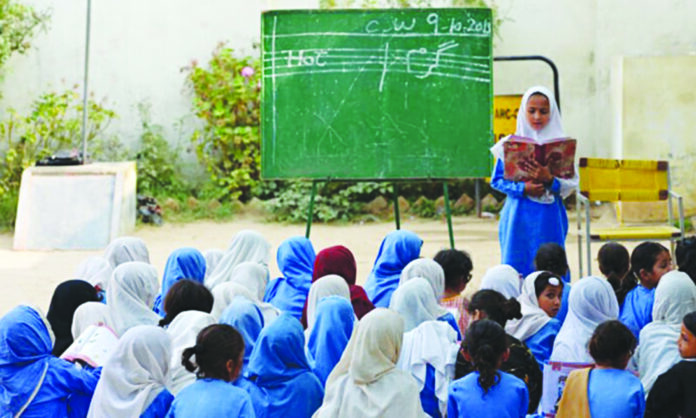
Societies emerging from conflict often speak of peace in the language of reconstruction. In Pakistan’s Mirali tehsil of North Waziristan, that measure was answered with destruction. The bombing of the only girls’ school in Eppi village, days after another school was attacked nearby, was no random act of violence. It was a statement that girls’ education remains contested ground, and that the fragile promise of post-conflict normalcy continues to be denied. The absence of casualties cannot soften the blow. Schools are more than brick and mortar, they are symbols of stability, civic order, and hope for the future. Their destruction is meant to reassert fear, suppress ambition, and signal to women that their progress is conditional. For families who painstakingly reclaimed education after decades of conflict and displacement, the rubble represents not just physical loss but the reversal of belief itself.
The impact of targeting education extends far beyond a single village. In Pakistan, nearly 22 million children remain out of school, and girls constitute the majority of those excluded. Female literacy lags behind male literacy by a significant margin, particularly in Khyber Pakhtunkhwa and Balochistan, where millions of children never see a classroom. Each functioning girls’ school in these provinces is more than an educational facility, it is a statement of resilience, a challenge to fear, and a promise of social renewal. When a school is destroyed, it is not only a physical act of destruction but a deliberate attempt to intimidate families, keep children away from learning, and reinforce cycles of vulnerability.
This isn’t just a moral failure but a serious threat to the country’s future. Global evidence demonstrates that educating girls is among the most powerful tools to combat poverty, instability, and extremism. Each additional year of schooling increases future earnings, reduces child marriage, improves maternal and child health, and strengthens the next generation’s educational attainment. Societies that deny girls this opportunity forfeit economic growth, social stability, and long-term resilience. In fragile regions of Pakistan, a classroom that survives becomes a site of empowerment, one destroyed becomes a warning.
The impact of targeting education extends far beyond a single village. In Pakistan, nearly 22 million children remain out of school, and girls constitute the majority of those excluded. Female literacy lags behind male literacy by a significant margin, particularly in Khyber Pakhtunkhwa and Balochistan, where millions of children never see a classroom.
The contrast between Pakistan’s aspirations and the realities on the ground is striking. Following major counterterrorism operations, North Waziristan was promised a post-conflict transformation with roads, schools, healthcare facilities, and programs to reintegrate displaced communities. Billions were allocated, and some improvements are visible. Yet repeated attacks on schools, including those still under construction, reveal how uneven and precarious state authority remains. Security responses that are reactive rather than preventative fail to deter attackers. When perpetrators operate with impunity, public trust erodes and lawlessness takes root.
Protecting education must therefore be recognized as a matter of national security, not simply local law enforcement. This requires intelligence-driven strategies in vulnerable districts, robust protection for local informants, and sustained monitoring. Security cannot rely on temporary guards or emergency measures after violence occurs. High-risk areas need institutionalized safeguards with community protection committees, regular patrols, reinforced construction standards, and early-warning mechanisms. Equally critical is ensuring that learning continues uninterrupted. Temporary classrooms, digital and mobile platforms where feasible, and rapid reconstruction must be automatic responses rather than delayed gestures. Every month a girl is kept from school increases the likelihood she will never return, whether due to early marriage, household responsibilities, or lingering fear. In fragile communities, lost education is rarely recovered without deliberate intervention.
Accountability is the linchpin of effective protection. The near-total absence of arrests following school attacks conveys a stark message that violence carries no consequences. Transparent investigations, public updates, and visible prosecutions are essential both to deliver justice and to deter future attacks. Trust between citizens and the state in post-conflict areas is fragile and silence, delay or neglect only deepen alienation. In today’s interconnected world, no nation can afford to allow deliberate educational deprivation to persist. Societies that deny children, particularly girls, access to learning forfeit economic potential, innovation, and social cohesion. When a girls’ school is destroyed in Mirali, the loss is not contained locally, it resonates globally as a reminder that commitments to gender equality and education are only as strong as their enforcement in the most marginalized communities.
Breaking with a violent past requires Pakistan to treat education, especially girls’ education as a non-negotiable national imperative. Schools must be more than classrooms and must serve as sanctuaries where learning is safe from fear coercion and destruction. The state’s response must be strong and prompt and every attack must be fully investigated with the perpetrators held accountable. Protecting girls’ education in these regions require the state to act alongside local elders, community leaders and Ulema who could play a vital role in fostering a culture that values learning, ensures children can attend school safely, and rejects intimidation and extremism. Every child, every girl in Mirali and across Pakistan, must be able to step into a school knowing she is safe, that her aspirations are respected, and that her future is protected. Safeguarding knowledge is not a charitable act but a moral and considered obligation, the foundation of security, economic progress, social cohesion and a society capable of imagining a future free from fear. To fail is to betray an entire generation and weaken the very fabric of the nation.





naturally like your web site however you need to take a look at the spelling on several of your posts. A number of them are rife with spelling problems and I find it very bothersome to tell the truth on the other hand I will surely come again again.
Access the official Dubibet login page for fast entry to live casino games and secure betting. Join now for high-limit tables, instant play, and exclusive bonuses.