












NEW YORK: Israel is laying the groundwork for a permanent military presence across large parts of the Gaza Strip, despite official denials of permanent occupation, according reports and analysis from research agencies and the United Nations.
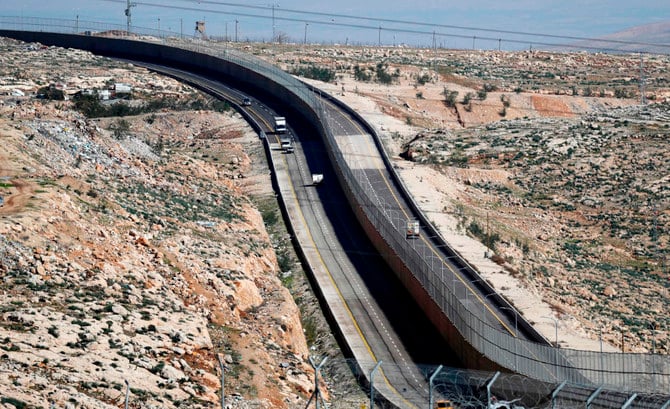
Satellite imagery and on-the-ground intelligence suggest that Israel has accelerated the development of 48 military outposts inside Gaza, ahead of the potential deployment of an International Stabilization Force (ISF) under the terms of the US peace plan for the enclave. These outposts are connected by a network of new and expanded roads that link to Israeli bases outside Gaza, creating a solidified military footprint.
“Israel is doing what it always does, and what it historically has done best: establish ‘facts on the ground,’ incrementally rather than spectacularly, and make them permanent once those with influence to force it to reverse course either lose interest, decide that the cost of confronting Israel is not worth the price, or come out in open support of Israeli violations. Mouin Rabbani, co-editor of Jadaliyya and a former UN official who worked as a senior analyst on Israel-Palestine for the International Crisis Group, told Drop Site, a Washington-based investigative news outlet.
“Israel is in no rush and prepared to play the long game,” he said after reviewing a summary of the Forensic Architecture findings.
The analysis also shows that, between October 10 and December 2, 2025, Israel has accelerated the growth and infrastructure development of 48 existing military outposts inside Gaza, expanded a network of roads connecting military outposts inside Gaza to the Israeli road network, bases and settlements outside of Gaza, continued construction that began in September 2025 of a new road in Khan Younis, re-routing the Magen Oz corridor to run within Israel’s area of control and engaged in the systematic demolition and destruction of Palestinian property, particularly in eastern Khan Younis, targeting areas which haven’t already been destroyed. New military outposts and roads have emerged across this area.
“Augmenting multiple Israeli statements about extending its borders with buffer zones to the north, east, and south, this is indisputably an Israeli campaign to partition the Gaza Strip and thereby promote its long-term objective of moving the Palestinian population elsewhere,” Rabbani said.
“At the same time, Israeli success is not a foregone conclusion. If it was, the Palestinian population of the Gaza Strip would have been ethnically cleansed years if not decades ago.”
As part of the initial phase of the Oct 10 ceasefire agreement, the Israeli military partially withdrew to what became known as the “yellow line,” with over half of Gaza under continued Israeli control, Drop Site pointed out. The term comes from a map that was distributed in late September as part of President Donald Trump’s 20-point ceasefire plan that depicted a phased withdrawal of Israeli troops, to an initial yellow line, followed by another withdrawal, until an eventual pullback to a “buffer zone” running inside Gaza along the border with Israel.
Point 16 of Trump’s 20-point plan explicitly states, “Israel will not occupy or annex Gaza. As the ISF establishes control and stability, the Israel Defense Forces (IDF) will withdraw based on standards, milestones, and timeframes linked to demilitarization.” It goes on to say, “Practically, the IDF will progressively hand over the Gaza territory it occupies to the ISF according to an agreement they will make with the transitional authority until they are withdrawn completely from Gaza, save for a security perimeter presence.”
While the “standards, milestones, and timeframes” around Israel’s withdrawal have been highly contentious, they are nevertheless the principal subject of ongoing negotiations, it was pointed out. However, the analysis by Forensic Architecture clearly shows that Israel is consolidating its military presence on the ground east of the yellow line in a way that suggests no intention of a further withdrawal
Meanwhile, the United States is intensifying efforts to put together the ISF.
On Friday, US Secretary of State Marco Rubio said that the Trump administration will have to clarify the mandate of the force before it can expect to secure troop commitments from countries willing to contribute their troops.
“In fairness to all the countries we’ve talked to about having a presence on the ground, I think they want to know specifically what the mandate will be and what the funding mechanism,” Rubio said during a press conference in Washington when asked whether the US has secured a commitment from Pakistan to contribute its soldiers.
“We’re very grateful to Pakistan for their offer to consider being a part of it, [but] I think we owe them a few more answers before we can ask anybody to firmly commit,” Rubio added.
“I feel very confident that we have a number of nation states acceptable to all sides [that] are willing to step forward and be a part of that stabilization force,” he declared.
Western diplomats familiar with the situation said on Friday that among those Rubio has asked to contribute troops to the force is Ethiopian Prime Minister Abiy Ahmed Ali.
“I feel very confident that we have a number of nation states acceptable to all sides [that] are willing to step forward and be a part of that stabilization force,” he declared.
“We’re trying to make a lot of progress here. The next step is announcing the Board of Peace, announcing the Palestinian technocratic [committee] that will help provide daily governance.
“Once that’s in place, that will allow us to firm up the stabilization force, including how it’s going to be paid for, what the rules of engagement are, what their role will be in demilitarization and so forth,” he added.
The full implementation of phase two will likely take two or three years, according to Rubio. The Palestinian Authority is hoping to take over management of Gaza from the Board of Peace in a shorter timeframe.
Rubio’s remarks came after Pakistan outlined its official stance., with Foreign Office spokesman, Tahir Andrabi, saying Islamabad had not yet decided on contributing troops to the ISF, indicating that discussions were still at an exploratory stage rather than reflecting a final commitment.