








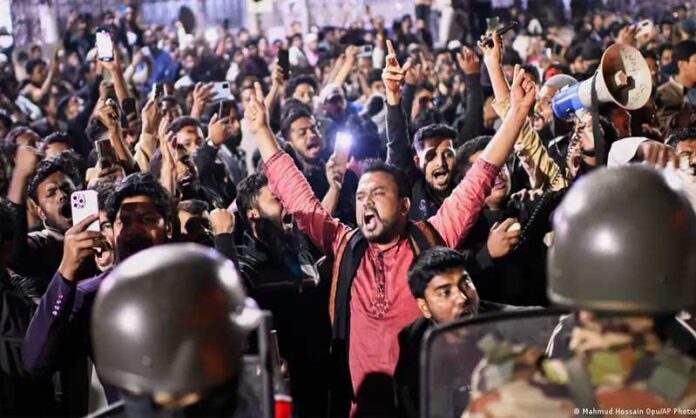
DHAKA: Bangladesh deployed police and paramilitary forces in the capital on Saturday ahead of funeral prayers for slain youth leader Sharif Osman Hadi, whose killing has triggered widespread violence and unrest across the country.
Hadi, 32, a key figure in last year’s student-led uprising that toppled former Prime Minister Sheikh Hasina, was shot in the head by masked assailants while launching his election campaign in Dhaka last week. He died on Thursday night in Singapore after six days on life support.
The unrest erupted amid rising political tensions following the ouster of former Prime Minister Sheikh Hasina in August 2024. Hadi, a spokesperson for the student-led group Inquilab Mancha, was a key figure in the protests that toppled Hasina. He was shot in the head by masked assailants while launching his election campaign in Dhaka and later flown to Singapore for advanced medical care, where he died after six days on life support.
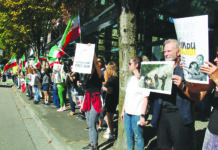
Following his death, violent demonstrations spread across Dhaka and other cities, with mobs targeting media outlets, political offices, and cultural organisations. In Dhaka, the offices of major newspapers Prothom Alo and the Daily Star were vandalised, while in Chittagong, protesters attacked the Indian Assistant High Commission, reflecting growing anti-India sentiment.
Analysts say the unrest highlights the fragile control of the interim government led by Nobel laureate Muhammad Yunus and raises concerns about maintaining law and order ahead of the parliamentary elections scheduled for February 12, 2026.
The unrest has seen coordinated attacks on media outlets, political websites, and cultural institutions, including the Dhaka office of Udichi Shilpigosthi, a leading progressive cultural organisation. Demonstrations demanding justice for Hadi also spread to Chittagong, where protesters attacked the Indian Assistant High Commission, reflecting growing anti-India sentiment following Hasina’s exile to New Delhi.
Bangladesh is set to elect a new parliament on February 12, 2026, a transition aimed at stabilising the nation after nearly two years of political turbulence. Analysts say the unrest has exposed the limitations of the interim government led by Nobel Peace Prize winner Muhammad Yunus and raised questions over its control in the world’s largest apparel producer after China.
Yunus’ government declared Saturday a day of state mourning and urged citizens to resist “mob violence by fringe elements,” warning that continued unrest could undermine the fragile democratic transition.
Human Rights Watch condemned Hadi’s killing as a “terrible act” and called on the government to halt ongoing violence, including attacks on journalists and media houses, which the group described as assaults on free expression. Amnesty International also urged prompt, independent investigations into Hadi’s death and subsequent violence.
The violence underscores mounting concerns over press freedom and civic space in Bangladesh, which ranks 149th of 180 countries in the World Press Freedom Index.