
















Governance involves the frameworks and processes that manage a nation’s affairs efficiently, influencing all sectors and driving sustainable socio-economic development. Built on principles like rule of law, transparency, and accountability, good governance ensures fair resources use and inclusive growth. Democratic governance fosters integrity, participation, and private sector growth within strong systems. Central to national prosperity, it aligns with Sustainable Development Goal (SDG) 16 and URAAN Pakistan (National Economic Transformation Plan) where reforms aim to strengthen institutions, enhance service delivery, and build accountability through innovation and capacity development.
In the World Bank’s Governance Indicators Report 2023, Pakistan’s governance indicators are not very encouraging compared to other countries in the region, despite the fact that the incumbent federal government headed by Prime Minister Muhammad Shehbaz Sharif has implemented a number of initiatives to improve governance indicators in the country. Comparative analysis of Pakistan’s governance indicators with other regional countries shows that Pakistan’s scores are below par in certain indicators, requiring more focus to strengthen the local governments system through voice and accountability, ensuring political stability and strengthening the institutions for improving the rule of law for sustainable socio-economic development.
The federal government’ has chalked out a rather quite ambitious programme for undertaking multi-sectoral reforms during the ongoing financial year as its governance agenda focuses on institutional strengthening, market development, inclusive and sustainable growth, civil service reforms, criminal justice enhancement, efficient public service delivery, domestic resource mobilization, and public sector enterprise reform, according to information gathered from the official sources concerned.
Accordingly, due emphasis will be placed on completing ongoing initiatives to boost public sector capacity for ensuring timely service delivery. URAAN Pakistan will unify governance efforts, prioritizing political stability, peace, human capital development, policy reforms, and equitable growth to reduce disparities and empower youth women, and marginalized groups, fostering social cohesion and global competitiveness.
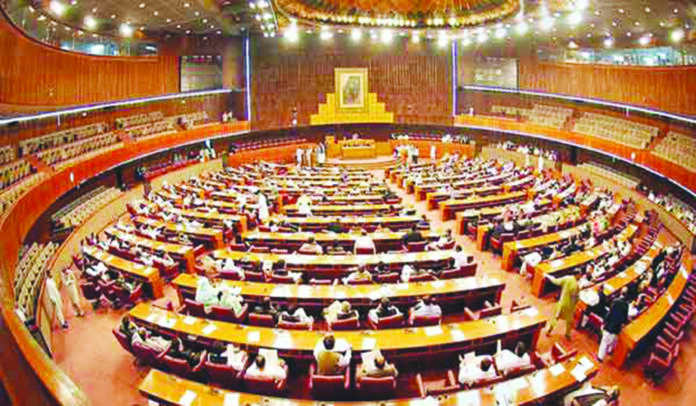
Inclusive governance will address extremism through implementing the Revised National Action Plan, Prevention of Violent Extremism Policy, the draft National Internal Security Policy (2024-29), and the Interfaith Harmony Policy, focusing on root causes, social harmony, and peace consolidation. Local Government reforms will include stakeholders consultations, institutionalizing Provincial Finance Commissions aligned with Sustainable Development Goals (SDGs), and enhancing civic engagement through digital platforms. A comprehensive review of the 18th Amendment and the National Finance Commission Award will ensure fair resource distribution, while Public Account Committees and Parliamentary Standing Committees will strengthen fiscal oversight.
Governance and public sector reforms recommended by the Prime Minister’s Committees will be implemented with a whole-of-government. Approach, uniting federal and provincial stakeholders to achieve lasting peace, stability and improved governance indicators that support broader sectoral progress. It is good to note that 2026 is going to be the year of Reforms and Development for Pakistan.
Anti-corruption and procurement reforms will be intensified by empowering institutions enhancing investigative capacity for white-coller crimes, implementing Anti-Money Laundering regimes, and digitizing procurement through the Electronic Procurement and Disposal System (EPADS) and standardized bidding documents.
Rule of law improvements focus on capacity-building across law enforcement and judicial bodies, court digitization, record management, and applying Artificial Intelligence (AI) to increase judicial efficiency. Public financial engagement and tax administration will be continue to be modernized via digital reforms
The National Economic Transformation Plan (2024) aims to evolve the Federal Bureau of Revenue (FBR) into a modern tax body, expanding the tax base by an additional US $81 billion by FY 28/29. The Board of Investment will promote industrialization and ease of doing business via 35 approved Special Economic Zones (SEZs) and one-step shop services. The
Competition Commission will establish a Centre for Excellence for enhanced policy and procurement, the Securities and Exchange Commission will drive regulatory digitization, and the Pakistan Telecommunication Authority will launch 5G, renew LDI licenses, and expand district-level internet services.
Governance and public sector reforms recommended by the Prime Minister’s Committees will be implemented with a whole-of-government. Approach, uniting federal and provincial stakeholders to achieve lasting peace, stability and improved governance indicators that support broader sectoral progress. It is good to note that 2026 is going to be the year of Reforms and Development for Pakistan. The federal government was in the process of formulating a National Reform and Modernization and it is going to be launched in due course of time to make the governance result-oriented, innovation-driven and globally competitive. Hopefully, good things will happen in the coming months for the country on the whole and its people.