Seven candidates are in the race to become next UN secretary-general
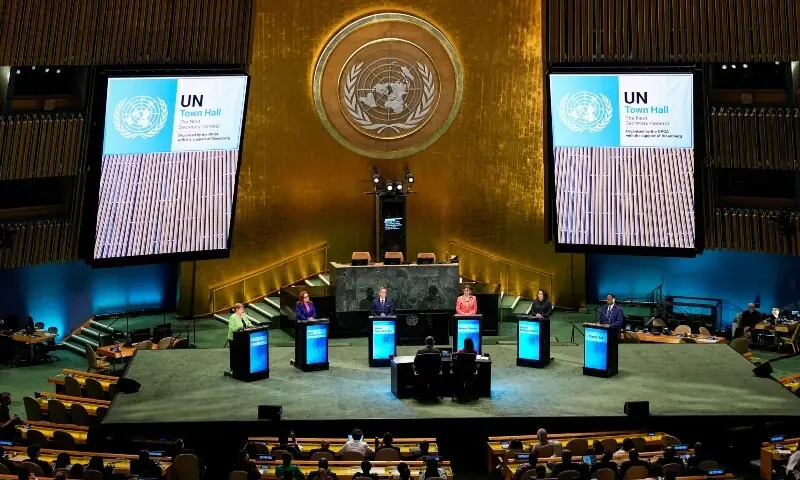
Seven candidates have declared bids to succeed Antonio Guterres as UN secretary-general, with the next term beginning on January 1, 2027. The field includes former presidents, senior UN officials and diplomats, with Rafael Grossi widely seen as the early frontrunner.

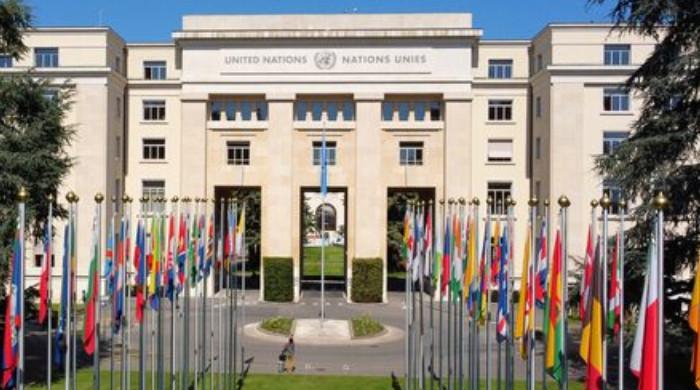
NEW YORK: Seven declared candidates are now contesting the race to become the 10th secretary-general of the United Nations, with the successful contender set to begin a five-year term on January 1, 2027, after Antonio Guterres leaves office.
The field brings together former presidents, veteran diplomats and senior UN officials, with several candidates presenting bids centred on institutional reform, conflict prevention and a stronger voice for developing countries.
Grossi seen as early frontrunner
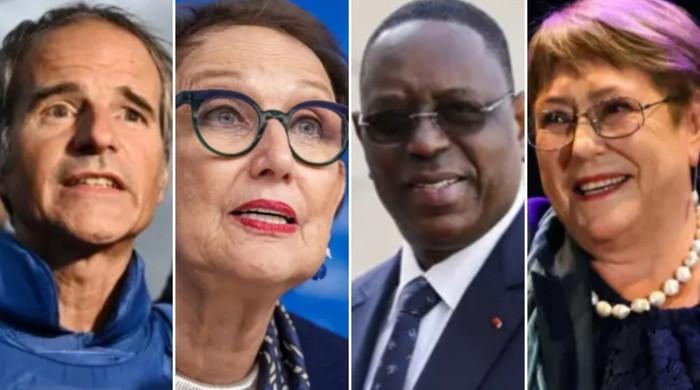
Argentina's Rafael Grossi, 65, enters the contest after six years as director general of the International Atomic Energy Agency. Many diplomats see him as the frontrunner, helped by years spent navigating relations with the five permanent members of the UN Security Council, whose support is critical in the selection process.
Grossi has been a prominent figure in nuclear diplomacy, including efforts to preserve elements of the 2015 Iran nuclear deal after the United States withdrew from it in 2018 under President Donald Trump. He also secured the deployment of a small IAEA team to the Russian-occupied Zaporizhzhia nuclear power plant in Ukraine. Critics, however, argue that he pushed too far in trying to strike arrangements with Iran.
Women candidates press reform agenda
Rebeca Grynspan, 70, the former vice president of Costa Rica and current head of the UN Conference on Trade and Development, has cast herself as a reform-minded multilateralist. She stepped back from her duties until September to avoid conflicts of interest during the campaign and, if elected, would become the first woman to serve as UN secretary-general. Grynspan said, "I am not waiting for special treatment. I want equal treatment."
An economist by training, Grynspan has described herself as a "mature leader" who would try to make the UN more agile while defending its core values of peace, development and human rights.
Chile's Michelle Bachelet, 74, is a former two-time president and former UN high commissioner for human rights, who also led UN Women from 2010 to 2013. Her candidacy has faced setbacks after Chile withdrew its support in March following a rightward shift in the country's leadership, despite backing from Brazil and Mexico.
Bachelet has also drawn criticism from US conservatives over her pro-choice position on abortion. In April, Washington's UN envoy Mike Waltz publicly questioned her suitability, echoing concerns raised by Republican Senator Pete Ricketts, who said she had not done enough while serving as the UN human rights chief.
Ecuador's Maria Fernanda Espinosa, 61, has highlighted her experience inside the UN system, having served as her country's foreign minister, defence minister, ambassador to the UN and president of the General Assembly. In her vision statement, she said, "I offer a candidacy grounded in a simple conviction: the UN must recover the courage to prioritise, the discipline to deliver, and the political confidence to act with purpose."
Guyana's Carolyn Allison Farida Rodrigues Birkett, a career diplomat and former politician, has been her country's permanent representative to the UN since 2020. She previously became the first woman and the highest-ranking Indigenous person to serve as Guyana's foreign minister. If elected, she would be both the first woman and the first Caribbean national to lead the United Nations.
Rodrigues Birkett has said she wants to strengthen conflict prevention and push climate action as part of a broader effort to make the organisation more effective.
African contenders stress representation and reform
Senegal's Macky Sall, 64, served as president for 12 years until 2024 and has called for relief for developing countries burdened by debt, along with a restructuring of the Security Council to reflect demands from developing states for permanent seats. He was nominated by Burundi and, if selected, would become the third African secretary-general after Boutros Boutros-Ghali and Kofi Annan.
Sall wrote on X, "More than ever, a reinvented multilateralism remains the best way to respond to the challenges of a world in full transformation."
Uganda's Olara Otunnu, 75, is the oldest candidate currently in the field. A diplomat and former UN under-secretary-general, he has said he would give immediate attention to efforts aimed at ending major international conflicts, while continuing institutional reform.
Otunnu has also proposed a body to oversee UN work on artificial intelligence and has stressed that climate action should not come at the expense of economic development.
Comments
No comments yet. Be the first to join the discussion!