Swiss researchers copy Nasa climate data to train AI models
Researchers at ETH Zurich have copied around 100 petabytes of publicly available Nasa climate data to a Swiss supercomputer. The data will be used to train AI forecasting models and preserved amid concerns over US science funding cuts.


GENEVA: Researchers at Switzerland’s Federal Institute of Technology Zurich have transferred a vast collection of publicly accessible climate and environmental data from Nasa to a Swiss supercomputer for use in artificial intelligence training and as a safeguard amid cuts to US science funding.
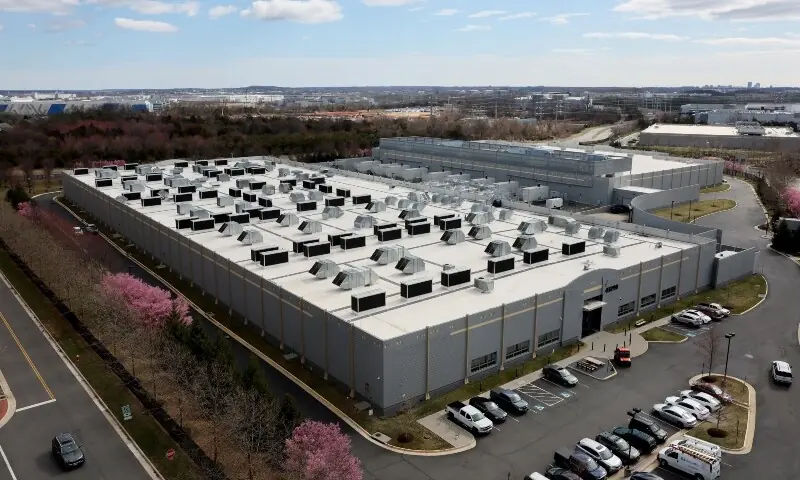
ETH Zurich said late last week that its researchers had moved about 100 petabytes of Nasa data to the Swiss National Supercomputing Centre in Lugano, southern Switzerland. According to the university, the transfer involved roughly six billion files and took about a year to complete.
Reto Knutti, a professor of climate physics and head of ETH’s Center for Climate Systems Modeling, described the scale of the archive as enormous. He said the volume was comparable to around 20 million feature-length films in data terms. “The sheer amount is impossible to visualise,” he added.
Knutti said. He added that the researchers are also planning to copy large volumes of datasets from the US National Oceanic and Atmospheric Administration in the future.
Data to support AI forecasting
The datasets were collected over decades and include information on Earth systems such as greenhouse gases, clouds, rainfall and ice sheets. ETH said the material will be used to help train AI models designed to provide fast and dependable forecasts in areas including weather, climate and natural hazards.
Thomas Zurbuchen, an ETH professor and former Nasa chief scientist who initiated the data transfer, said in a statement that the United States had played a central role in observing Earth for decades. He said that without the measurement programmes operated by Nasa and NOAA, global understanding of the planet would be significantly more limited.
Funding concerns in the background
The researchers said concern over the effects of major US funding cuts on the scientific community was one factor behind the project, though not its main purpose. Since returning to office last year, US President Donald Trump has pursued deep reductions in federal support for climate science and Earth-observation work, including programmes that feed data into international monitoring networks.
Knutti said the United States had not, up to now, limited access to the data. Still, he pointed to uncertainty around decision-making in the US administration and said the speed of some decisions had raised concern. He stressed that all of the material copied so far had already been publicly available.
“But we also know that decisions in the US administration are sometimes quick, and not completely obvious.”
Emphasising that the information was open rather than restricted, Knutti said, “It’s not a secret.”
He also underlined the value of large scientific archives for future research and AI development. “Data is the new gold,” Knutti said.
Comments
No comments yet. Be the first to join the discussion!