Data centres could be emitting far more CO2 than earlier estimates, study says
A new study says data centres are producing substantially more carbon dioxide than earlier estimates as AI drives power demand higher. It also warns of rising climate damage and heavy water use by 2030.

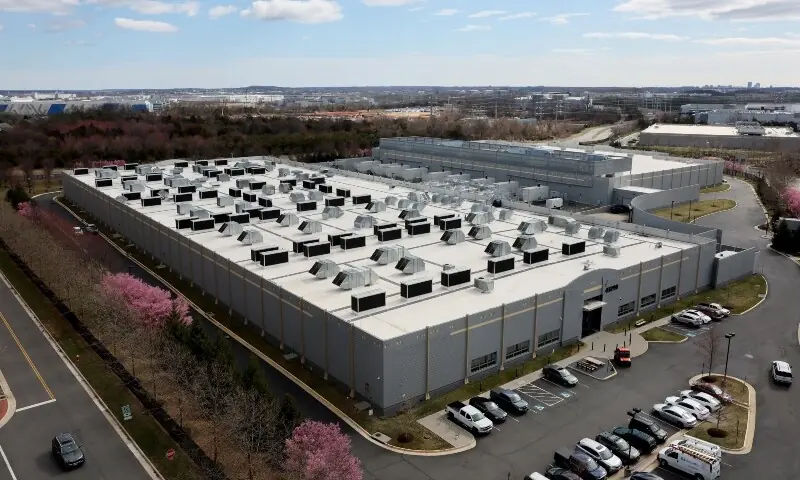
ISLAMABAD: Data centres, whose rapid global expansion is being driven by the growth of artificial intelligence, may be responsible for a significantly larger carbon footprint than previously estimated, according to a study released on Tuesday.
The report by Allianz Trade said data centres were expected to emit 286 million tonnes of carbon dioxide in 2025. According to the group, this figure is 57 per cent higher than the estimate published by the International Energy Agency. The study said the facilities, which house critical computing infrastructure including servers, are being developed around the world as AI applications require increasing amounts of computing power.
Allianz Trade said artificial intelligence already accounts for between 15pc and 20pc of electricity consumption at data centres, and this share could rise to 40pc by 2030. Patrick Hoffmann, senior climate economist at Allianz, said the role of these facilities in energy demand was becoming more pronounced.
“Data centres are evolving from a marginal factor into a structural driver of electricity demand in many regions", he stated.
The study warned that if electricity grids are not decarbonised, emissions from data centres could more than double by 2030. It estimated the resulting annual climate damage at $154 billion by the end of the decade, compared with $68bn at present. It also said climate-related damage linked specifically to AI workloads could surpass $50bn by 2030.
Beyond emissions, the report highlighted pressure on natural resources, particularly water. It said data centres could require between 1.3 trillion and 1.8 trillion litres of water by 2030, a volume it compared to Switzerland’s annual consumption.
The study also said the emissions associated with the same level of computing activity varied sharply depending on how electricity was generated. In India, electricity-linked emissions exceed 600 grams of CO2 per kilowatt-hour, while in Norway and Sweden they are below 30 grams per kWh because power generation there is largely decarbonised.
According to Allianz Trade, nearly 70pc of global emissions from data centres are currently concentrated in the United States and China, which it described as the world’s leading AI powers.
Comments
No comments yet. Be the first to join the discussion!