

ASEAN ministers open Manila meeting with unity call amid regional strains
ASEAN foreign ministers opened their annual Manila meeting with a call for unity as the region faces geopolitical uncertainty, maritime tensions and conflict spillovers. Security issues including Myanmar and the South China Sea are expected to dominate the agenda.

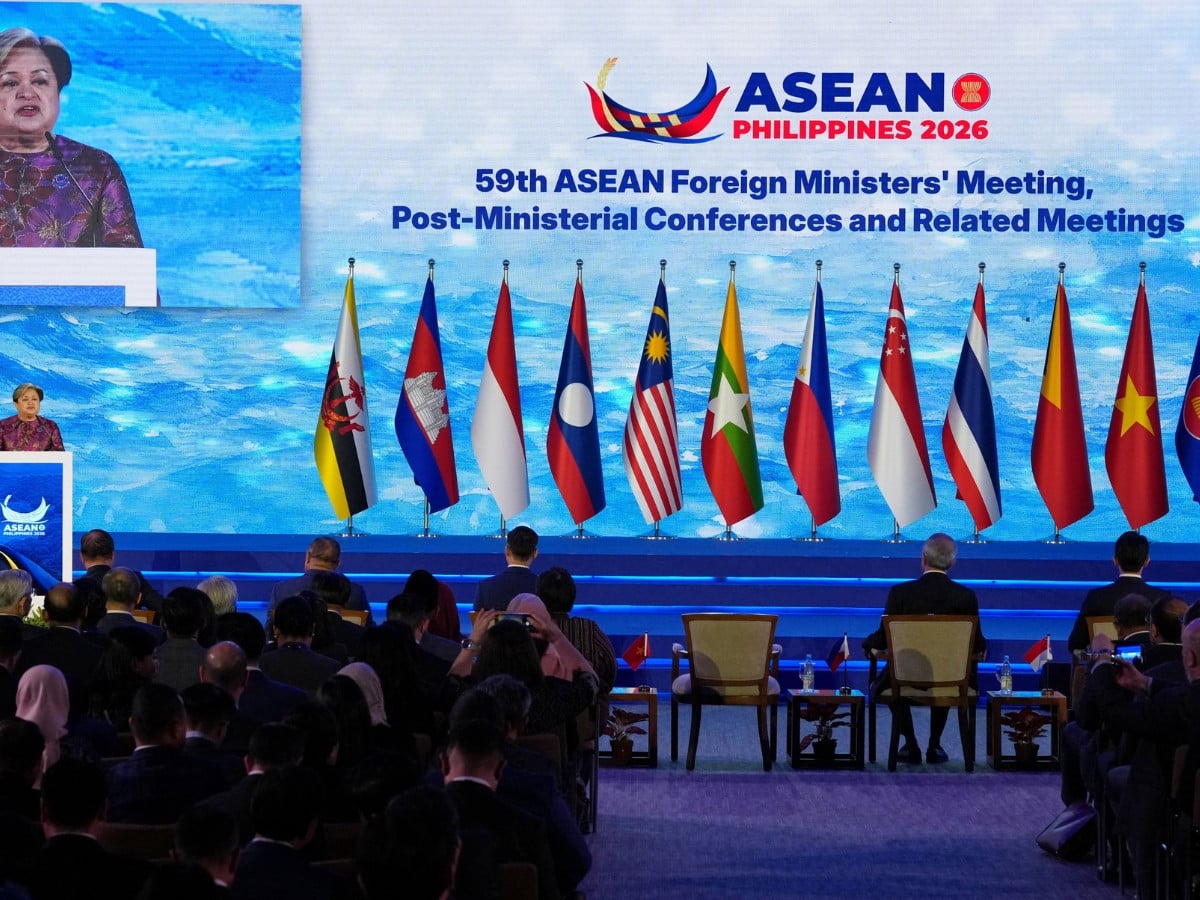
MANILA: Foreign ministers from the Association of Southeast Asian Nations opened their annual meeting in Manila on Tuesday, with the Philippines calling for a coordinated regional response to rising geopolitical tensions, maritime disputes and ongoing conflicts affecting the wider region.
Opening the 59th ASEAN Foreign Ministers’ Meeting, Philippine Foreign Affairs Secretary Ma. Theresa P Lazaro said the bloc needed to confront a world shaped by instability with what she described as active and deliberate problem solving. She told member states there was urgency in the work ahead as ASEAN navigates an international environment marked by disruption and uncertainty.
Referring to the Philippines’ theme for its 2026 ASEAN chairmanship, Navigating Our Future, Together, Lazaro said the region should take a proactive role in shaping its direction rather than simply reacting to events. She also pointed to the Treaty of Amity and Cooperation, which turns 50 this year, as a central pillar of ASEAN stability, saying its principles of respect for sovereignty, non-interference and peaceful dispute resolution remain vital.
In her remarks, Lazaro stressed the importance of collective action in the face of global fragmentation.
There is a profound urgency to our work,
she said, while urging member states to pursue creative solutions and viable pathways even during difficult and complex discussions.
We do not just drift with the tide; we steer the ship as we chart the course.
She also said ASEAN’s resilience depended on unity, adding that no country could face current challenges alone and warning that the grouping risked being divided if it failed to move ahead together.
The ministers are set to assess progress across ASEAN’s political-security, economic and socio-cultural pillars before submitting recommendations to leaders for the ASEAN Summit scheduled for November. The meetings are also expected to examine ways to reinforce ASEAN centrality, push forward regional integration under the ASEAN Community Vision 2045, and deepen cooperation with outside partners.
Security issues expected to dominate agenda
Regional security is likely to be the central focus of the week-long meetings. Key issues include attempts to revive ASEAN’s stalled peace initiative on Myanmar, talks with China on a long-delayed code of conduct for the South China Sea, and the broader economic effects of conflicts outside Southeast Asia, including disruptions to global energy supplies and trade routes.
The Manila meetings will continue through July 24 and include sessions with ASEAN’s dialogue partners, the ASEAN Plus Three, the East Asia Summit and the ASEAN Regional Forum. Those gatherings will bring together major powers including the United States, China, Russia, Japan, India and the European Union for discussions on regional and international security concerns.
Comments
No comments yet. Be the first to join the discussion!


