The ground beneath our feet is shifting
A 100 MW solar project in Gilgit-Baltistan raises questions about missed hydropower potential, seasonal glacier-dependent flows, and the need for storage as renewables scale.

Transport and power generation are inextricably linked
AT PENPOINT
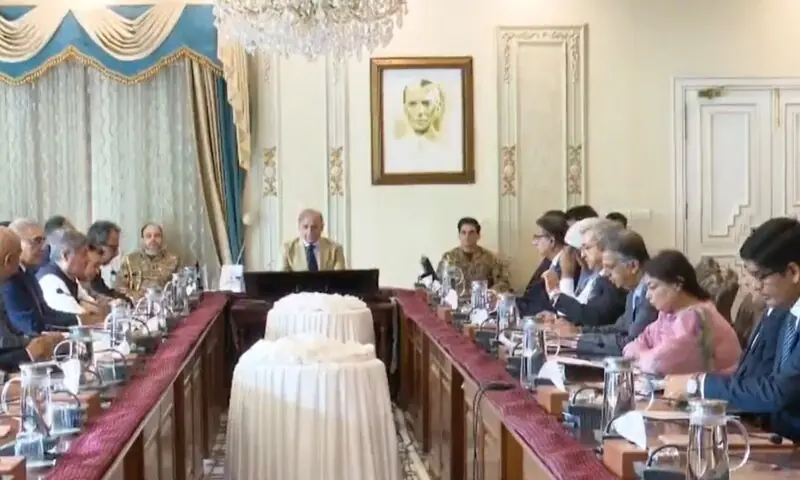
Prime Minister Shehbaz Sharif declared that the promotion of clean, affordable and sustainable energy was a cornerstone of Pakistan’s national energy strategy. He was speaking about a 100 MW solar project for Gilgit-Baltistan, and may have missed the multiple ironies involved.
First of all, to praise a solar power project in Gilgit-Baltistan, is an admission of failure, for it meant that the immense hydroelectric power potential has been overlooked. While the Diamer-Bhasha Dam is being built, which is a 8.1 MAF water storage project, with a 4500 MW electricity generation capacity. There is also a plan to build a run-of-the-river generation plant at Bunji, which has a potential of 7100 MW. The 11800 MW potential of these two projects alone is 118 times the power of the solar plant.
These are the projects on which more attention is needed. This should not divert attention from the rest of the hydel potential of the area, which comprises many swiftly flowing streams and rivers. One estimate is of between 40,000 MW and 50,000 MW. Of that, only 285 MW has been installed, and even that leads to power shortages in winter, when the glacier melt stops.
That is the problem with hydel. It depends on river flows, which are seasonal. This is even more the case with the Indus and its tributaries, where all the country’s hydel projects are located. The Indus is an exotic river, and its flows increase and decrease with the season, meaning that in winter, when flows are low, electricity cannot be generated. Another problem with the hydel potential of Gilgit-Baltistan is that the river flows depend on snow melt. As glaciers are shrinking because of global warming, if present trends continue, flows will come to an end. In a strange way, then, solar power does make a certain kind of sense. After all, global warming may make the hydel power plants useless.
It should not be forgotten that the annual rising and flooding of the exotic rivers depends on sufficient snow falling in the highlands during winter. Hydel generation also depends on this cycle. With increasing global warming, sunlight will be more plentiful, and it will be a matter of harnessing that sun power.
Another irony is that the government is erecting this plant in Gilgit-Baltistan, but has left the rest of the country to solarize on its own, and has left it to the individual consumer. Perhaps inadvertently, the distribution companies have let the consumer get into generation. The DISCOs may have escaped the cost of installing the generation equipment, but the only hold they have is the ability to provide back-up power, because solar power can only be generated when the sun is shining, wind power when the wind is blowing and hydel when the water is flowing.
As a matter of fact, all three renewables generate much more than is sued, but so far there are insufficient storages available. The DISCOs must explore the possibility of storing not just excess solar power, but also wind power and hydel. Indeed, they are ideally suited to developing such battery storage, because they are too expensive for the consumer.
Perhaps the biggest hurdle is the mental one. There is the natural inertia against change, especially when it has to be executed by those who have risen to the top of their institution or department through the same system that is in need of change. Surprisingly, technical organisations have proved the strongest opponents of the changes they are best positioned to execute.
The government must realize that the oil era is coming to a close. While it is far from over, the end is in sight. Electricity generation is moving to renewables, and the coming of electric vehicles has meant that transport is also moving in the direction of converting to renewables. The reason for the transport revolution will be the same as the generation revolution: the price of oil. It should be noted that electricity generation was a new phenomenon in the 19th century, with fire having preceded it throughout human history. On the other hand, transport had been drawn by animal power, mostly horses and donkeys. Transport animals require care and feeding. With the decline of animal draught, the stabling and fodder industries were dealt fatal blows. A similar transformation is likely to take place, as new requirements create new opportunities.
Oil is polluting, and the gases resulting from its combustion, the notorious greenhouse gases, are causing global warming. Oil is highly convenient, but it is also highly polluting. The only way out is for the world to adopt renewables. True, Pakistan does not produce much of the problem. However, if it industrialises the traditional way, by burning fossil fuels, it will become part of the problem. In fact, using new methods will help the West change over to less polluting methods of power generation and transport.
However, there is one bottleneck that will not allow the natural link required to develop between the national grid and the transport sector. EVs depend on the grid for charging, even if it means that charging is one at home, not at the petrol pump. The mind does boggle at the idea of ramping up oil- and coal-fired generation to power transport, not so much from the economic point of view, as because it does not make environmental sense to have electric vehicles being powered by fossil fuels. It is possible that EVs will ultimately be charged directly using their roofs, bonnets and boots, but it is unlikely that this will do more than supplement grid charging.
The real challenge, and the one the government is uniquely positioned for, involves improving the grid’s distribution system, which is simply unable to handle the burden of EVs.
Indeed, the problem has become visible in the experience of two firms, offering different charging solutions, one in Lahore, the other in Karachi. The one in Lahore offers e-bikes charged batteries, which it changes for exhausted batteries. The one in Karachi offers chargers on rent, choosing as locations existing businesses. A recent report in this newspaper’s Profit magazine revealed that both had come up against the distribution problem. (The one in Lahore found problems with regular supply at its centralized charging station, where it changed all the batteries handed in all over the city, the one in Karachi was a problem of DC current versus AC supplies).
The whole profession of electrical engineering will have to adapt to the new demands of the changing reality. At the moment, there is little intersection between automotive engineering and electrical engineering. That will have to change, which means the government may have to amend the Pakistan Engineering Council Act, as well as revise the curricula, even the structure, of engineering universities under its control (which is the vast majority).
The real test of Pakistani commitment to meeting its commitments under the Paris Accords will come when it attempts to inject renewable sources of generation into the national grid on the one hand, and attempt the more difficult, but equally essential, task of making the transport economy transit. The switch in the transport economy is heralded by the Punja committing to purchase only EVs or hybrid vehicles. However, none of the other governments have followed suit. And no government has committed to solarize, which would be a major development (it would probably destroy the DISCOs financially, and thus the federal government, but that is another story).
Perhaps the biggest hurdle is the mental one. There is the natural inertia against change, especially when it has to be executed by those who have risen to the top of their institution or department through the same system that is in need of change. Surprisingly, technical organisations have proved the strongest opponents of the changes they are best positioned to execute.
Comments
No comments yet. Be the first to join the discussion!