

The America of our youth
A writer recalls arriving at the University of Pennsylvania in 1987, arguing, protesting, and learning democracy through people—not classrooms—during America’s late-1980s optimism.

A generation came to study in America. It left understanding the world.
There are moments in history when a country becomes more than a nation. It becomes an idea. For my generation of international students, America in the late 1980s was such a place.
I arrived at the University of Pennsylvania in the autumn of 1987 carrying a suitcase, a scholarship, and the quiet hopes of parents who believed education could change the trajectory of a life. Like thousands of young people from across the world, I came seeking an academic qualification from a top university. I left with something much larger, an education in democracy, rule of law, diversity, friendship and the remarkable confidence of a nation at the height of its influence.
Nearly four decades later, what I remember most is not the classrooms, although they were exceptional, nor the libraries, which seemed to contain the accumulated knowledge of our civilization. What I remember most is the people.
My first year roommate was an Italian-American from the East Coast. We could hardly have come from more different worlds. We spoke with different accents, had grown up with different traditions and carried different assumptions about each other's countries. Yet within weeks we became close friends. Nearly 40 years later, we remain so.
Our friendship eventually travelled across continents. He later visited Pakistan, not as a tourist seeking familiar destinations but as a curious traveller eager to discover a country almost entirely absent from the Western imagination. Together we travelled through Pakistan's magnificent northern mountains, where the towering peaks of the Karakoram and the hospitality of local communities left a lasting impression on him. He even experienced wild boar hunting in rural Pakistan, an adventure few Americans could claim. The journey changed his understanding of my country just as America had changed mine.
Looking back, I realize that friendship captured something essential about the America of that era. It was confident enough to welcome strangers, curious enough to learn from them and secure enough not to fear difference.
The America I encountered was living through one of the most extraordinary moments in modern history. Ronald Reagan occupied the White House. The Cold War was approaching its peaceful conclusion. Within two years the Berlin Wall would fall, and soon afterwards the USSR itself would disappear. Francis Fukuyama would famously write about "the end of history," reflecting the widespread belief that liberal democracy and market economics had ultimately prevailed. Whether or not that judgment proved premature, there was an unmistakable optimism in the air. The future seemed open, globalization promised unprecedented prosperity, and American universities stood at the centre of that confidence.
They attracted students from every continent because they represented something larger than academic excellence. They embodied meritocracy, openness and the belief that ideas mattered more than identities. What struck me most was not that everyone agreed with one another. Quite the opposite. Campuses were places of vigorous disagreement, but disagreement was viewed as an essential feature of education rather than a threat to it.
Three experiences from those years remain vivid in my memory because they revealed different dimensions of that intellectual culture.
The first was participating in a protest outside the Israeli Consulate in Philadelphia in support of Palestinian rights around the time of the first Intifada. Students from many backgrounds gathered peacefully to express their convictions. There were passionate arguments and opposing views, but the legitimacy of peaceful protest itself was never questioned. It was my first close encounter with the practical meaning of the First Amendment. Democracy was not merely taught in political science classrooms, it was lived on the streets.
The second was attending a speech by Louis Farrakhan, the controversial leader of the Nation of Islam, on the University of Pennsylvania campus. Many profoundly disagreed with his views. Others defended his right to speak. The significance of the event was not the speaker himself but the principle it represented. Universities believed that difficult ideas should be confronted rather than suppressed. Exposure to controversial opinions was considered part of intellectual maturity.
For us, the greatest lessons America taught were never found only in lecture halls or textbooks. They were found in dormitory rooms where unlikely friendships began, in classrooms where difficult ideas could be debated without fear, and in a society that believed curiosity was stronger than prejudice and openness more enduring than fear. That America shaped a generation. In a world searching for confidence amid uncertainty, it still has much to teach us.
The third came during the global controversy surrounding Salman Rushdie's The Satanic Verses. As debates erupted across the Muslim world, I was interviewed by The Daily Pennsylvanian, the university's student newspaper, about the issue. It was a moment that forced many international students to explain complex religious, cultural and political perspectives to audiences unfamiliar with them. Once again, what stayed with me was not that consensus emerged. It rarely did. What mattered was the willingness to ask difficult questions without assuming that conversation itself was dangerous.
Looking back today, I realize I was witnessing more than campus life. I was witnessing America at the height of its confidence. It was a country secure enough to believe that open debate strengthened society rather than weakened it, that universities existed to challenge assumptions rather than confirm them, and that diversity meant more than demographics, it meant the free exchange of ideas.
History, however, has a habit of humbling every generation. The America that shaped us would soon confront events that transformed not only the United States but the international order itself.
The fall of the Berlin Wall in 1989 and the dissolution of the USSR two years later ushered in what many called the "unipolar moment." For a brief period, history appeared to have chosen its direction. Liberal democracy was expanding. Global trade accelerated at an unprecedented pace. The internet connected societies in ways unimaginable only a decade earlier. China's economic opening promised prosperity through integration rather than confrontation. American universities, corporations and financial markets became magnets for global talent. It was an era defined as much by confidence as by capability. Looking back, it is remarkable how much optimism existed.
The prevailing assumption was that greater trade would reduce conflict, that technological progress would naturally strengthen democracy and that globalization would gradually narrow the divide between nations. America stood at the centre of this world, not merely because of its military or economic strength, but because its universities, research institutions and culture represented aspiration for millions beyond its borders.
Then history accelerated.
The terrorist attacks of 11 September 2001 fundamentally altered America's sense of itself. A country that had long felt insulated by geography suddenly confronted vulnerability on its own soil. The wars in Afghanistan and Iraq followed, reshaping American foreign policy for two decades while consuming enormous human, financial and political resources. The confidence that had characterized the America of my student years gradually gave way to a greater preoccupation with security.
The world changed alongside it.
China emerged as an economic superpower, lifting hundreds of millions out of poverty while becoming America's principal strategic competitor. The 2008 global financial crisis shook confidence in Western economic models and exposed deep structural weaknesses within the international financial system. Social media, initially celebrated for democratizing information, began fragmenting public discourse, rewarding outrage over reflection and speed over accuracy. Political polarization intensified across many democracies, including the United States, making compromise appear increasingly elusive.
Today, artificial intelligence promises another transformation whose consequences may prove as profound as the Industrial Revolution or the internet itself. At the same time, the world is becoming unmistakably multipolar, with economic and geopolitical influence distributed among several major powers rather than concentrated in one.
America, too, has evolved.
The country remains home to many of the world's finest universities, most innovative companies and leading research institutions. It continues to attract ambitious students, entrepreneurs and scientists from every corner of the globe. Its capacity for reinvention remains extraordinary. Yet the atmosphere feels different from the one I encountered as a student.
The America of my youth was unquestionably liberal, but it was not defined by the cultural anxieties that dominate many contemporary debates. People disagreed passionately about politics, foreign policy, religion and race, yet there remained a widespread confidence that disagreement itself was healthy. Universities encouraged students to test ideas rather than avoid them. Intellectual resilience was valued as highly as intellectual achievement.
That confidence appears less certain today.
Across much of the democratic world, public debate has become more polarized, trust in institutions has declined and identity has too often replaced dialogue. Social media has compressed complex arguments into slogans, while algorithms increasingly shape what citizens see, read and believe. The challenge is no longer simply protecting freedom of speech, it is preserving a culture that values listening as much as speaking.
Yet it would be a mistake to romanticize the past or suggest that America has somehow lost its essence.
Every generation tends to remember the country of its youth with particular affection. Nostalgia has a way of smoothing rough edges and overlooking imperfections. The America of the late 1980s was hardly free of social tensions, political divisions or international controversies. But it possessed something that remains deeply attractive, an underlying confidence in openness, meritocracy and the transformative power of education.
That confidence changed lives including mine.
The education I received extended far beyond economics, politics or development studies. It taught me how to engage with people whose experiences differed profoundly from my own, how to question my assumptions without abandoning my principles and how democratic societies derive strength not from uniformity but from the disciplined exchange of ideas. Those lessons proved invaluable throughout a career that later took me across the Middle East, Europe and Asia, working with people of different cultures, faiths and nationalities.
Perhaps that is America's greatest contribution to the world. Its most important export has never been Hollywood, Silicon Valley or even the dollar. It has been the belief that talent can come from anywhere, that ideas deserve to compete freely and that strangers can become lifelong friends.
My Italian-American roommate remains one of my closest friends after nearly four decades. Our friendship has outlasted presidents, geopolitical crises, financial upheavals and profound changes in the international order. In many ways, it symbolizes the America I first encountered, open enough to welcome difference, confident enough to embrace debate and generous enough to allow friendships to flourish across cultures.
The world of 2026 is unquestionably more complex than the world of 1987. Great power competition has returned. Artificial intelligence is reshaping economies and societies. Climate change, cyber conflict and technological rivalry present challenges unimaginable to my generation of students. The certainties of the post Cold War era have given way to a far less predictable international landscape.
Yet the values that attracted millions of young people to America remain as relevant as ever. Openness, intellectual curiosity, meritocracy, tolerance and confidence in free inquiry are not relics of a bygone era. They are enduring strengths that every successful society must continually renew.
The America of our youth may never fully return, because neither America nor the world stands still. But the ideals that inspired a generation of international students remain worth preserving. They remind us that a nation's greatest influence does not arise solely from its military power, economic size or technological leadership. It comes from the example it sets, the opportunities it creates and the confidence it inspires in those who arrive as strangers and leave forever changed.
For us, the greatest lessons America taught were never found only in lecture halls or textbooks. They were found in dormitory rooms where unlikely friendships began, in classrooms where difficult ideas could be debated without fear, and in a society that believed curiosity was stronger than prejudice and openness more enduring than fear.
That America shaped a generation. In a world searching for confidence amid uncertainty, it still has much to teach us.
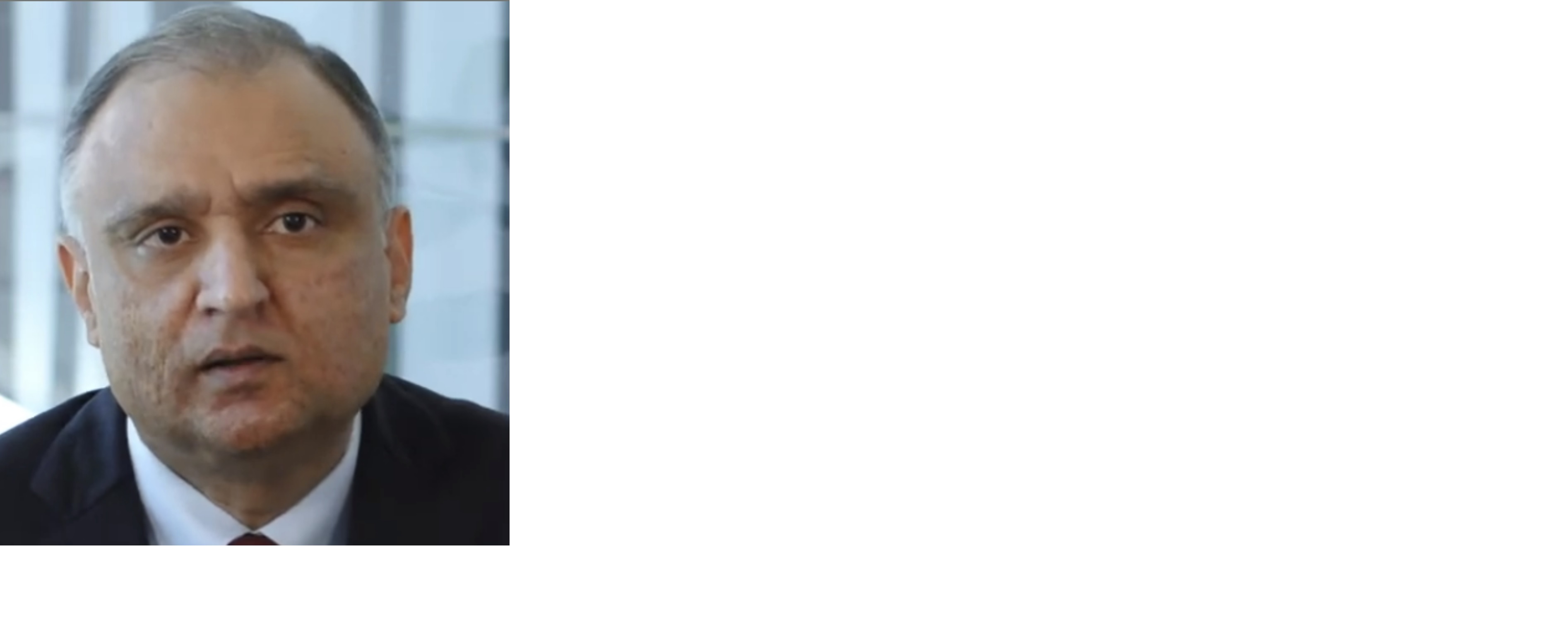
The author is a senior international banker, with degrees in economics and political science from University of Pennsylvania and Brown University
View all articles →Comments
No comments yet. Be the first to join the discussion!


