OIC women’s conference adopts Islamabad Declaration and digital inclusion initiative
The OIC’s ninth Ministerial Conference on Women has adopted the Islamabad Declaration and launched a voluntary digital inclusion initiative for women and girls. The declaration sets out commitments on education, employment, finance, technology and protection from violence.

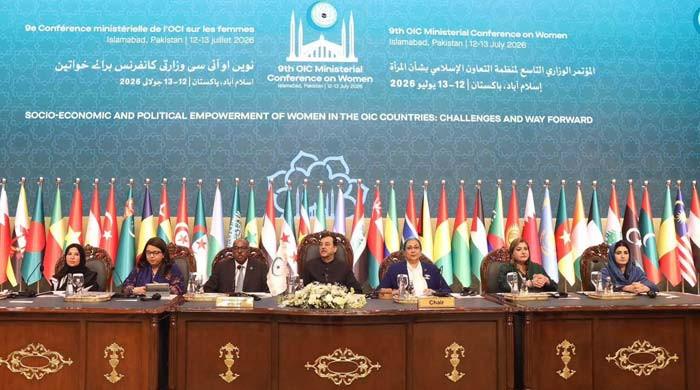
ISLAMABAD: Ministers and delegates at the ninth Ministerial Conference on Women of the Organisation of Islamic Cooperation on Monday endorsed the Islamabad Declaration, setting out a shared agenda on women’s socio-economic and political advancement and backing a new platform focused on digital inclusion for women and girls across member states.
According to the text of the declaration available on the OIC website, participating ministers and heads of delegation committed themselves to reinforcing policies and institutional arrangements aimed at enabling women to play a fuller role in political, economic and public life in OIC countries.
The document called on member states to address obstacles affecting women’s access to education and work, while widening opportunities for quality schooling, vocational learning and leadership training. It also urged stronger support for women’s economic participation through better access to jobs, finance, entrepreneurship assistance and social protection.
The declaration also advocated more inclusive financial systems, including Islamic finance, microfinance and digital financial services. It further encouraged greater backing for women-led small and medium-sized enterprises through improved access to capital, innovation and trade openings.
Focus on technology and digital access
A significant part of the declaration dealt with women’s role in technology-driven sectors. It highlighted the importance of greater participation by women in science, technology, engineering and mathematics, as well as in artificial intelligence and other emerging fields.
Member states were urged to reduce the digital gender gap by improving affordable digital infrastructure, connectivity, device availability and digital literacy programmes, particularly in rural communities.
Alongside the declaration, the conference launched the Islamabad Initiative on Women’s Digital Inclusion, described as a voluntary OIC platform. The initiative is intended to promote digital literacy, digital entrepreneurship, STEM education, artificial intelligence skills, cybersecurity awareness and fair access to digital technologies for women and girls across the Muslim world.
The declaration invited interested member states, OIC institutions and development partners to contribute to the initiative through training programmes, scholarships, mentorship and exchanges of expertise and best practices.
Violence, discrimination and conflict-affected women
The declaration also pressed for stronger action against violence targeting women and girls, including cyber harassment, online abuse, exploitation and other technology-enabled threats. It also called for closer cooperation in countering Islamophobia, xenophobia, discrimination and hate speech directed at Muslim women and girls.
It expressed solidarity with the women and girls of Palestine and Indian Illegally Occupied Jammu and Kashmir, and appealed to the international community to extend legal, humanitarian, economic, educational and psychosocial support to ease their suffering.
The conference additionally adopted an omnibus resolution. The declaration concluded by restating that education, skills, leadership and economic participation are central to the empowerment of women and girls and to the progress, resilience and prosperity of OIC societies. It also thanked the Government of Pakistan for hosting the meeting and acknowledged Prime Minister Shehbaz Sharif for his patronage.
OIC official calls for implementation
In his concluding remarks, OIC Assistant Secretary-General Ambassador Dr Tarig Ali Bakheet said the discussions showed a collective resolve among member states to improve the status of women as an essential part of sustainable development and the prosperity of the Muslim Ummah.
He welcomed the omnibus resolution and said it marked an important step by reflecting the common outlook of member states and offering a broad framework for cooperation on women’s empowerment and on challenges faced by women across the Islamic world.
Dr Bakheet said:
“I commend the spirit of consensus and cooperation that has guided the adoption of this important resolution,”
He added that the true test of the conference would be effective implementation and measurable results rather than the passage of resolutions alone. He urged member states, OIC institutions, international partners and other stakeholders to work together to carry out the conference’s decisions and recommendations.
Dr Bakheet said that continued cooperation, coordinated action and the sharing of successful experiences among member states could turn agreed commitments into tangible improvements in the lives of women and girls. He also congratulated Pakistan on taking over the chairmanship of the Ministerial Conference on Women and expressed confidence that it would steer implementation of the conference’s decisions successfully.
He reaffirmed the OIC General Secretariat’s commitment to working with Pakistan, the OIC Women Development Organisation, relevant OIC institutions and member states to sustain the momentum created by the conference and convert it into concrete results. He also prayed for greater unity among OIC member states and called for continued joint efforts to promote the dignity, empowerment and well-being of women across the Muslim world.
Comments
No comments yet. Be the first to join the discussion!