OIC Ministerial moot on women
Pakistan hosts the 9th OIC Ministerial Conference on Women in Islamabad on July 12-13, focusing on socio-economic and political empowerment through four key themes.

The conference opens today
The Organization of Islamic Countries (OIC), historically speaking, is the second largest inter- government organization in the world after the United Nations. With as many as 57 member states across the four continents, it has been serving as the collective political and diplomatic voice of the Muslim world, peace and harmony.
The OIC as such aims to enhance solidarity and cooperation among the member states in political, economic, social, cultural, scientific and humanitarian fields.
As a founding member of the OIC, Pakistan greatly values its role and contributions as an institutional expression of Pan-Islamic sentiment and remains committed to the values and objectives of the organization as promoting relations with the Muslim countries was its constitutional obligation and a key pillar of its foreign policy.
The organizers and the participants will need good luck in making positive and practical recommendations regarding womenfolk's enhanced participation in different activities in the national life of their respective countries and enhancing women's participation in all national activities and reducing the gender disparities in due course of time
On its part, the OIC has consistently and unequivocally been supporting and continues to support the Kashmir cause through a series of pronouncements, including the communiques issued by the Islamic Summits and the resolutions by various sessions of the Council of Foreign Ministers.
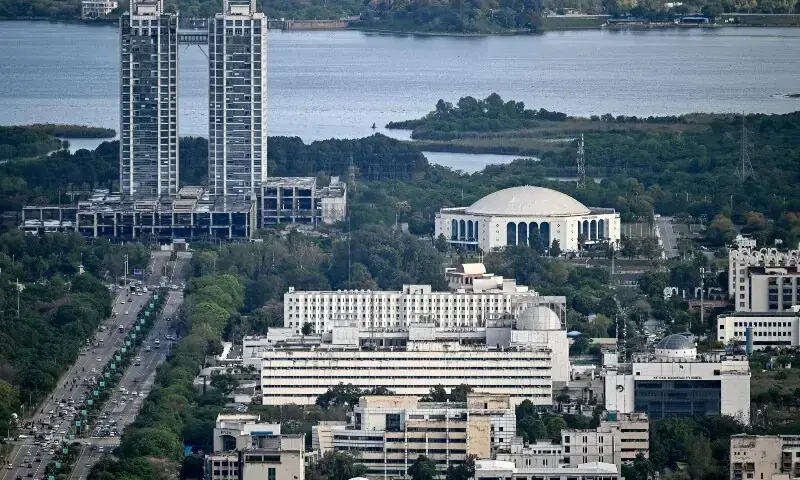
Pakistan is all set to open a new chapter of its continued cooperation and participation in the OIC activities as it is hosting the 9th OIC Ministerial Conference on Women is being held in the Convention Centre Islamabad on July 12 and 13,for which all possible arrangements have been made by the Federal Ministry of Human Rights in a quite befitting manner..
The important OIC moot will be deliberating through delegates from the member countries and possibly also from some concerned international organizations on "Socio-Economic and Political Empowerment of Women in the OIC countries; Challenges and Way Forward" while three sub-themes include "Enhancing Political and Profession Participation of Women", “Advancing Women's Access to Economic Resources and Financial Systems", and "Bridging Gender Gaps in Technology and Digital Participation".
According to the information available from the organizers of this apparently quite meaningful and forward looking moot viz-a-viz women's empowerment in modern times relevant important fields, the 9th OIC Ministerial Conference aims to call for developing a synthesis for developing an enabling environment for women in the member countries in which they could fully participate, exploit and realise their potential for contributing to socio-economic development, of their respective motherlands.
Advancement of women was not merely a social objective but also a strategic necessity for the collective progress of the Muslim Ummah. There were around 940 million females living in the OIC member states, constituting 49.3 percent of the OIC member countries’ total population.
However, their role in and contribution to the socio-economic development of their societies were often suboptimal. This was largely due to various social , cultural, and political norms and practices that resultantly limit their participation in the society and render their needs invisible. Ensuring fair participation of women in the society was of the utmost importance for the OIC member countries for eliminating not so appreciable gender disparities and maximizing women's positive, desirable and meaningful contributions to the socio-economic development of their countries.
According to the World Economic Forum's Global Gender Report 2025, although there has been moderate progress in narrowing gender disparities, full parity was still projected to be more than a century away at current rates of progress. Global parity in 2025 showed significant gaps persisting in women's political empowerment and economic participation.
The finalised themes for the upcoming moot, as briefly mentioned above, represented a sophisticated synthesis of Islamic values, demographic realities, and modern economic demands and as a follow-up to the 8th Ministerial Conference in Cairo, Egypt, to bridge the gap between declarative policy and practical implementation through the lens of socio-economic and political empowerment of women.
The upcoming moot's central theme, "Socio-Economic and Political Empowerment of Women in the OIC Countries; Challenges and Way Forward", as a matter of fact acknowledges that human development can only reach its optimum level through the full participation of all gender identities. This realisation was duly anchored in the OIC charter and the constitutional principles of the member states.
As far as the host country Pakistan was concerned, its Constitution also adheres to egalitarianism, equality, socio-economic well-being, and full participation of women in national life. The Father of the Nation, Quaid-i-Azam Muhammad Ali Jinnah, had articulated a
democratic state based on Islamic principles of social justice. .
Further, the OIC -2025 Programme of Action also has identified the empowerment of women as a key priority, thereby recognizing that they constituted one of the most affected groups due to wide gender disparities in several member countries.
For addressing the issues of gaps in achieving the goals of socio-economic and political empowerment of women,three sub-themes namely Enhancing political and professional participation, Advancing women's access to economic resources and financial systems and Bridging gender gaps in technology and digital participation have been prioritized, since these themes recognized that political agency provides the legislative framework for women's economic rights while digital inclusion serves as the modern infrastructure which was necessary to exercise these rights in a globalized world.
The organizers and the participants will need good luck in making positive and practical recommendations regarding womenfolk's enhanced participation in different activities in the national life of their respective countries and enhancing women's participation in all national activities and reducing the gender disparities in due course of time.
The writer is Lahore-based Freelance Journalist, Columnist and retired Deputy Controller (News) , Radio Pakistan, Islamabad and can be reached at [email protected]
View all articles →Comments
No comments yet. Be the first to join the discussion!