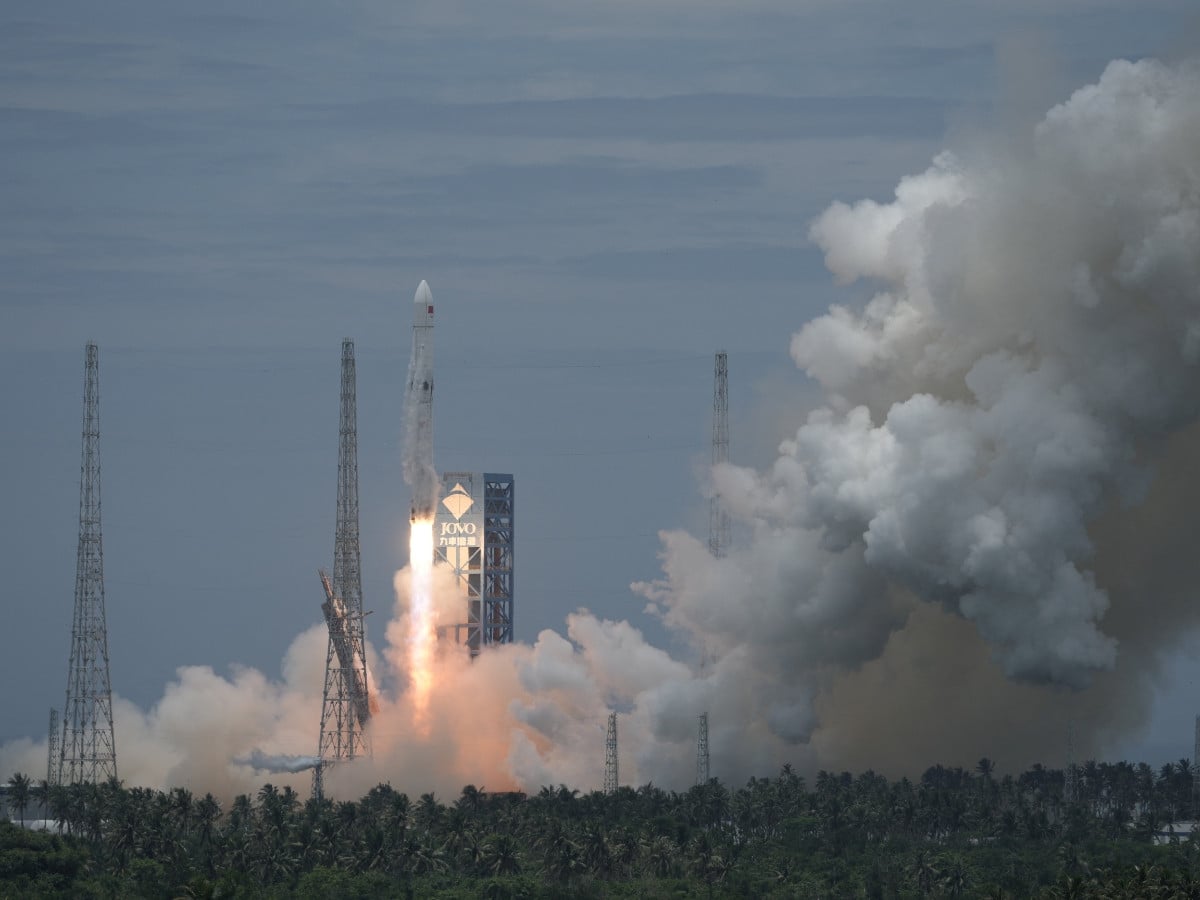
China recovers reusable Long March-10B booster in first net-based sea capture
China recovered the first-stage booster of its Long March-10B rocket during its maiden flight, using a net-based system on an offshore platform. The mission marked the country’s first controlled recovery of a carrier rocket first stage.

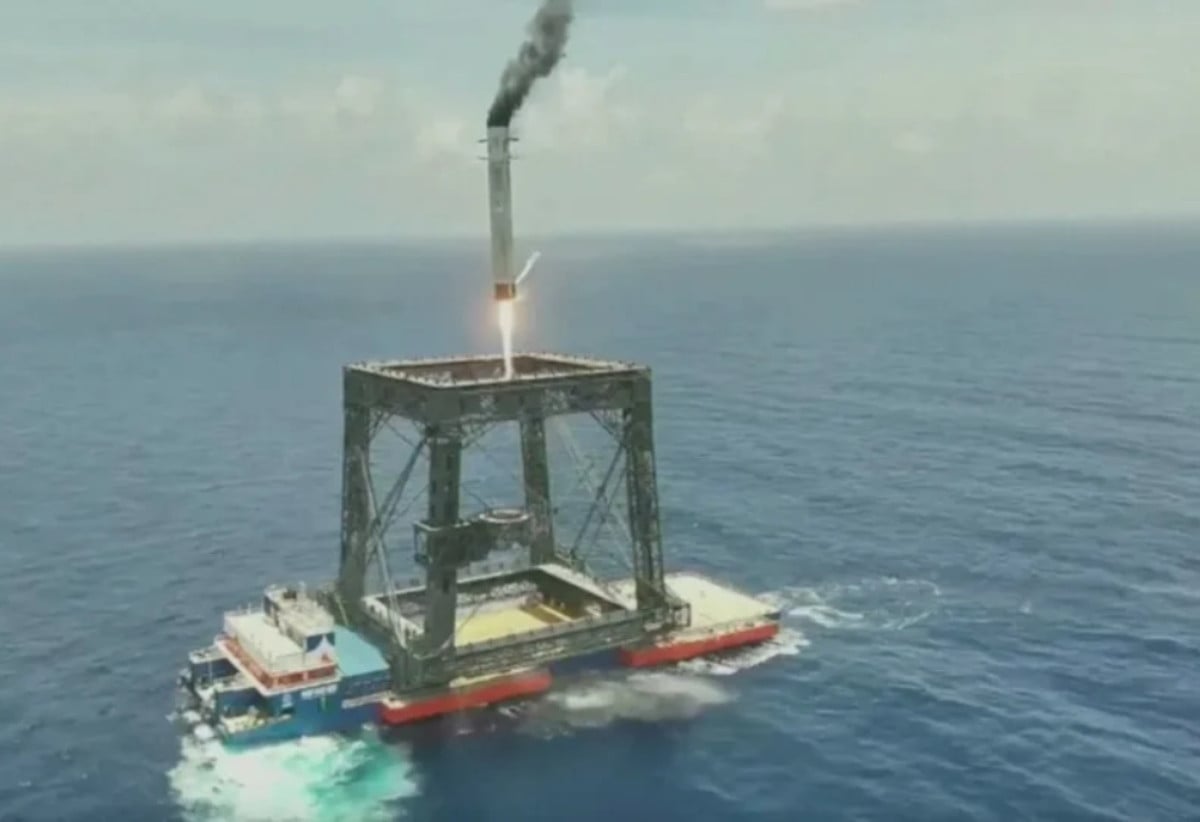
BEIJING: China has completed what experts described as a major step in reusable launch technology after recovering the first-stage booster of its Long March-10B rocket during its maiden flight over the South China Sea on Friday.
The rocket lifted off from the Hainan commercial space launch site at 12:15pm Beijing time and placed its payload into the intended orbit before beginning a recovery sequence for the first-stage booster. About six minutes after stage separation, the booster made a controlled descent and was captured mid-air by a specially designed net-based recovery system installed on an offshore platform more than 300 kilometres from the launch site.
The mission marked China’s first controlled recovery of a carrier rocket’s first stage and, the first use of a net-based system to retrieve a launch vehicle. With that, the Long March-10B became the country’s first reusable rocket to complete a full recovery mission, a development that experts said signalled China’s entry into what they called the rocket recovery era.
A video released on Saturday by the China Aerospace Science and Technology Corporation showed the launch and the recovery of the booster. The operation was presented as one of the most technically demanding parts of the mission, requiring engineers to guide the descending stage through re-entry while managing stability, speed and accuracy so that it aligned with the offshore capture platform.
Technically demanding recovery
Mission observers said the capture was closely watched because of the novelty of the system. Unlike vertical landings or ocean splashdowns, the net-based method depended on precise coordination between the booster’s descent path and the positioning of the sea platform.
The achievement goes beyond symbolism and could help lower launch costs while improving the efficiency of future missions. Reusable rocket systems allow major components to be recovered and refurbished instead of building new launch hardware for every mission.
Approach is widely seen as central to modern space activity and commercial launch operations because it can reduce costs, raise launch frequency and widen access to orbit for missions including satellite deployment, scientific work and possible deep-space exploration.
Wider implications for China’s space programme
The Long March-10B recovery mission is expected to provide a solid foundation for strengthening China’s ability to access space and return launch hardware. Analysts said such progress is important as China seeks to broaden its space presence, including in relation to space stations, lunar exploration and future crewed missions.
Reusable rockets can bring environmental and operational advantages by reducing debris and cutting the need for expendable hardware, while the precision recovery demonstrated further advances in safety and mission reliability.
The use of a net-based recovery system was also described as a new engineering option that could shape future rocket designs. While other methods rely on powered landings or ocean retrieval, net capture may reduce structural stress on the rocket and make post-recovery processing easier. Industry observers added that, if further refined, the method could shorten turnaround times between launches.
The successful maiden flight comes amid rapid global progress in reusable rocket technology. China’s latest success strengthens its position in the changing space sector and carries broader strategic significance because cheaper and more capable launch systems can support satellite deployment, communications networks and scientific research. The demonstration of precise recovery technology reflects growing maturity in China’s aerospace engineering as the Long March-10B programme moves toward further testing and operational missions.
Comments
No comments yet. Be the first to join the discussion!