USA and Israel: From support to accountability
As U.S.-Iran conflict escalates, a parallel U.S. political fight grows over Washington’s Israel alliance. Graham’s departure and Ro Khanna’s critique fuel calls for accountability and policy reassessment.

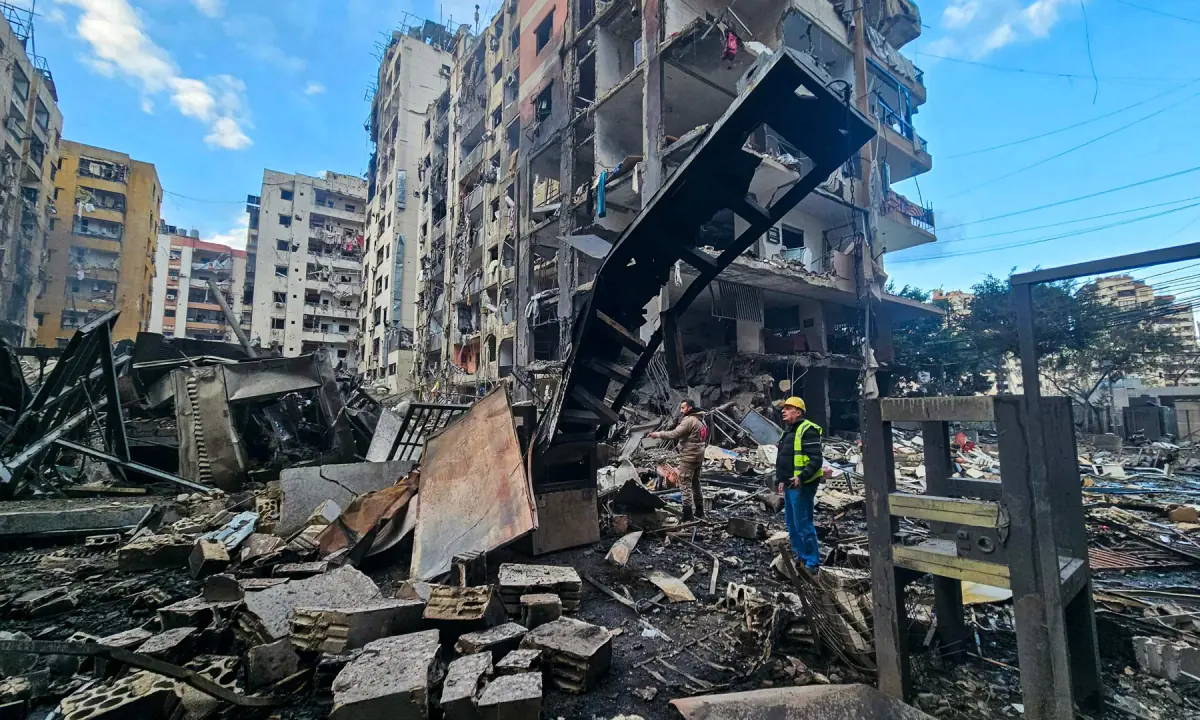
The renewed U.S.-Iran conflict has once again entered a dangerous phase. American strikes on Iranian targets have been followed by Iranian retaliation on Sunday 12th July, raising fears that the region may be entering a prolonged cycle of attack and counterattack. Yet while missiles dominate headlines in the Middle East, an equally consequential battle is unfolding inside the United States—one over America's relationship with Israel and the political costs of that alliance.
One significant development has been the passing of Senator Lindsey Graham, who for years was among Israel's most outspoken supporters in the U.S. Senate. Graham consistently advocated maximum pressure against Iran, arguing that Tehran's military capabilities, regional proxies, missile programs, and nuclear ambitions posed an existential threat to Israel and a broader danger to American interests and regional allies. He defended Israel's military campaigns in Gaza, Lebanon, and elsewhere by drawing historical parallels to Allied actions during World War II, including the atomic bombings of Hiroshima and Nagasaki, arguing that overwhelming force can sometimes bring wars to an end.
His death removes one of Israel's strongest voices in Congress at a time when American policy toward the Middle East is facing unprecedented scrutiny. At the same time, a different narrative has emerged from Congressman Ro Khanna following his visit to Israel and the occupied West Bank. Khanna described witnessing the realities of occupation firsthand and recounted an incident in which he said Israeli settlers and Israeli security forces temporarily detained his delegation. He argued that the experience fundamentally changed his understanding of conditions faced by Palestinians and intensified his criticism of Israeli policies in the occupied territories.
Khanna’s remarks resonate strongly with a younger generation of American lawmakers and voters who increasingly view the Israeli-Palestinian conflict through the lens of human rights, equality and international law. Drawing on his own visit to the occupied West Bank, Khanna described what he regarded as an apartheid-like system marked by the arrogance of armed Israeli settlers, the detention of an American delegation, and the willingness of the IDF to side with those settlers rather than protect visiting Americans.
He argued that Israel has enjoyed near-total impunity despite the devastation and alleged genocide in Gaza, and warned that American politicians who remain silent in the face of such injustice are morally compromised. Khanna therefore called for a fundamental moral repositioning of U.S. policy—a serious reassessment of Washington’s support for Israel and of Israel’s actions across Gaza, the West Bank and the wider Middle East.
Beyond elected officials, prominent commentators have also intensified the debate. In a widely watched interview, Tucker Carlson and his guest argued that U.S. foreign policy has increasingly subordinated American strategic interests to Israeli priorities. They alleged that missile-defense and interceptor systems originally deployed to protect U.S. bases and Gulf allies were diverted to defend Israel, leaving American installations and partner nations more vulnerable to Iranian retaliation.
The discussion went further, portraying the United States as a power in relative decline—one whose military stockpiles have been significantly depleted, whose capacity to sustain a prolonged conflict is increasingly constrained, and which no longer possesses the capability to undertake a large-scale ground invasion of Iran.
Carlson also questioned whether Washington was allowing itself to be "led around the nose" by Israel, arguing that American policy had become excessively aligned with Israeli regional objectives rather than guided primarily by U.S. national interests. Simultaneously, younger Americans—particularly those under 35—are asking increasingly difficult questions about the role of lobbying organizations, campaign financing, and the influence of foreign-policy advocacy groups in shaping American decisions in the Middle East. Critics argue that elected officials often hesitate to criticize Israel because of domestic political pressures, while supporters of the U.S.-Israel relationship respond that the alliance reflects shared democratic values, longstanding security cooperation, and strategic interests rather than undue influence.
Another issue drawing attention is the expanding military cooperation between the United States and Israel. Supporters view deeper integration as essential for regional security, intelligence sharing, missile defense, and technological innovation. Critics, however, worry that increasingly integrated military planning could blur the distinction between American and Israeli strategic priorities, potentially drawing the United States into conflicts that originate from regional disputes rather than direct threats to the American homeland.
Many Americans are therefore asking a fundamental question: What direct threat does Iran pose to the United States itself? Successive U.S. administrations have argued that Iran's support for armed groups, ballistic missile development, and nuclear activities threaten American forces, regional partners, and international stability. Critics counter that the primary confrontation remains between Iran and Israel, with the United States increasingly assuming the costs of a conflict driven largely by regional dynamics.
Another contentious issue concerns nuclear policy. Iran has long maintained that if it is expected to accept intrusive inspections, limits on uranium enrichment, and international oversight, then similar standards should apply to Israel. Many analysts note that Israel is widely believed to possess nuclear weapons while maintaining a policy of deliberate ambiguity and remaining outside the Nuclear Non-Proliferation Treaty (NPT). Now the world is waking up to the reality that Israeli nukes pose a greater threat to humanity than the combined military of the entire Muslim world.
Now an increasingly vocal group of politicians, military analysts, commentators, and independent media figures argues that the relationship has reached a point where Washington is no longer acting with complete strategic independence. They contend that American foreign policy has become disproportionately oriented toward advancing Israel's regional objectives, often at the expense of U.S. national interests, the security of American personnel, the economic well-being of its citizens, and the country's broader global standing.
This creates a profound paradox: the world's most powerful nation increasingly appears to be shaping its policies around the security priorities of a much smaller regional ally, thereby eroding perceptions of American strategic autonomy and sovereignty. Such an approach not only burdens American taxpayers and military resources but also weakens the United States' image as an independent global leader capable of pursuing a foreign policy guided primarily by its own national interests rather than those of any external partner. This growing acceptance in mainstream political discourse marks one of the most significant developments in the evolving American debate over Israel and the Middle East.
History demonstrates that foreign policy ultimately follows domestic political evolution. As American society reexamines its priorities, Washington may eventually recalibrate its approach—not necessarily by abandoning Israel, but by seeking a relationship that balances security cooperation with greater emphasis on diplomacy, accountability, regional stability, and equal application of international norms.
The future of the Middle East may ultimately depend not only on what happens on the battlefield, but also on how the US reassess the principles guiding their alliances in an increasingly complex and polarized world.
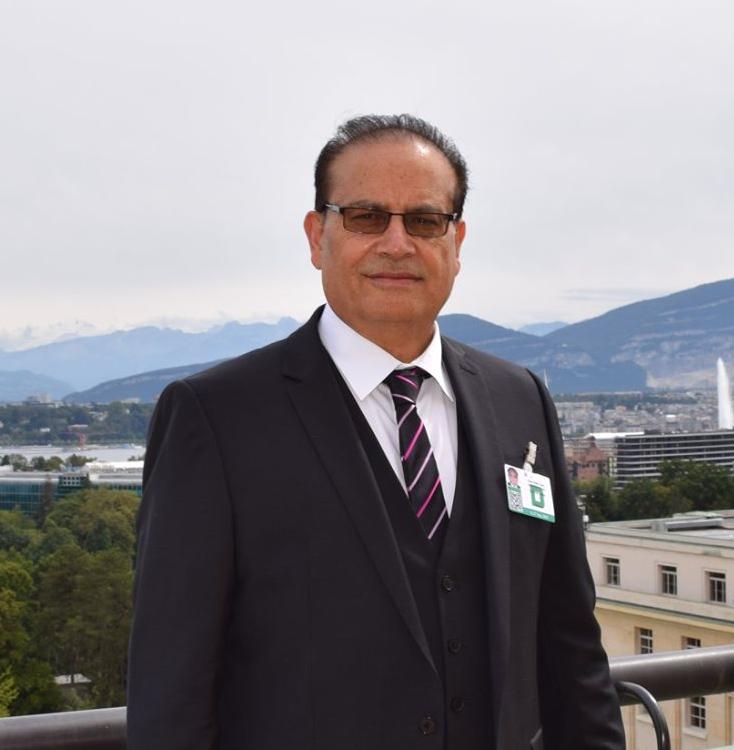
The writer retired as Press Secretary the President, and is former Press Minister at Embassy of Pakistan to France and former MD, Shalimar Recording & Broadcasting Company Limited
View all articles →Comments
No comments yet. Be the first to join the discussion!