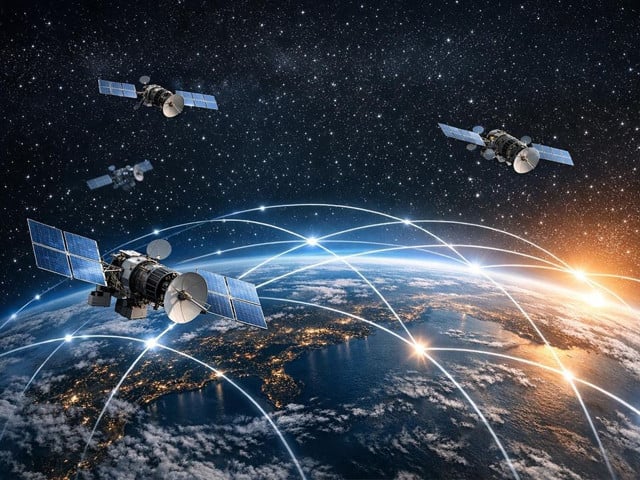
The internet spreads
PTA’s approval of 47 district-level ISP licences aims to extend internet beyond major cities. The move, backed by 5G spectrum rollouts, could improve last-mile connectivity and enable remote work—if power and grids upgrade.

The granting of district-level licences shows the spread of technology
The granting of 47 district-level licences for internet service providers by the Pakistan Telecommunication Authority shows that the internet is becoming part and parcel of people's lives even outside the large urban centres. With an initial fee of Rs 300,000 and an annual fee of Rs 100.000 over the 10-year duration of the licence, there will be Rs 1.3 million in cost, while other costs will remain. The main cost will be obtaining bandwidth in bulk and then distributing it in bulk to consumers. When coupled with the recent roll-out of the 5G spectrum, this constitutes a new effort to achieve internet penetration in areas that lack it. One of the most interesting consequences will be the improvement of last-mile connectivity for consumers. This has been one of the most persistent complaints of consumers in the mofussil, and to give the outlying areas access to the internet is essential.
It is perhaps not understood that the internet is not simple a tool for entertainment, or to obtain information, but a means of doing so many things. One of the main functions of the \internet has become to provide cable television. Then there is the internet of things, in which devices communicate with each other. Then there is the satellite data expected in rural areas to provide real-time monitoring of crops. There is so much that is being done over the internet that even these ISPs will probably find themselves overwhelmed. Then there is the prospect of absolutely new uses which no one has even thought of. Improved internet access will mean an expansion in the concept of remote working. So far, it only extends to someone working at home in the same town or city where his or her office is. What is to prevent some from working in one town while living in another, if the internet connectivity is good enough?
Side by side with providing internet access, the government must also upgrade its electricity grid. The internet is completely dependent on uninterrupted and uniform power. The sort of electricity supply provided in smaller twins and rural areas simply will not cut it. ISPs may solarize, not just to avoid punishing tariffs, but to obtain regular supplies. This does not solve the issue of dilapidated distribution networks, which the area will really have to concentrate to retain customers, including district-level ISPs.

The Editorial Department of Pakistan Today can be contacted at: [email protected].
View all articles →Comments
No comments yet. Be the first to join the discussion!