Technology row deepens as VAR decisions dominate World Cup debate
FIFA’s expanded use of VAR and ball-tracking technology has triggered mounting criticism at the World Cup, with coaches, players and analysts questioning consistency and overreach. Several major decisions involving goals, penalties and red cards have intensified the debate.

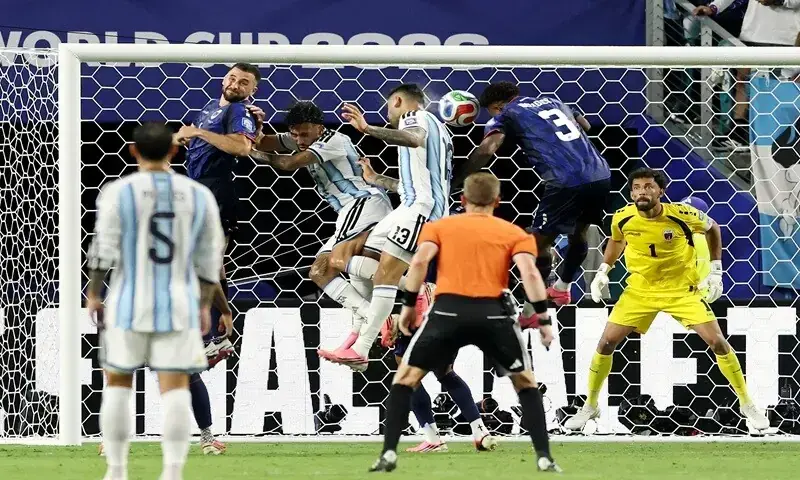
MEXICO CITY: FIFA’s wider use of technology at the World Cup has become a central source of dispute at the tournament, with video reviews and ball-tracking data driving several of the competition’s biggest controversies.
According to Reuters, criticism has ranged from complaints about overreach and inconsistent use of the system to allegations that video review has influenced outcomes in favour of particular teams or players. The debate has intensified after a series of decisions involving goals, penalties and red cards in the expanded 2026 tournament.
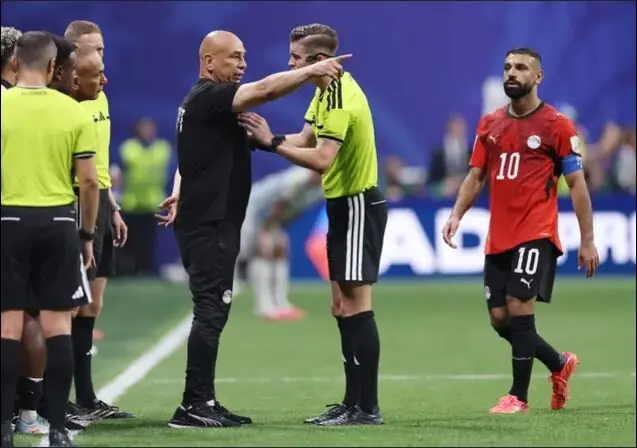
Egypt coach Hossam Hassan voiced his frustration on Tuesday after his side had a goal ruled out by VAR for a foul earlier in the move, while a penalty appeal was not reviewed, before Egypt lost 3-2 to Argentina in the last 16.
“What’s happening isn’t fair,” he said.
FIFA referees’ chief Pierluigi Collina said in an interview on Wednesday that he was satisfied with how the system was working. He specifically defended the decision to disallow Egypt’s goal.
“There is no defined limit regarding either the distance from goal or the amount of time between the incident and the goal,” he wrote. “We believe that a foul is a foul. Regardless of whether the foul appears ‘obvious’, if the referee did not see it on the field of play, the VAR can intervene.”
Expanded role for video review
VAR was originally introduced to correct clear and obvious refereeing errors, such as Diego Maradona’s Hand of God goal against England at the 1986 World Cup. Its use at the World Cup had been opposed by former FIFA president Sepp Blatter, but Gianni Infantino moved quickly to adopt it after taking office in 2016.
There were 20 VAR interventions in 64 matches at the 2018 World Cup and fewer than 30 in 64 matches at Qatar 2022. Those totals were surpassed early in the 2026 tournament, which features 104 matches. Reuters reported that the increase was intentional, with the enlarged role of four match officials in the television booth forming a key part of Collina’s approach, developed with the International Football Association Board. Collina also added four more situations in which VAR can intervene.
Network scientist Brennan Klein, whose team at Northeastern University has been analysing tournament data, said a future in which cameras and artificial intelligence adjudicate matches in real time was possible but unlikely because supporters appeared to have little appetite for further technological intrusion.
“This kind of dystopian future of over-refereeing everything kind of fails to address what it’s originally designed to intervene on,” Klein told Reuters.
“My sense is that fans in the stadium, by and large, just hate this. They’ve sort of been informed that this is the right way to do things, but not really had a say in it.
“I think fans seem to be voting with their boos.”
Offside call and red-card complaints add to anger
One of the most disputed incidents came in the round-of-32 match between Croatia and Portugal. Josko Gvardiol appeared to have equalised in the 13th minute of stoppage time to make it 2-2, but VAR ruled that the ball had touched Igor Matanovic on its way to him, making Matanovic offside. Reuters said the contact was not visible to the naked eye and the ball’s path did not clearly change, but a sensor inside the ball registered a touch, possibly from Matanovic’s hair.
FIFA said in a social media post that the sensor was capable of detecting even the slightest contact and giving officials an unprecedented level of data for quick and accurate decisions.
Croatia captain Luka Modric, whose 24-year World Cup career ended with the 2-1 loss, criticised the use of the system.
“For some things it’s useful, but it’s either being used incorrectly or selectively, depending on the size of the team or whatever else,” he said.
“If it’s a 200pc mistake, then you intervene. If it’s not, if it’s in a grey area, then there’s no reason to get involved.”
The Croatian football federation, while supporting the use of VAR, wrote to FIFA seeking an explanation and described the decision as an abuse of technology.
Klein said red cards had risen to 13 by the end of the round of 16, more than triple the levels seen at the 2018 and 2022 tournaments, although the current figure came in 94 games compared with 64 in each of the previous two World Cups. Reuters said at least two of those dismissals would not have occurred before VAR, including those shown to United States striker Folarin Balogun and England defender Jarell Quansah for fouls not seen by the referee in real time.
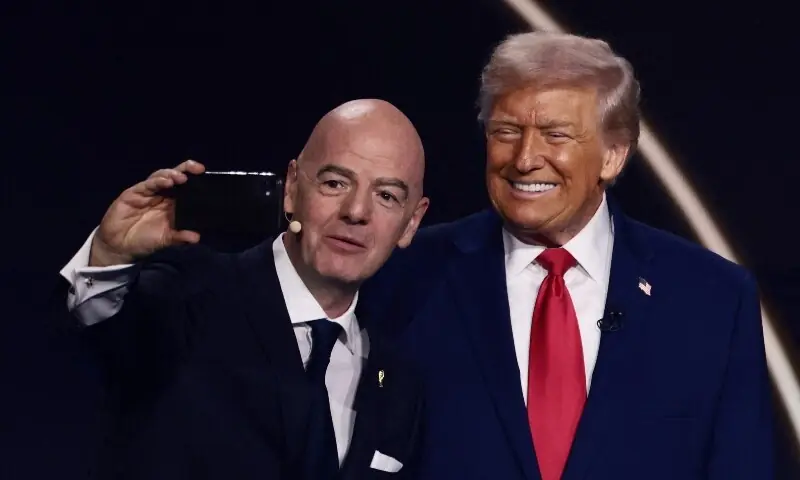
US President Donald Trump cited what he called the unfairness of Balogun’s red card when he said he had contacted Infantino in an effort to have the player’s one-match ban lifted, although the FIFA president later said he was not involved in the eventual outcome.
England still beat Mexico 3-2 at the Azteca Stadium despite Quansah’s red card and a VAR-awarded penalty against captain Harry Kane in their round-of-16 match. But manager Thomas Tuchel reacted angrily afterward.
“VAR overturns (but) is this a clear and obvious error for the penalty? For sure not,” said the furious German.
“They overturned a situation where (the referee) doesn’t even give a foul. Referees just not good enough, fourth officials just not good enough.”
Comments
No comments yet. Be the first to join the discussion!