Iran says it struck US military sites in Gulf as Khamenei is buried in Mashhad
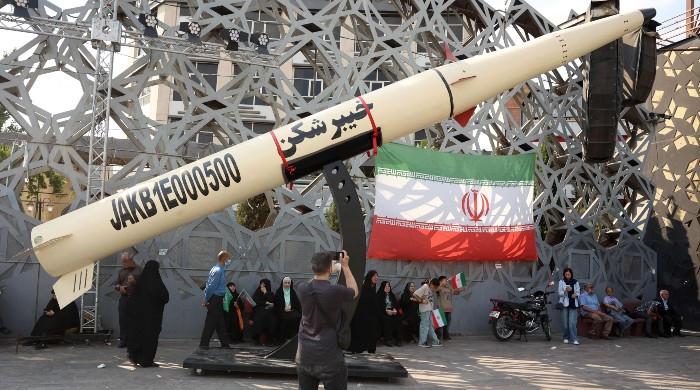
Iran said it attacked US military targets in Gulf states after fresh American strikes, while Tehran buried Ayatollah Ali Khamenei in Mashhad. The escalation also renewed tensions around the Strait of Hormuz and regional bases.

TEHRAN: Iranian armed forces said they carried out attacks on US military infrastructure in Gulf states on Thursday after American strikes hit Iran’s southern coastal and eastern provinces, adding further strain to a ceasefire that had been in place for about three weeks.
Iranian media later reported several explosions in southern Iran, including in Bushehr, Konarak, Choghadak and Bandar Abbas. A US official said there had been no American strikes in recent hours. Another US official said Washington remained committed to seeking a resolution with Iran and that technical talks were continuing.
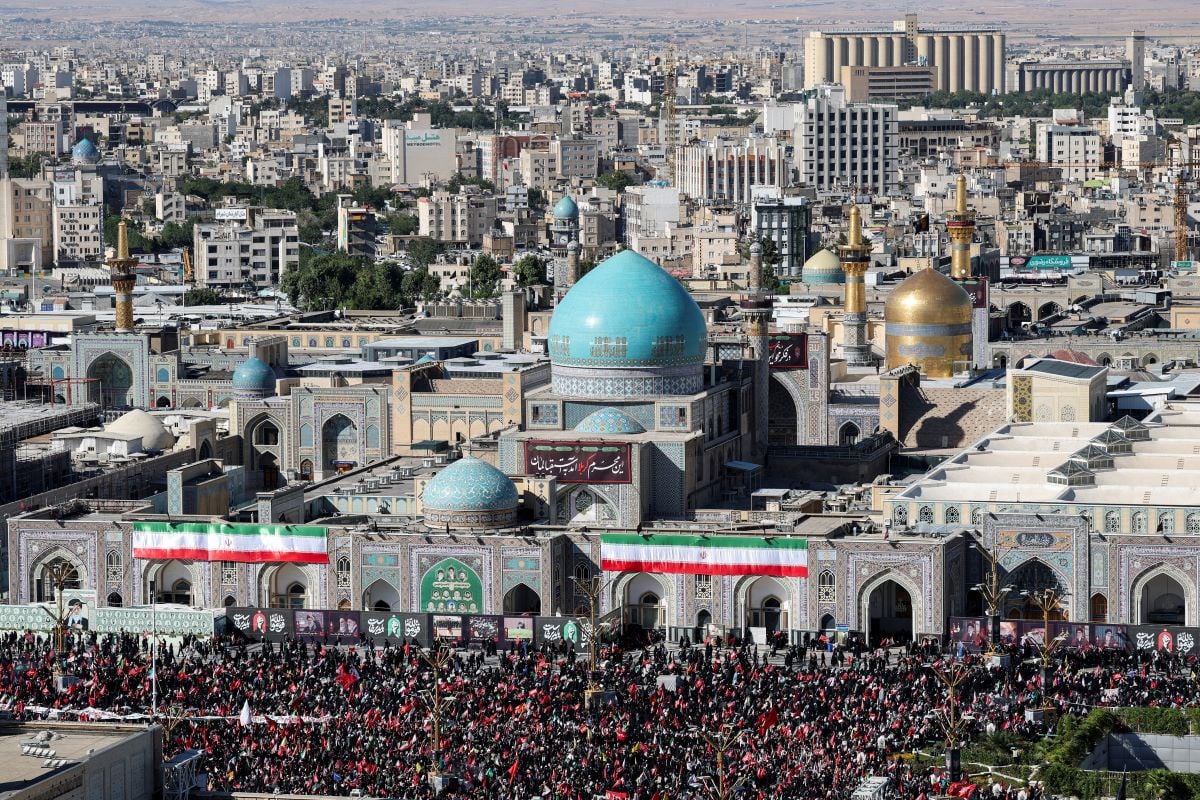
The developments came as Iran buried slain Supreme Leader Ayatollah Ali Khamenei at a shrine in Mashhad, bringing to an end a week of funeral processions and rallies. Khamenei was killed in an airstrike on the first day of the war on February 28 during a US-Israeli assault on Iran that triggered a months-long conflict, killed thousands and disrupted global energy supplies.
Earlier attacks on shipping vessels from Qatar and Saudi Arabia had already shaken the ceasefire, with US President Donald Trump declaring the truce over. Trump also wrote on Truth Social after the latest US strikes:
This is in retribution for yesterday’s bombing of ships by Iran. If it happens again, it will get much worse!
Strait of Hormuz tensions
Iran’s Revolutionary Guards Navy said US attacks and Washington’s role in rerouting shipping through the Strait of Hormuz were hampering the waterway’s reopening. The Guards said vessel traffic under Iranian supervision had recovered to about half of pre-war levels in the past two weeks and that permission was being issued only to ships using routes set by Tehran.
The Guards warned that any further US intervention would bring a crushing response. The US military, however, said its operations were intended to keep the strait open after accusing Iranian forces of attacking three tankers in the area. On Thursday that since early May, the United States had helped facilitate the movement of more than 800 commercial vessels and 380 million barrels of crude oil through the strait, and said Iran does not control the waterway.
Iran’s top negotiator Mohammad Bagher Ghalibaf wrote on X:
The Strait of Hormuz will be reopened only under Iranian arrangements, not through US threats.
Before the war, the Strait of Hormuz handled about a fifth of global oil supplies. Oil prices retreated on Thursday after earlier rising on fears that the fighting could hit global supplies.
Claims of strikes in Kuwait, Qatar, Bahrain and Jordan
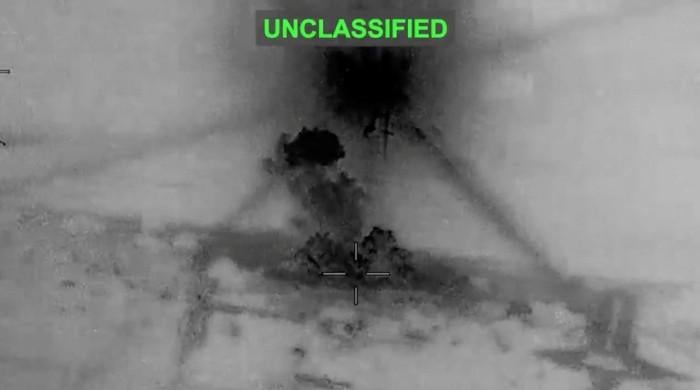
US Central Command said on Wednesday that its forces had struck about 90 Iranian military targets, including air defence systems, coastal surveillance assets, and missile and drone storage sites.
Iranian state media, citing the country’s army, said Iran had launched attacks on US Patriot systems in Kuwait, an early-warning site in Qatar and a US Army fuel depot in Bahrain. Kuwait said its armed forces engaged a cruise missile, three ballistic missiles and 10 drones in its airspace, and that one person was hurt by falling shrapnel.
Jordan’s state news agency reported that sirens sounded after missiles launched from Iran were detected. Eight were intercepted and that no injuries or damage were reported. The Revolutionary Guards later said Iran had fired 10 ballistic missiles at Jordan’s Azraq military base, used by US forces, and also at a US military control centre in the Middle East, without giving further detail.
Qatar, which hosts the region’s largest US base and has often acted as a mediator between Washington and its adversaries including Tehran, condemned attacks on commercial shipping but also called for diplomacy to resume. The foreign ministers of Turkey and Oman likewise stressed the need to prevent further military escalation in separate conversations with Iranian Foreign Minister Abbas Araghchi.
In a call with Chief of Army Staff Field Marshal Asim Munir, Araghchi condemned what he called US warmongering policies.
Bushehr and casualties
Iranian state media reported that US attacks on July 8 and 9 killed 14 people and wounded 78 across five provinces. Fars news agency said one US strike hit a rail bridge used for trade with Russia and China.
Bushehr, the site of a Russian-built nuclear power plant, was also affected. A local official later told state media that a US projectile struck the perimeter area of the facility. The perimeter, had already been hit several times before an April 8 ceasefire.
Funeral in Mashhad
Khamenei’s funeral procession reached the shrine in Mashhad with large crowds filling the courtyard. Some mourners carried banners denouncing Trump, including signs that read, We Will Kill Trump.
The burial marked the final stage of public mourning ceremonies held over the past week as fighting and diplomatic efforts unfolded in parallel across the region.
Comments
No comments yet. Be the first to join the discussion!