Groundwater depletion triggers emergency response
Punjab has set 2030 targets for water conservation and groundwater recharge as officials warn climate pressures and unregulated extraction are worsening the crisis. Lahore remains a key concern, with studies indicating groundwater levels are falling by up to one metre a year.

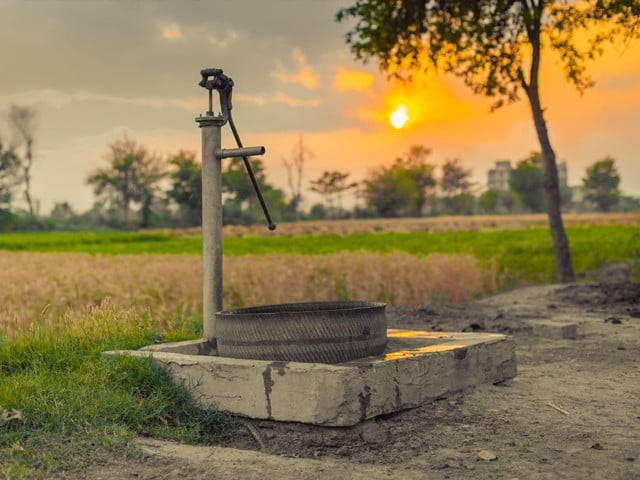
LAHORE: Facing climate change, lower rainfall and a continued fall in groundwater levels, the Punjab government has set 2030 goals for water conservation, rainwater harvesting and groundwater recharge, while officials and experts say implementation remains slow even as the crisis intensifies, particularly in Lahore.
The Climate Resilient Punjab Vision and Action Plan 2024 states the province is under growing climate pressure from rising temperatures, erratic rainfall, urban expansion and unregulated groundwater extraction. The plan calls for expanding rainwater storage, installing recharge systems, improving flood management and promoting efficient water use by balancing surface and groundwater resources and strengthening recharge infrastructure in vulnerable areas.
Lahore is identified in the plan as a major example of the worsening situation. Multiple studies suggest the city’s groundwater table is dropping by as much as one metre each year. Areas including Gulberg, Shadman and Muslim Town have been classified as high-risk zones.
Recharge projects and storage plans
The Water and Sanitation Agency Lahore has started a groundwater recharge initiative under which rainwater is channelled back underground through specially built wells. A WASA spokesperson said recharge wells have already been installed in Tajpura, Liberty, Qaddafi Stadium and other sites, with further expansion planned.
The Punjab government has also approved 358 underground water tanks across the province, comprising 34 large tanks and 324 roadside tanks. Recharge wells are to be built alongside these tanks to support restoration of groundwater levels.
Separately, WASA Lahore has drawn up a plan to install 1,000 groundwater recharge wells in the city. Officials said three wells are currently operational and that each of them can recharge around 8,000 gallons of water per day. Secretary Housing Punjab Noor-ul-Amin Mengal said 15 initial locations in Lahore have been chosen for recharge wells, while the Parks and Horticulture Authority will provide space in all parks for the initiative.
Officials and experts stress implementation
The Punjab Climate Resilient WASH Sector Development Plan 2025-35 says the current water management system is not robust enough to cope with climate-related stress. It warns that meeting the 2030 targets will require substantial investment, modern water infrastructure and stronger capacity in local governments.
Dr Muhammad Yasin of the Centre for Integrated Mountain Research at the University of Punjab said the main challenge is not policy design but implementation. "Frequent changes in governments and policies damage long-term planning. Recharge wells alone are not sufficient; groundwater extraction must be controlled, surface water projects expanded, and urban planning made environmentally sustainable," he said.
Environmental Protection Agency Punjab Director General Imran Hamid Sheikh said rainwater harvesting systems have been made mandatory in 23 new sectors. "Industries including poultry, fish farms, textiles, pharmaceuticals, food, and cement, as well as housing societies, hotels, marriage halls, educational institutions, and commercial buildings, must install rainwater harvesting systems, and construction approval has been linked to this requirement," Sheikh added.
WWF Pakistan Freshwater Programme Director Sohail Ali Naqvi said climate change is contributing to heatwaves, droughts and irregular rainfall, all of which are affecting groundwater reserves. "Government agencies have warned temperatures in South Punjab may exceed 50 degrees Celsius, while phenomena like El Niño are disrupting the hydrological cycle, causing extreme rainfall in some areas and drought in others," he emphasised.
Naqvi said rainwater harvesting and groundwater recharge are necessary steps, adding that the Punjab government has made water conservation compulsory for housing societies and that the Judicial Water and Environment Commission is also issuing related guidelines.
Comments
No comments yet. Be the first to join the discussion!