Govt makes landowners’ consent mandatory in telecom bill overhaul
A PM committee unanimously revises the Pakistan Telecommunication (Re-organisation) (Amendment) Bill, making property owners’ consent a legal precondition before telecom infrastructure can be installed on private land, with clearer safeguards and contractual obligations.

PM’s committee unanimously revises Right of Way provisions after opposition, allies raise objections
Azam Nazeer Tarar says no telecom infrastructure can be installed on private land without owner’s permission
Revised draft heads to Senate panel with clearer safeguards for property rights and contractual obligations
Shaza Fatima says reforms will accelerate 5G rollout and fibre expansion while protecting citizens’ rights
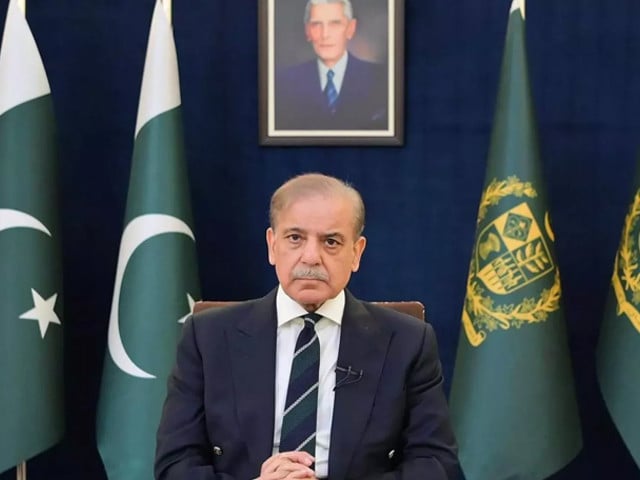
ISLAMABAD: The government has agreed to revise the proposed Pakistan Telecommunication (Re-organisation) (Amendment) Bill to make the consent of property owners mandatory before any telecommunications infrastructure can be installed on private land, with a committee constituted by Prime Minister Shehbaz Sharif unanimously endorsing the changes after concerns raised by coalition partners and the opposition.
The prime minister had constituted the committee following strong criticism of the proposed amendments by both government allies and opposition lawmakers, who called for a comprehensive review of the bill and revisions to its contentious provisions.
Law Minister @AzamNazeerTarar has made it clear that owner's consent is mandatory for the installation of telecom infrastructure on a private property@ShazaFK @MoitOfficial #RadioPakistan #News https://t.co/Us0iBmKC5N pic.twitter.com/CXIcPe8LyA
— Radio Pakistan (@RadioPakistan) July 5, 2026
Addressing a joint press conference in Islamabad alongside Minister for Information Technology and Telecommunications Shaza Fatima Khawaja, Law Minister Azam Nazeer Tarar said the revised draft of The Pakistan Telecommunication (Re-organisation) (Amendment) Bill now explicitly requires the consent of a property owner before any right-of-way can be granted over private land.
He said the amended draft also provides clearer definitions of key terms, including right-of-way, above-ground and underground infrastructure, and the installation of telecommunications equipment to eliminate ambiguity.
Explaining the revisions, the law minister said the earlier draft had referred to "mutual consent", but the new version makes such consent an explicit legal requirement.
"Initially, it only stated that negotiations would take place. Now we have made it clear that if access is required through any private property — whether a house, shop, vacant plot or agricultural land — the owner's permission must first be obtained. It is now a precondition," he said.
Tarar said that if the two parties failed to agree on the terms and conditions, they could approach the relevant authority. However, he stressed that since the arrangement would be based on mutual consent and the free will of both parties, the usual enforcement mechanisms would not apply at that stage.
He added that once an agreement had been concluded and the agreed consideration paid, neither party could unilaterally withdraw from the contract.
"If the terms and conditions have been settled, payment has been made, and all matters agreed upon, one party cannot later decide not to continue with the agreement. In such cases, the appropriate authority will deal with the matter," he said.
The minister said that if an operator failed to make agreed payments, the authority would issue the necessary directions. Likewise, if a property owner, after voluntarily entering into an agreement and receiving payment, attempted to obstruct or terminate the arrangement during the contract period, the matter would also be addressed under the law.
ٹیلی کمیونیکیشن بل ابھی تک قانون نہیں بنا۔ کمپنیوں کو تین طرح کی پراپرٹیز کے لیے رائٹ آف وے (Right of Way) درکار ہوتا ہے۔ پہلی پبلک پراپرٹی ہے، جیسے ریلوے ٹریکس اور سڑکیں وغیرہ، جہاں رائٹ آف وے فری کر دی گئی ہے۔ دوسری نجی اور نیم سرکاری ہاؤسنگ سوسائٹیز ہیں، جہاں رائٹ آف وے باہمی… pic.twitter.com/9dqS0jODuD
— WE News (@WENewsPk) July 5, 2026
"If the owner has willingly agreed, is receiving rent and has already been compensated, they cannot disrupt the arrangement during the contract period. Agreements are meant to be honoured, just as we are bound to fulfil contracts in our daily lives," he said.
Tarar said the committee had unanimously resolved the issue and submitted its recommendations to the prime minister.
"The amended draft will now be sent to the Senate Standing Committee, making it clear that no one can be compelled to grant right-of-way over private property without the owner's consent," he said.
He clarified, however, that separate legal provisions would continue to apply to state-owned land, other public property and housing schemes.
The law minister noted that right-of-way legislation had existed for decades and remained essential for the provision of basic public services.
"Without this law, it would not be possible to provide electricity, gas, internet and many other essential utilities to the public," he said.
Tarar said the earlier version of the bill had been passed by the National Assembly with six amendments, but concerns over its wording were later raised in the Senate Standing Committee.
Speaking on the occasion, IT Minister Shaza Fatima Khawaja said the original law, enacted in 2006, required amendments to meet Pakistan's growing connectivity needs.
She said the country's data consumption had increased by around 25 per cent over the past two years, highlighting the need to expand spectrum capacity and strengthen telecommunications infrastructure.
Shaza said spectrum availability had increased from 274 megahertz (MHz) to around 750MHz through Pakistan's largest-ever spectrum auction. She added that the rollout of 5G services would require further investment in fibre-optic networks, telecom towers and related infrastructure.
The minister noted that Pakistan currently had fewer than three million fibre-to-the-home connections despite a population of around 240 million, adding that the government aimed to increase the number to 10 million homes over the next three years.
Responding to public concerns over the proposed right-of-way provisions, Shaza said expanding internet access remained a key priority of the Ministry of Information Technology and Telecommunication, while assuring that efforts to improve connectivity would not come at the expense of citizens' fundamental rights.
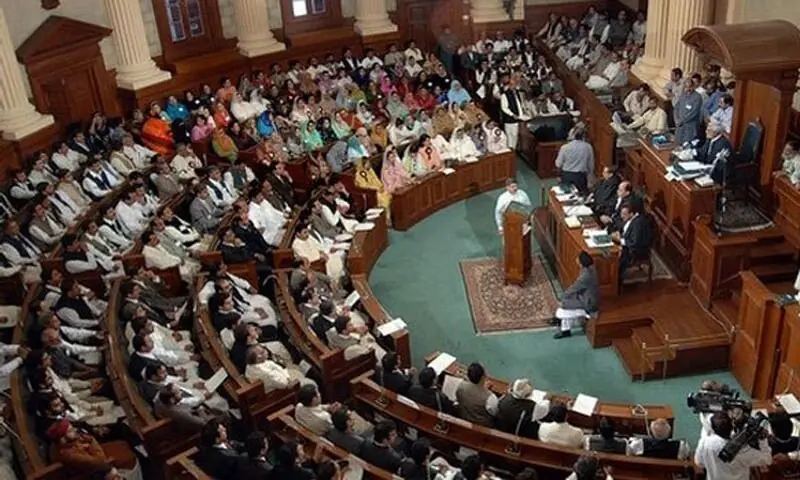
The bill, which proposes amendments to the 1996 telecommunications law and was tabled by the IT minister, was passed by the National Assembly on June 11 through a majority vote. It was later deferred by the Senate Standing Committee on IT and Telecommunication, to which it had been referred on June 15.
Questions over the bill's intent intensified as the government sought its approval from both houses of parliament.
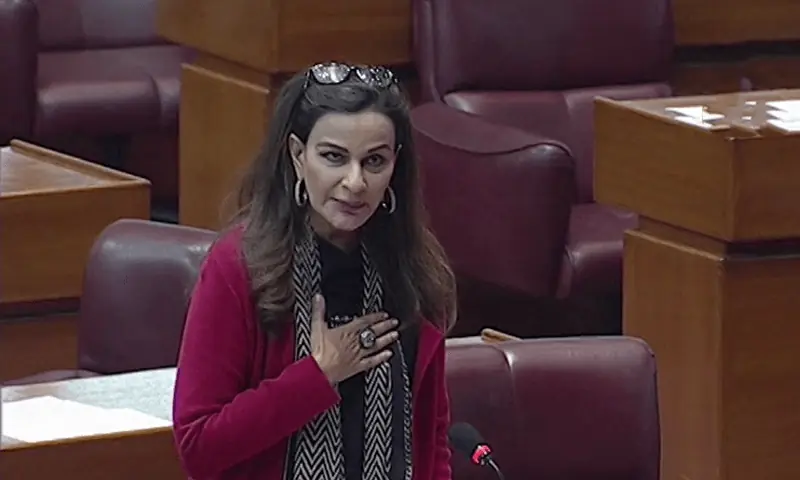
Following reservations expressed by the Pakistan Tehreek-e-Insaf (PTI), the Pakistan Peoples Party (PPP), a key coalition ally, also withheld its support. Senator Sherry Rehman stated that her party would not allow any legislation relating to the information technology sector, the Pakistan Telecommunication Authority (PTA) or right-of-way provisions to pass through the Senate unless it was thoroughly examined and amended by the relevant standing committee.
The prime minister subsequently constituted a committee to review the proposed legislation and tasked it with addressing concerns over provisions relating to the Right of Way framework under Sections 2(qb), 2(ma), 27A and 27B of the Pakistan Telecommunication Reorganisation (Amendment) Bill, 2026.
The Ministry of Information Technology and Telecommunication had also clarified that the proposed Right of Way Bill 2026 would neither permit the forcible acquisition of private land nor allow unauthorised entry into citizens' private property. According to the ministry, property owners would retain the full right to raise objections, negotiate terms and seek appropriate compensation before any work is carried out on their land.

Comments
No comments yet. Be the first to join the discussion!